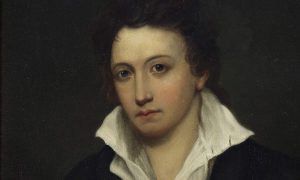
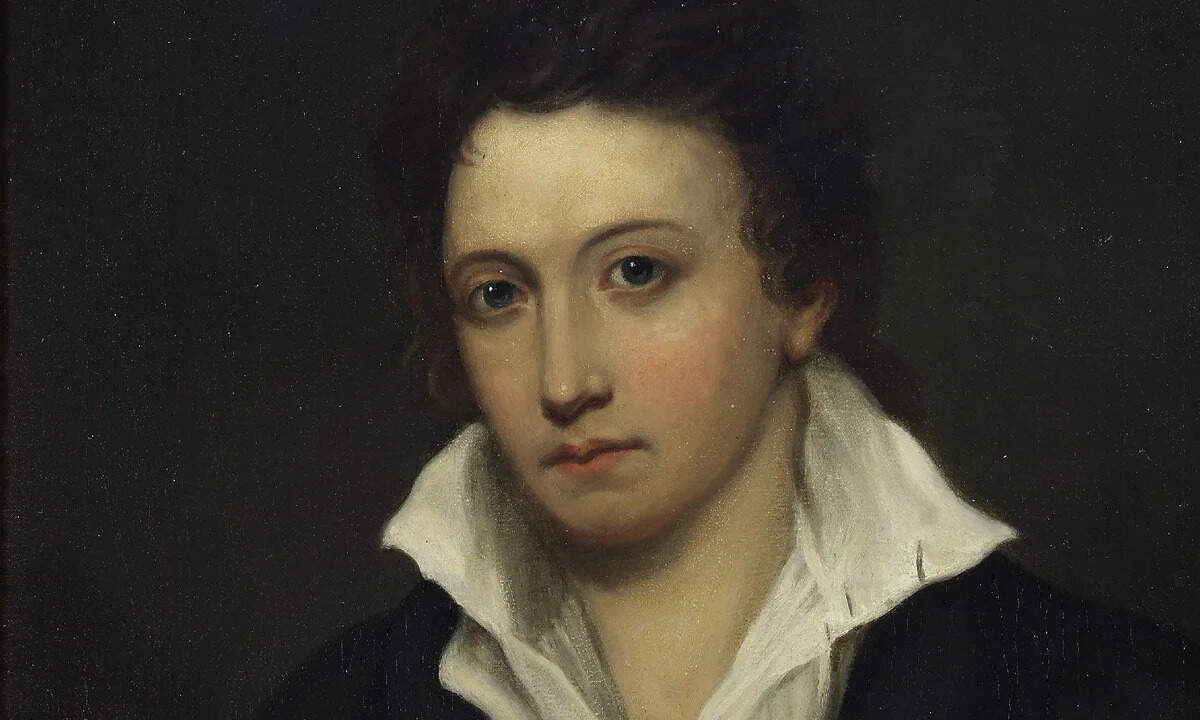
Those ho have read Ode to the Westwind would know how great a poet PB Shelley was. One of the most iconic figures in the romantic movement, Shelley is as much known for his poetry as for his essays. Percy Bysshe Shelley was one of those poets whose work burned brightly and quickly, leaving behind a legacy that still moves people. He was born in 1792 into a rich English family. He fought against everything, from his schooling at Eton to Oxford, where he was kicked out for writing a pamphlet about atheism.
Shelley’s childhood at Field Place, which is near Horsham, was full of imagination that didn’t fit in with the strict world around him.
He avoided bullies at Eton by reading books and playing pranks. In 1811, he shocked Oxford by publishing The Necessity of Atheism and refusing to deny that he wrote it, even though it cost him his place there. That year, he ran away with 16-year-old Harriet Westbrook and got very involved in radical politics, writing pamphlets for Irish rights and against the monarchy while living off of family money. Harriet drowned in 1816, which was a tragedy. This allowed him to marry Mary Godwin, the daughter of feminists Mary Wollstonecraft and William Godwin. Their elopement was stormy and included a famous “haunted summer” in Switzerland with Lord Byron, which inspired Mary’s Frankenstein. They left for Italy in 1818 because they were sick and lost children. There, Shelley wrote his best works. He died in a boating accident off the coast of Livorno when he was 29.
Shelley’s writing is like a wild storm- intense, musical, and full of images that make you feel like you’re in the middle of nature’s fury or a person’s dreams.
He liked rich, tactile language that didn’t have any fluff. Every word had meaning and used similes, metaphors, and symbols, often visual ones, to stir up strong emotions. It uses “uncontrolled passion” and “lofty imagination” to explore ideas and turn his own problems into calls for change that everyone can hear. It doesn’t just describe; it changes you, making you feel the “smooth, stormy march” of his thoughts.
Poems That Shook the World Shelley’s best poems mix politics, nature, and myth. Many of them were never published during his lifetime because they were too hot.
His first big hit, a utopian epic that criticizes war, commerce, church, and marriage while dreaming of a world without sin. The sonnet about a broken statue makes fun of tyrants’ short-lived power: “Look on my Works, ye Mighty, and despair!” This is pure Shelleyan irony about time’s revenge. A call to the wind as both a destroyer and a preserver, with cries like “If Winter comes, can Spring be far behind?” that stand for revolution. An epic drama that turns Aeschylus on its head, in which chained Prometheus forgives Jupiter and creates a new moral world through love instead of revenge. A dark tragedy about incest and killing one’s father that mixes Elizabethan drama with moral ambiguity—Shelley’s attempt at theater. An elegy for Keats written in Spenserian stanzas, where the poet’s spirit “outsoars the shadow of our night,” mixing grief and immortality.
Others, like “To a Skylark,” “Mont Blanc,” and “The Masque of Anarchy” (about the Peterloo protest), show how he can go from writing beautiful poetry to being very active in politics. These aren’t old things that have been sitting around; they’re calls to rethink power, love, and society, often with hope in the midst of despair.
“The great instrument of moral good is the imagination” comes from Shelley’s unfinished essay A Defence of Poetry, which he wrote in 1821 as a response to his friend Thomas Love Peacock’s claim that poetry was old-fashioned. Shelley says that imagination isn’t just a lofty idea; it’s the “great instrument of moral good” that drives empathy. To be “greatly good,” you have to really feel what others are going through, both good and bad. It’s like stretching a muscle to get stronger. This “intense and comprehensive” imagining creates sympathy and love by “going out of our own nature” to see the beauty in other people. He says that poetry wakes this up in people’s minds and sets the rules that ethics and laws follow. Poets are “unacknowledged legislators of the world. “
Imagination doesn’t fight tyrants with hate, but with love that is open and big. It’s fuel for activists, writers, and anyone else who wants to do good. Shelley thought that poetry worked on the “moral nature of man,” like working out makes muscles bigger; without it, we become selfish shells.