
The American job market has grown increasingly unforgiving for young graduates. Gen Z degree holders, stepping out with ambition and debt, are encountering delayed offers, cautious employers, and an economy that rewards experience over promise. In lecture halls and online forums alike, a once-unquestioned assumption that a degree guarantees stability has begun to fray.
Yet higher up the academic ladder, a different story is unfolding. For graduates of elite MBA programmes, the return on investment remains strikingly robust. Even as scepticism swirls around higher education, the upper tiers of business schools continue to deliver salaries, networks, and career mobility that few other credentials can match.
A market tightening, a credential strengthening
Across the US, entry-level hiring has slowed, and graduates have had to temper expectations. But at the summit of business education, outcomes remain formidable.
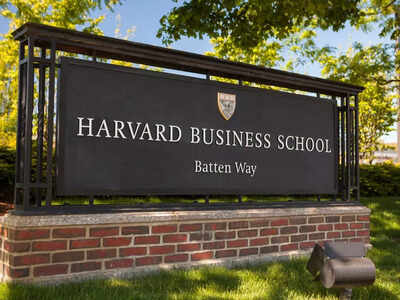
Three years after graduation, alumni of Harvard Business School reported median earnings of roughly $260,000. At the Wharton School of the University of Pennsylvania, the figure stood at $248,000. Graduates of MIT Sloan School of Management were close behind at $246,000, according to Financial Times data.
These numbers highlight not incremental gains, but structural elevation in earning power.
The pipeline effect: From campus to corner office
Elite MBA programmes do more than teach finance or strategy; they embed students into powerful recruitment ecosystems.
Fields such as management consulting, investment banking and private equity continue to draw heavily from a concentrated cluster of institutions. Firms including McKinsey & Company, Bain & Company, JPMorgan Chase and Goldman Sachs regularly recruit from these campuses, creating a dependable conduit into high-paying roles.
Among Harvard Business School’s Class of 2025, 90% of graduates received at least one job offer within three months of graduation; 84% accepted. Both figures marked improvements over the previous two years, signalling resilience even as entry-level hiring elsewhere softened.
Across other members of the so-called “Magnificent 7”—including Chicago Booth School of Business, Columbia Business School, Northwestern Kellogg School of Management and Stanford Graduate School of Business—median base salaries within three months of graduation ranged from approximately $175,000 to $185,000.
Critics, sceptics, and sustained demand
The MBA has not been immune to criticism. High-profile executives such as Elon Musk and Peter Thiel have publicly questioned hiring decisions rooted solely in credentials, arguing that innovation and execution matter more than degrees.
Yet application trends tell a different story. According to the Graduate Management Admission Council, MBA applications rose by 13% in 2024 and by another 2% in 2025. Even in an era of doubt, demand has persisted.
The network dividend
Barbara Coward, founder of MBA 360 Admissions Consulting, described entry into a top programme as access, said to the Associated Press. “Elite club of industry-wide influencers and changemakers.” The value of such networks, though intangible, often proves decisive.
Alumni communities at these institutions extend into boardrooms, investment committees and entrepreneurial ventures. The MBA’s promise, therefore, is not only immediate salary gains but long-term positioning within circles of influence.
A tale of two degrees
The contrast is stark. At the undergraduate level, students increasingly weigh alternatives, certifications, apprenticeships, direct-to-work routes, against rising tuition costs. At the elite MBA level, however, the degree continues to function as a gateway to high-margin sectors and accelerated mobility.
The equation is not universal; industry selection, timing and individual capability remain decisive variables. But for those admitted to the upper tier and aligned with high-growth fields, the economic return appears resilient.
In a labour market defined by caution, the elite MBA endures not as a relic of credentialism, but as a recalibrated instrument of advantage.
Ready to navigate global policies? Secure your overseas future. Get expert guidance now!


