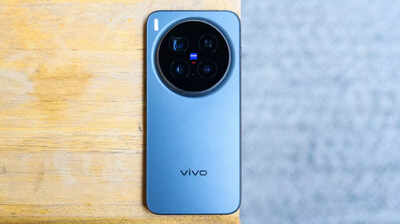
I’ve spent the better part of this past month with the Vivo X300 Pro, and it’s a phone that keeps pulling me towards its camera. Not in a dramatic way, but enough that I notice. Someone across a busy road, their expression catching my attention (this isn’t stalking, it’s called people watching). A bird far away that would normally be just a speck. The carved details on a monument’s facade. Small moments that would typically pass by suddenly feel within reach when you have this kind of capability in your pocket.
Vivo’s been building towards this for years with their X-series flagships. The X300 Pro doesn’t feel like they’re chasing the next big thing anymore. It feels like they’ve arrived at what they’re good at and decided to go all in, and there’s something refreshing about a phone that knows exactly what it wants to be.
But does being camera-first mean everything else takes a backseat? Does it actually deliver on those imaging promises, or is it just good marketing? And at Rs 1,09,900, up against some of the most obvious choices out there, does the X300 Pro do enough to justify choosing it over the “safer” options?
After a month of using this as my so-so daily driver—picturing cities and people, scrolling through social feeds, juggling between apps, trying to drain it as quickly as I could—I’ve got thoughts (as usual).
So should we start with them? With the most obvious one first.
About those cameras
![<p class="font-claude-response-body break-words whitespace-normal leading-[1.7]">The Vivo X300 Pro doesn't hide what it's built for—that camera island dominates the back, and for good reason</p>](https://static.toiimg.com/photo/imgsize-23456,msid-128678896/p-classfont-claude-response-body-break-words-whitespace-normal-leading-1-7the-vivo-x300-pro-doesnt-hide-what-its-built-forthat-camera-island-dominates-the-back-and-for-good-reasonp.jpg)
The 200MP telephoto is the reason this phone exists. Not because the number sounds impressive—plenty of phones throw big megapixel counts around—but because of what it actually lets you do. I’ve spent the past month shooting at 10x zoom more than I’ve used any other focal length, and that’s not something I expected.
I was out walking one afternoon, and instead of just taking the usual wide shots, I started zooming into distant details.
Things I’d normally miss—text on old signboards, architectural details on upper floors, the way light catches window frames—suddenly became visible and worth capturing. It’s not that the telephoto reveals hidden secrets, it just makes distant details accessible enough that you actually bother looking for them.
At 10x, the clarity holds up better than expected. Not like muddy algorithmic reconstruction trying to guess what details should be there—even though it’s hard to deny there aren’t algorithms at work.
Push to 20x and you start seeing the computational processing take over—textures soften, edges get a bit too perfect—but even then, it’s usable.
I didn’t get to try out the optional telephoto converter kit that extends the zoom range even further with a physical lens attachment and grip. The proposition is quite enticing, but I’m not sure how often I’d actually carry it around given how bulky the entire setup looks like.
But based on what the built-in telephoto already delivers, I can see the appeal for anyone serious about mobile photography.
The 50MP main camera handled most of my day-to-day shooting, and it’s got this warmth to it that feels more like film than digital. Not artificially pumped-up warmth, just a quality to the light that feels right. I’ve been bouncing between the colour profiles depending on mood—Vivid when I want things to pop, Textured when I’m after something moodier, ZEISS Natural when I just want accuracy.
Two taps to switch, which matters when you’re trying to nail a look before the moment passes.
Then there’s the third one—a 50MP JN1 sensor paired with an ultra-wide lens—and this is where expectations catch up with reality. It’s the same camera Vivo’s been using for years and it’s fine for casual work—controlled distortion, decent corner sharpness, colours that mostly match the other cameras. But it doesn’t quite match the quality of the others.
Give it complex textures or challenging light, and the gap becomes obvious. The pictures come out noticeably softer and less defined.
The colours stayed matched across the three lenses. No jarring shifts when I switched focal lengths, which meant I could mix wide and tight shots without them looking like they came from different cameras. But the quality differences showed up clearly. The ultra-wide looked softer in textured details—the weave of fabric, the texture of leather bags.
The main camera felt the most reliable. The telephoto delivered sharpness the other two couldn’t match.
The Humanistic Street Snap mode became my default for these walks. It’s tuned for quick shooting—faster shutter, film-style colours, minimal processing. I shot people browsing at a tiny corner bookstore, flipping through old paperbacks stacked on makeshift shelves, the winter afternoon light filtering through the shop’s narrow entrance.
The mode captured the scene with colours that leaned slightly cooler and more muted, shadows that deepened without crushing detail, and a subtle grain that added character. Not every shot worked, but enough did that I stopped worrying about composition and just shot what caught my eye.
There’s also a dedicated Bird mode that I didn’t expect to use much. It’s designed for shooting birds from a distance with faster shutter speeds and tracking that keeps moving subjects in focus.
I tested it deep inside Sunder Nursery one morning, following a group of peahens moving through the undergrowth. What’s interesting is there’s clear algorithmic processing at work, which becomes obvious when you check the gallery. What you see in the viewfinder looks muddy and unclear—you’re not sure you got the shot. Then you open the gallery and the pictures come out sharp, with detail you didn’t see while shooting. It surprised me. The mode locked focus quickly and kept it there even when one of them turned suddenly or moved behind foliage. It’s a niche feature, but if you’re into bird watching or wildlife photography, it justifies carrying this phone instead of a dedicated camera.
The macro mode takes a different approach than most phones. Instead of using the ultrawide lens—which results in mediocre quality and weird perspective distortion—the X300 Pro uses the telephoto.
You can focus as close as 20cm from small subjects while maintaining proper image quality and natural background blur. I shot flower petals at Lodhi Garden, insect wings, texture details on old wood and stone, all with colours that stayed accurate and bokeh that looked smooth. I used it regularly enough that it stopped being a novelty and became an actual tool.
Portrait mode has gotten better, which became clear when I started shooting friends in less-than-ideal lighting.
Edge detection handles hair and glasses more reliably, skin tones stay natural without that waxy smoothness most phones default to, and the background blur looks real rather than algorithmically obvious. I shot portraits in harsh overhead fluorescents, backlit by windows, dim restaurant corners—situations that usually mess up computational photography—and most came out better than expected. There’s still the occasional miss around complex edges like flyaway hair or intricate jewellery, but it’s rare enough that I trust it.
The 50MP front camera delivers solid selfies with natural colours and good dynamic range. I took several during golden hour with the sun behind me, and it balanced my face against the bright sky without blowing either out.
Night shooting is where the X300 Pro really proves itself. I took it out to test limits—walking through poorly lit side streets near Hauz Khas Village, shooting down narrow alleys with single overhead bulbs, capturing wide cityscape shots from my terrace where half the frame was dark residential blocks.
The main and telephoto both held shadow detail while keeping highlights under control. Street lights stayed contained instead of blooming, neon signs kept their colour without bleeding, and dark areas maintained texture instead of collapsing into black.
There’s a dedicated Night mode that extends exposure to several seconds while compensating for hand shake, and the results look noticeably brighter than what your eyes see.
I shot the Delhi skyline at 10 pm and it came out looking like early dusk. It’s a bit unnatural seeing that much detail pulled from shadows, but it works when you need it.
Video quality matches what you get with stills. The phone shoots 4K at 120fps with stabilisation that keeps footage smooth without looking over-corrected. Portrait video mode works well enough, though edge detection struggles with fast movement.
What impressed me most was how well it handled challenging lighting scenarios—rapid shifts between bright and dark, harsh backlighting, mixed colour temperatures.
There’s no constant exposure hunting that usually ruins footage in these conditions. The phone adjusts quickly and keeps subjects properly exposed even when lighting changes dramatically. Whether you’re shooting in low light, moving between indoor and outdoor spaces, or dealing with complex lighting, the video stays consistent without the constant flickering and readjustment you see on most phones.
Vivo X300 Pro, the phone
We’ve spent enough time talking about what makes the X300 Pro a camera. Now let’s talk about what makes it a phone—the thing you’re actually holding and carrying around every day.
Vivo flattened everything this year. The curves from the X200 Pro are gone, replaced by flat edges and a flat display. It’s closer to what most flagships look like now, but it works. At 226 grams, it’s got weight to it, though it’s distributed well enough that it doesn’t feel awkward or top-heavy. The matte finish on the glass and aluminium adds grip, which matters when you’re using a phone this size one-handed.
I’ve been going without a case for the past month, and it hasn’t slipped once. What caught me off guard is how the phone feels like a camera when you’re actually shooting with it. The flat edges give you something to grip, the weight makes it feel like a tool rather than just glass, and the camera bump creates a natural ledge for your index finger in landscape. After a month, the ergonomics started clicking in ways I didn’t expect.
The camera island dominates the back. It’s large, circular, centred—you can’t miss it. But it’s purposeful. The ring around it accommodates mounting accessories, which explains the bulk. Vivo added a textured finish to the metal ring that mimics a camera lens, a small touch that reinforces what this phone is about. The island sits flush enough that the phone doesn’t rock too much on a table.
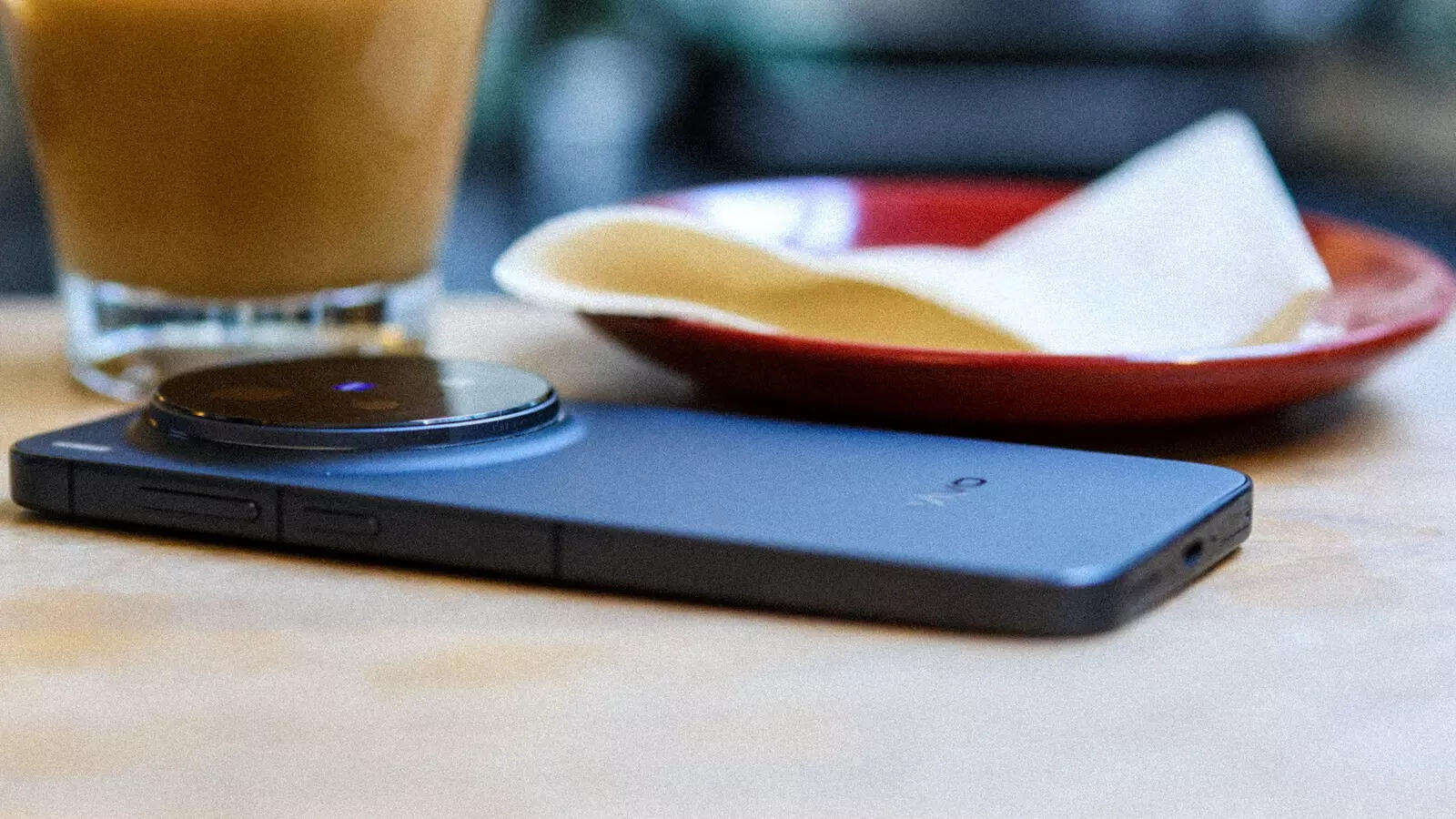
There’s a shortcut button on the left edge—assign two functions, one for a long press, another for a double press.
I’ve set mine to launch the camera and toggle the flashlight. The shortcut button placement makes triggering the camera easy without shifting your grip, which matters more than you’d think during extended shooting. The power button and volume rocker are on the right. The ultrasonic fingerprint sensor sits about a third up from the bottom, right where your thumb lands. It’s fast, reliable, and I’ve stopped thinking about it. IP68 and IP69 ratings mean it handles water and dust without issue.
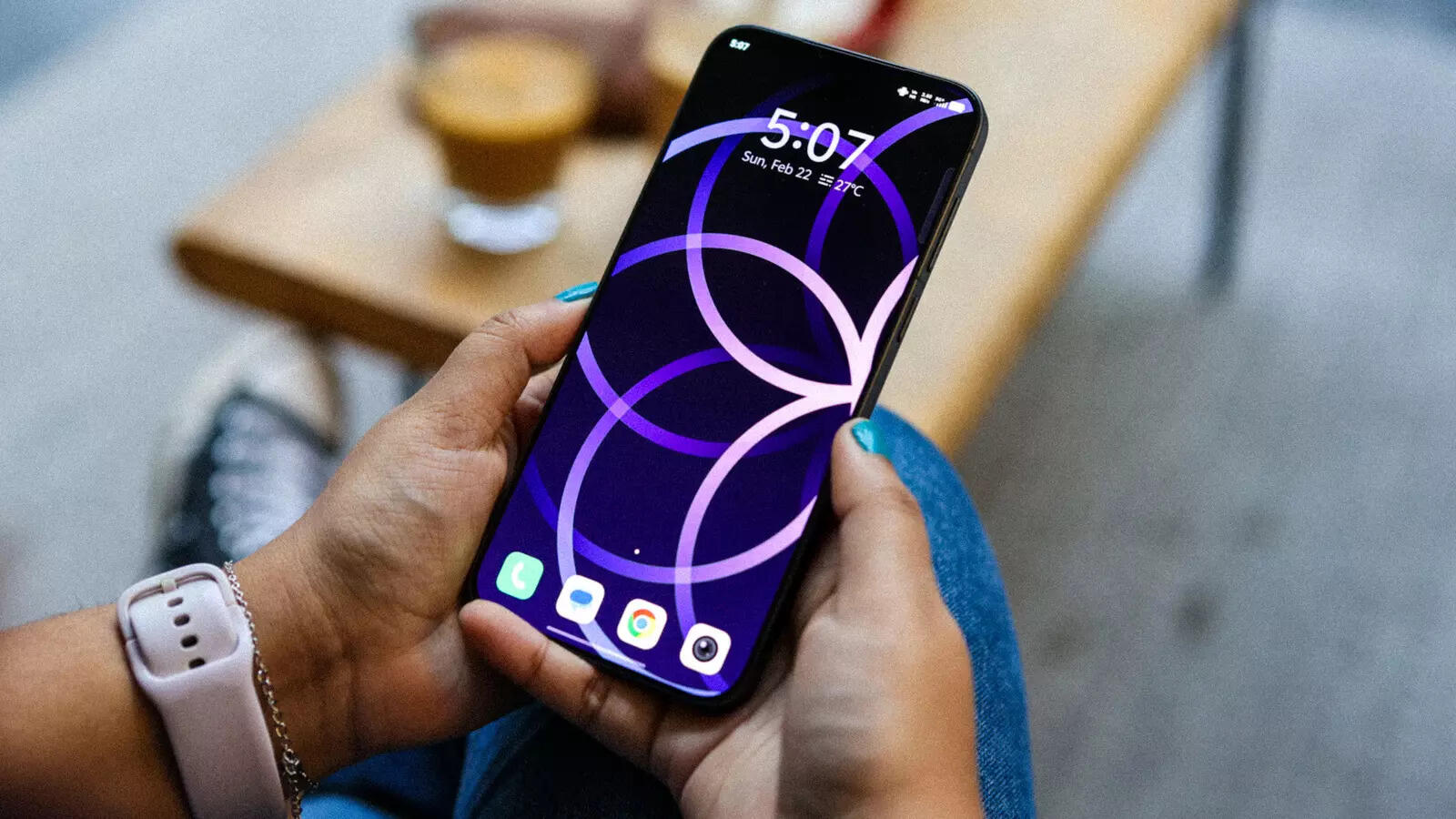
The 6.78-inch LTPO AMOLED screen hits 4500 nits peak brightness, which means it stays readable in direct sunlight. The 120Hz refresh rate makes scrolling and swiping feel smooth. Colours are punchy—maybe a bit too much on reds and oranges even in neutral modes—but it’s not something that bothered me in daily use. Vivo throws in a lot of customisation options: colour temperature adjustments, white balance controls, DC dimming at all brightness levels.
The bezels are thin enough that the screen feels immersive without making the phone feel fragile.
Performance hasn’t been an issue. The MediaTek Dimensity 9500 keeps things moving—apps launch quickly, multitasking feels seamless, no noticeable lag or stuttering after a month of use. Gaming works well. I played demanding titles like Genshin Impact and Call of Duty, to name a few—the phone handled them without struggle, though it did warmed up during longer play sessions.
The heat spread across the back rather than concentrating in one spot, which made it easier to hold. The 16GB of RAM meant I could leave dozens of apps open without slowdown. There’s a spread of connectivity options with Wi-Fi 7, Bluetooth 5. 4, 5G, NFC—and all work as expected. eSIM support is a nice addition for travellers.
OriginOS 6 replaces Funtouch OS globally, and it’s a clear upgrade. Everything feels faster, animations are smoother, the interface has polish that wasn’t there before.
Yes, it borrows from iOS—the lock screen customisation, translucent overlays, notification stacking, even an “Origin Island” that mimics Dynamic Island. But Vivo adds more flexibility. You can resize app folders into different shapes, the Always-On Display has more widget options, and there’s plenty of personalisation.
There are AI features scattered throughout—voice recorder that names recordings automatically, gallery tools like AI Eraser and AI Unblur.
They’re there if you want them, unobtrusive if you don’t. I used the eraser a few times when something distracting showed up in the background, and it worked well enough. There’s also another feature, “AI Landscape,” and as the name implies, it uses artificial intelligence to render landscapes. While it works as advertised, I have my reservations against it. Vivo markets these features heavily, but in practice, they feel more like nice-to-haves than essentials.
Vivo promises four years of major Android updates and four years of security patches. It’s better than before, but still behind the seven-year commitments some competitors offer.
Battery life has been solid. The 6510mAh cell gets me through a full day of heavy use, including extended shooting sessions. Light usage stretches to nearly two days. The 90W charging is fast—50% in about 18 minutes, full charge in roughly 50 minutes.
Quick enough that you don’t need to charge overnight. It also supports 40W wireless charging and standard USB PD.
A camera that makes phone calls
The vivo X300 Pro is a phone that knows exactly what it’s trying to be. It’s built around a camera system that competes with dedicated cameras in reach and versatility, and everything else—the design, the display, the performance—supports that without getting in the way. After a month of daily use, what stands out is how often I reached for this phone specifically to take photos instead of just using whatever was in my pocket. That shift in behaviour says more than any spec sheet could.
The gaps show up elsewhere. Four years of software support lags behind what others promise. The ultrawide camera doesn’t match the main and telephoto. OriginOS 6 is a clear step up from Funtouch, but the some things still needs work. Battery life gets you through a day of heavy use but won’t stretch to two. At Rs 1,09,900, you’re paying flagship money for a phone that excels in one area while holding its own in others.
It’s not trying to be the best at everything, and that focus shows.
That one area happens to be photography, and the X300 Pro delivers here in ways most flagships don’t. The telephoto reach, the macro capability, the consistency across focal lengths—it’s not just better specs, it’s a different shooting experience. If you care about mobile photography, this phone gives you tools that actually change what you can capture.
But even if cameras aren’t your primary concern, the X300 Pro still functions as a solid flagship—the performance is there, the display is excellent, and the build quality doesn’t compromise. It’s just that the cameras are so far ahead that they become the defining reason to choose this over anything else.
For anyone who’s felt limited by their phone’s camera, the X300 Pro solves real problems. Missed shots because you couldn’t zoom far enough. Macro attempts that never quite focused. Telephoto images that fell apart past 5x. This phone fixes those frustrations. It’s a specialised tool that happens to be a capable phone, and for the right person, that’s not a compromise—it’s exactly the point.
Our rating: 4/5