
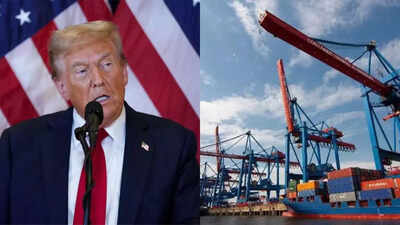
After the setback on tariffs in the US Supreme Court, US president Donald Trump indicated that he would order section 301 investigations against trading partners. USTR Jamieson Greer followed it up, saying that the probe will cover major trading partners and may range from industrial policies of countries to drug pricing and ocean pollution.
Sections 301 to 310 of the Trade Act of 1974 of the United States, titled “Relief from Unfair Trade Practices” are collectively referred to as “Section 301”. It provides for the Congress to grant the office of the United States Trade Representative (USTR) powers to investigate and initiate action through measures such as imposition of tariff to enforce US rights under trade agreements and respond to certain foreign trade practices.
The law allows the USTR to “self-initiate” a probe or order investigations based on complaints.
The investigations are conducted by a “Section 301 committee”, which reviews petitions, conducts hearings and submits its recommendations. USTR is required to seek consultations with the foreign govt at the time of initiation of probe as part of trade agreements. For investigations that do not involve an agreement, USTR has generally requested consultations with other govts.

If USTR concludes there is a violation of a trade agreement or a country’s action is “unjustifiable” and it “burdens or restricts” American commerce, action is “mandatory”. In case it finds that the action by a govt is “unreasonable or discriminatory” and “burdens or restricts” US commerce, action is discretionary. Usually, in cases where trade agreements are not involved, USTR makes its determination within 12 months after the launch of a probe.
It can impose tariffs or other import restrictions; withdraw or suspend trade agreement concessions; and enter into a binding agreement with a govt to either cease the action or compensate the US.
Since the WTO was set up in 1995 and until the first Trump Administration, the US used Section 301 primarily to build cases and pursue dispute settlement at the WTO.
The first Trump administration used the provision to investigate foreign trade practices six times. Two investigations into China and the EU resulted in the imposition of tariffs. In 2020, USTR imposed tariffs on imports from the EU under Section 301 based on the findings of a WTO dispute settlement body on subsidies on civil aircraft. They were suspended in 2021.
In 2018, USTR imposed tariffs of up to 25% on US imports of $370 billion from China after a probe into the country’s practices relating to “forced technology transfer”, intellectual property rights, and innovation.
During the Biden administration, after a review, the US increased tariffs on EVs. It also undertook three other investigations, involving Nicaragua’s policies, and practices related to labour rights, human rights, and the rule of law and Chinese practices on semiconductor and ship building.
Under the current Trump administration, USTR has initiated two investigations into Brazil’s practices related to digital trade and electronic payment services, ethanol market access, and other issues and also one related to China’s implementation of its commitments under the US-China “Phase One” deal.
Even before the US Supreme Court verdict it had indicated probes on digital service tax on American companies, practices of seafood exporters and China’s apparel sector policies.
In 1998, the EU had challenged the provision, with India, Brazil, China, Japan and Canada reserving their rights as third parties, on the grounds that the unilateral determination, including trade sanctions against trade partners of the US, bypassed WTO’s dispute settlement process. The panel under the dispute settlement body found the undertaking given by the US sufficient to overcome “prima facie violation of WTO obligations”, trade expert Abhijit Das wrote in his book.
It concluded that sections 304, 305 and 306 were not inconsistent with global trade rules.



