Have you ever picked up a shirt that looked perfect on the rack, only to realize it felt a bit like wearing a plastic bag once you tried it on? You aren’t alone. For decades, our closets have been dominated by synthetics—cheap, durable, and readily available. But as the conversation shifts from “fast fashion” to “forever fashion,” the labels on our clothes are changing.
The modern sustainable movement isn’t just about buzzwords; it’s about returning to materials that don’t choke the planet (or your skin). If you’ve been trying to decode the difference between Lyocell and Linen, or wondering why Pima cotton costs more than the regular stuff, here is your cheat sheet to the fabric revolution.
First, let’s address the elephant in the room: Synthetics like polyester, nylon, and acrylic. At their core, these are fossil fuels spun into thread. They are essentially plastics. Now, they aren’t all bad. If you are running a marathon or caught in a downpour, you want the water-resistance and stretch that synthetics provide. Natural fibers just can’t compete with that level of performance gear.
But for daily wear? They are a nightmare. They trap heat, they don’t breathe, and they hang around in landfills for anywhere from 20 to 200 years.
Perhaps the scariest part is the invisible trail they leave behind; every time you wash a polyester blouse, it sheds thousands of microplastics that bypass filtration systems and head straight for the ocean.
If you see “Tencel” or “Lyocell” on a tag, you’re looking at the gold standard of modern semi-synthetics. It might sound chemical, but it’s actually made from dissolved wood pulp, usually eucalyptus. Think of Tencel as the perfect middle ground.
It is incredibly soft—often compared to silk—and drapes beautifully, making it perfect for dresses or sheets. But the real magic is in how it’s made.
It uses a “closed-loop” process, which is a fancy way of saying that 99% of the water and solvents used to turn the wood into fiber are recovered and recycled. It’s thirsty work to grow cotton, but Tencel requires far less land and water, making it a high-ranking eco-hero.
Linen is the cool, crisp grandparent of the fabric world. Derived from the flax plant, it has been around for thousands of years for a reason. Flax is a resilient crop; it’s happy growing in poor soil, drinks rainwater instead of irrigation, and needs almost no pesticides.
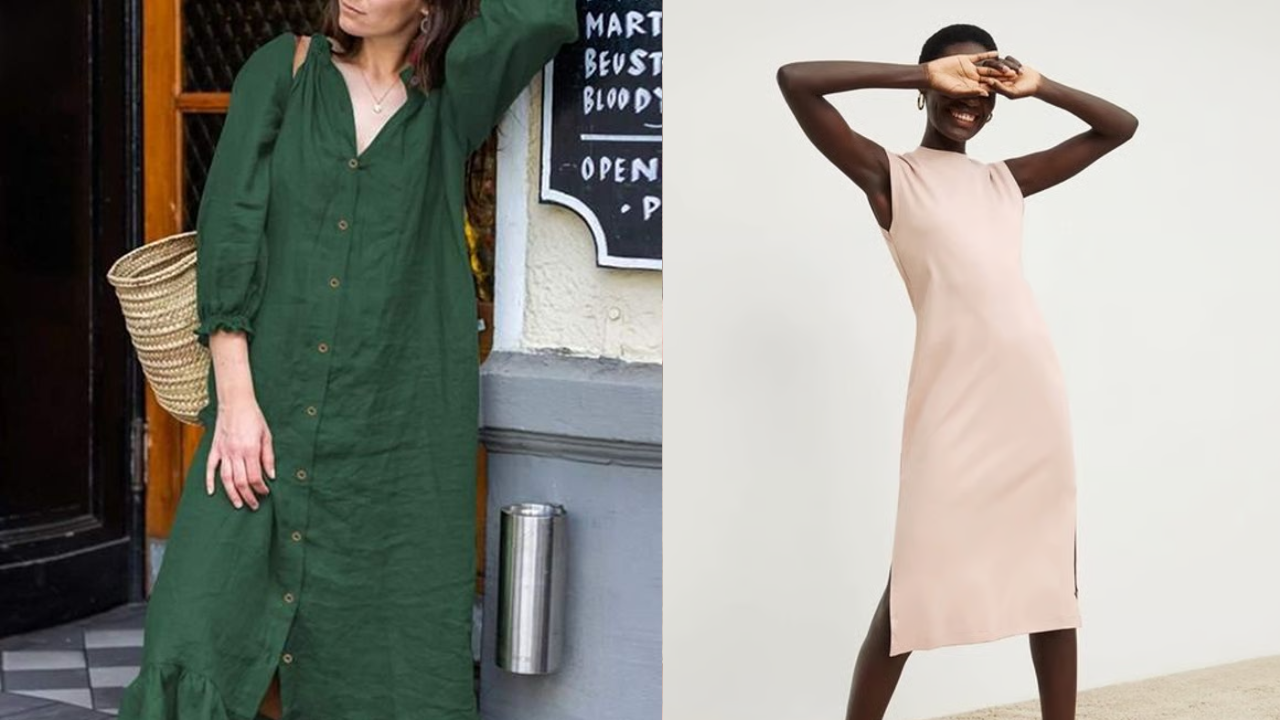
The trade-off? Linen has zero elasticity. That’s why it wrinkles the second you look at it. But in the world of sustainable style, those wrinkles are a badge of honor—a sign of natural fiber.
It is arguably the most breathable fabric in existence, making it a non-negotiable for hot climates. Plus, it’s fully biodegradable. When a linen shirt finally falls apart (which takes a long time, given its strength), it returns to the earth without leaving a trace.
We all love cotton, but standard cotton is thirsty and pesticide-heavy. Enter Pima (or Supima) cotton. This is an Extra-Long Staple (ELS) cotton. Because the fibers are longer, the fabric is softer, stronger, and holds color better than your average tee.
Pima’s sustainability argument is a bit different: it’s about longevity.
While it still needs water to grow, a Pima cotton shirt can last 50% longer than a standard one. It resists tearing and pilling, meaning you aren’t throwing it out after ten washes. It’s the embodiment of “buy less, choose better.”
The next time you’re shopping, check the tag. If you need gym gear, synthetics have their place. But for everything else? Choose Linen for the heat, Tencel for the feel, and Pima for the pieces you want to love for years. Your skin—and the planet—will notice the difference.