
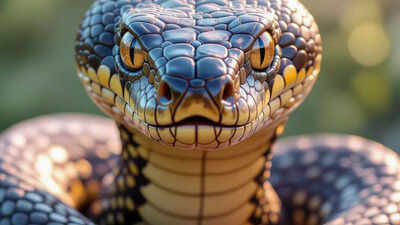
King cobra is the only snake species that builds its own nest like birds. This sounds strange yet fascinating to the long-held belief that snakes live mostly underground. In the forests of South India, something remarkable happens every April. The female king cobra, one of the longest and most venomous snakes in the world, begins something which is almost unheard of among reptiles. Experts say this is the only snake species that exhibits this behaviour. The nest is not just a simple pile of leaves but it is a carefully constructed structure, nearly one metre high, designed to protect her eggs for months.
King cobras: Inside the secret world of their nest
King cobras do not build their nests randomly; instead they select well-drained spots, often under large trees or within clumps of bamboo.
It appears they prefer a balance of shade and protection from the elements. Romulus Whitaker, the renowned herpetologist, explains that females might spend several days scouting before starting construction as reported by BBC Wildlife. Nests can reportedly measure up to 1. 4 metres wide and 55 centimetres high as wide as a small dining table. Each leaf is gathered carefully, moved, and positioned using the snake’s body in a tight coil.
How mother king cobras build and guard their protective leaf nests
Once the leaf pile is big enough, the female king cobra begins pressing it down. She crawls over the leaves again and again, making a tight, waterproof mound. Then she digs into the heap to form a cup-shaped hollow. This is where she lays her eggs, which can number anywhere from 15 to 50. Female king cobras usually stay on or near their nests for the full 75 to 100 days it takes for the eggs to hatch. Their presence helps keep predators away, including small mammals, monitor lizards, and even other snakes.
The behaviour looks almost like motherhood. While the snake does not warm the eggs directly, her watchfulness helps keep them safe. Nests that are well made have a much better chance of protecting the eggs. Observers have noted that these nests can survive light rains and remain intact for weeks if left undisturbed.
King cobra nests: Smart and careful work by mother snakes
The female moves hundreds of leaves, picking and arranging each one carefully. The work is tiring, but she manages it successfully. The nest keeps the eggs safe and helps ensure the next generation survives. Scientists are still studying this behaviour to understand why it developed.


