
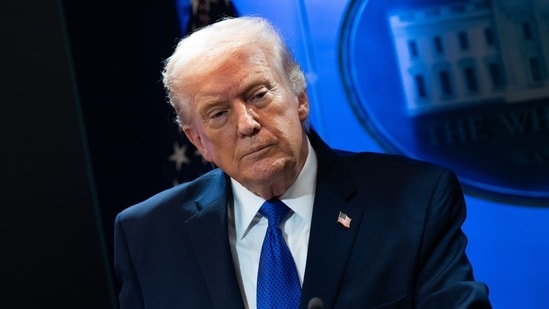
The Supreme Court on Friday struck down US President Donald Trump’s far-reaching global tariffs, delivering a significant setback on an issue central to his economic agenda.
In a 6–3 ruling, the court invalidated tariffs Trump had imposed unilaterally under an emergency powers statute, including the sweeping “reciprocal” tariffs applied to nearly every other country.
The decision marks the first major element of Trump’s broader policy program to be reviewed by the nation’s highest court.
Experts at The Asia Group say the Supreme Court’s decision striking down President Donald Trump’s global tariffs is likely to inject fresh uncertainty into trade and investment flows.
Landmark decision, but questions on compensation and calibration
Kurt Campbell, chairman and co-founder of The Asia Group and former US deputy secretary of state, described the judgment as a defining moment for presidential trade authority and the direction of U.S. economic policy.
“Today’s Supreme Court decision on IEEPA is a landmark decision on the legality of the Trump administration’s decision to use various legal parameters to implement their economic vision, leaning heavily on both sanctions and tariffs,” Campbell said.
While emphasizing that “the court’s decision is clear,” Campbell cautioned that reactions from allies and partners highlight continuing uncertainty.
“What does this mean for redress, given some of the harm that has been done to certain economies and companies? Will the Trump administration seek to use other executive authorities to reinstitute similar tariffs?” he asked.
He added that upcoming diplomatic engagements — including a visit by the Japanese prime minister and President Trump’s planned trip to China — may now require recalibration.
Campbell also argued that the ruling represents a broader political inflection point.
“Still, the importance of this judgment is another step in piercing President Trump’s seeming invincibility,” he said, pointing to recent domestic tensions and Congress signaling “its discomfort with the tariff policies.”
Unlikely to slow momentum, administration can absorb shocks
Not all observers, however, view the ruling as a meaningful constraint on White House momentum.
Nirav Patel, chairman of the board, chief executive officer, and co-founder of The Asia Group, suggested the administration had long anticipated such an outcome.
“The Trump administration has shown it can absorb setbacks and move fast. Today’s ruling was anticipated inside the White House, and it is unlikely to slow momentum,” Patel said.
He warned that businesses hoping for stability may instead face renewed disruption.
“Rather than clarity, today’s ruling may usher in a new period of volatility.”
Sharp injection of uncertainty
Rexon Ryu, president of The Asia Group, emphasized the immediate implications for US trading partners, particularly in Asia.
“The immediate impact of this ruling is a sharp injection of uncertainty, particularly for US trading partners in Asia who are likely to adopt a cautious, wait-and-see approach,” Ryu said.
Despite the legal setback, he noted that governments are unlikely to reverse recent bilateral understandings.
“A key takeaway for companies is that countries are unlikely to unwind bilateral arrangements reached over the last year.”
Ryu outlined three near-term watch points: the implications for President Trump’s upcoming China visit, Japan’s investment posture ahead of Prime Minister Takaichi’s Washington trip, and whether Congress revisits debates over legislative authority on trade.
Cautious response to the ruling is the right one
Dan Kritenbrink, partner at The Asia Group and former assistant secretary of state for East Asian and Pacific affairs, echoed expectations of caution rather than abrupt policy shifts.
“A cautious response to today’s ruling is the right one, and it’s what I expect to see from both international partners and businesses,” Kritenbrink said.
He stressed that while the ruling complicates the administration’s trade agenda, its broader objectives remain unchanged.
“The administration’s framework and objectives — reducing trade deficits, reshoring supply chains, and incentivizing U.S. investment and manufacturing, remain unchanged.”
Although alternative trade tools are “more limited in scope,” Kritenbrink said the White House still retains “multiple ways to generate leverage.”
Narrows executive options and a complicated situation
Brett Fetterly, managing principal at The Asia Group and a US legislative expert, framed the decision as narrowing executive options while increasing political pressure on Congress.
“The court’s decision limiting presidential tariff authority leaves the White House with two options: politically pressure the Congress to grant expansive tariff power… or pursue a patchwork of existing authorities to backfill lost leverage,” Fetterly said.
He added that congressional Republicans may prove increasingly sensitive to inflation risks tied to tariff policies, describing “a party less willing to fall in line.”
The ruling, he argued, could also complicate US–China diplomacy.
“The ruling also complicates upcoming U.S.–China talks… by weakening tariff leverage and raising the risk that any moves to backfill reciprocal tariffs with alternative measures are seen as escalatory by the Chinese.”
Time for reassessment
Jennifer Schuch-Page, managing principal at The Asia Group, highlighted potential ripple effects in energy and investment negotiations.
“It’s notable that energy purchases from the US and investments in the US energy sector… have benefited from the bilateral trade talks,” she said.
However, Schuch-Page cautioned that Asian partners may now reassess deals more carefully.
“I could see Asian trade partners becoming more cautious and selective… to ensure the credibility of the economic rationale and bankability.”


