
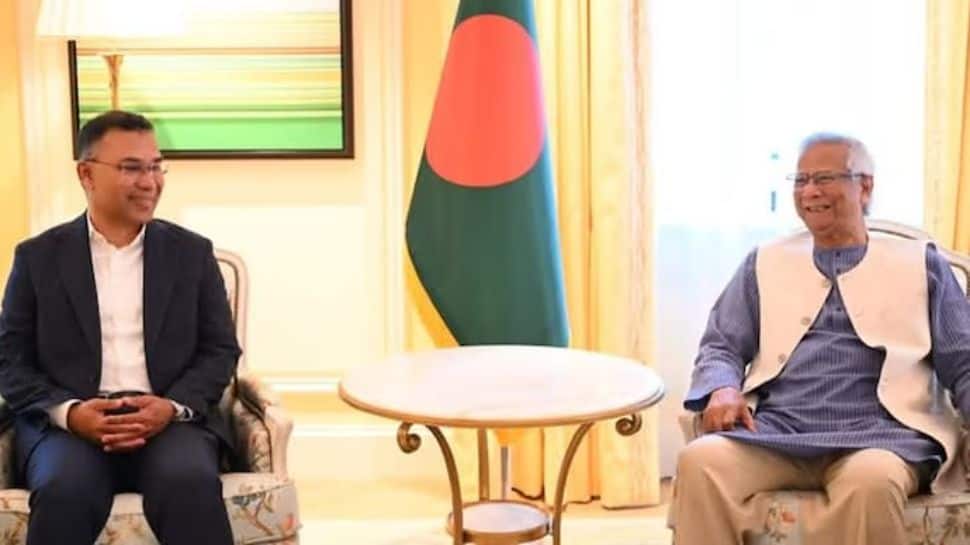
Dhaka/New Delhi: In the port city of Chattogram on Bangladesh’s south-eastern coast, a boy once walked through narrow lanes with a scout’s scarf around his neck and curiosity in his eyes. Former Bangladesh Chief Adviser Muhammad Yunus grew up there as the third of nine children in a modest household. He travelled as a teenager to international jamborees in Japan, the United States and parts of Europe. Those journeys widened his world long before politics entered his life.
A Fulbright scholarship took him to the Vanderbilt University. He completed a doctorate in economics in 1971 and later taught at the Middle Tennessee State University. The war for Bangladesh’s independence changed his direction. During the 1971 liberation struggle against Pakistan, he lobbied American officials to recognise the new nation and helped circulate a newsletter for the Bangladeshi diaspora.
He returned home in 1972 with an aim to help rebuild a country led by Sheikh Mujibur Rahman. He joined the planning commission and later went back to teaching economics in his hometown.
From Nobel laureate to political challenger
Yunus achieved global recognition decades later when he received the Nobel Peace Prize in 2006. Public expectations grew and many urged him to enter politics. In August 2007, he announced a party named Nagorik Shakti, but the experiment failed almost immediately. He later said the idea had looked noble from a distance. The ground reality felt very different. He tried to bring in individuals with clean reputations, but many refused to enter politics. Those who expressed interest belonged to the very circle he wanted to replace. He chose to step back instead of lowering his standards.
His entry into politics unsettled Bangladesh’s two main parties. Sheikh Hasina warned that sudden entrants into politics could be risky. Moudud Ahmed welcomed him but suggested he would be better outside party politics. When Hasina returned to power in 2009, relations between her and Yunus deteriorated. Investigations were launched against him and the Grameen Bank. The atmosphere grew tense. Senior leaders used harsh language against him in public. Allegations were leveled against his bank that its loan recovery practices targeting rural women were coercive.
The uprising that changed Dhaka
By July 2024, students-led mass protests had spread across Bangladesh and anger was against then Prime Minister Sheikh Hasina and her government. In early August, she stepped down and left for India. Student leaders contacted Yunus in Europe and urged him to return home to lead an interim administration. He agreed and headed a transitional government for nearly 18 months.
During this period, relations between Dhaka and New Delhi weakened. Yunus defended himself, arguing that he was not responsible for the decline. He alleged India was uneasy with the student-led movement and with demands seeking Hasina’s return for legal action. India continued to host the former prime minister.
At the same time, Indian officials raised concerns about attacks on the Hindu minority in Bangladesh and alleged increasing visibility of hardline political groups under the interim government.
Yunus received backing from the Bangladesh Nationalist Party and the Jamaat-e-Islami. His administration lifted the ban on the Jamaat and allowed it to contest elections. Former Prime Minister Khaleda Zia was released from prison during this phase. Her son Tarique Rahman returned to Dhaka after 17 years in London. When he later became prime minister, retired diplomat Khalilur Rahman joined his cabinet as foreign minister. He had earlier served as national security adviser under Yunus.
Why Delhi grew more comfortable with Rahman
Many observers see a noticeable difference in India’s approach. New Delhi appears more at ease with Rahman than it was with Yunus. Analysts in Dhaka and Delhi point to several reasons.
Some refer to developments during Yunus’s tenure that unsettled India. In December 2024, a Pakistani cargo vessel docked at Chattogram port. It marked the first direct sea link between Bangladesh and Pakistan since the 1971 war. The move drew attention in India.
Statements from leaders close to Yunus about India’s northeastern states triggered debate in Indian policy circles. Bangladesh’s stand on certain sporting matters and visible engagement between Bangladeshi military officials and Pakistan added to concerns in New Delhi.
Many experts said geography binds India and Bangladesh closely. Dhaka plays an important role in India’s plans to strengthen road, rail and trade links to the eastern region. Over the past 18 months, ties weakened not only between governments but also among business groups, academics and civil society organisations.
China and Pakistan expanded their outreach to Bangladesh during the same period. Experts argued that India, as the larger neighbour, carries greater responsibility to repair ties and restore stability.
Critics of Delhi’s position questioned India’s focus on minority safety in Bangladesh. They argued that moral authority requires consistency at home. They see elements of double standards in public messaging. Supporters of India’s position respond that security concerns deserve attention regardless of political change.
Yunus travelled to China from March 26 to March 29 last year. The visit attracted attention in India. Officials in Dhaka indicated that he had first sought a visit to Delhi and received no reply. Indian commentators stated that relations had already weakened by then and that earlier statements from Dhaka had added to discomfort.
Muhammad Yunus’s journey includes achievement, admiration and controversy. The relationship between India and Bangladesh is defined by shared history, emotion and strategic interests. The bond rests on the memory of 1971, domestic politics in both countries and the decisions of leaders who are accountable to their people.


