
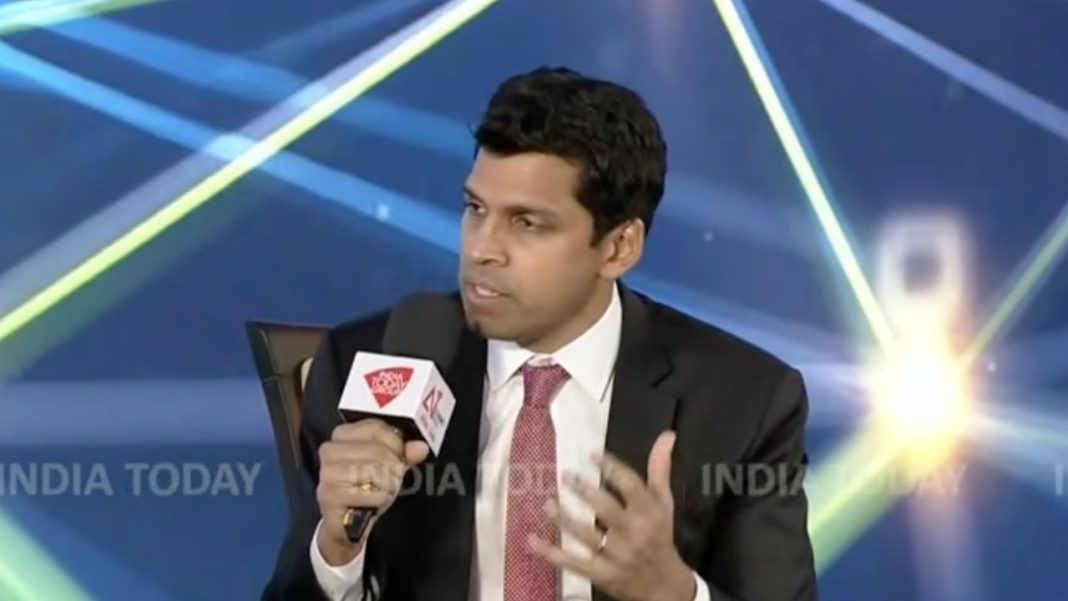
Artificial intelligence (AI) is not hype and it is not a passing bubble. It is already reshaping economies, and India has a real opportunity to lead if it makes the right investments. That was the central message from Dr. Aaron Ronnie Chatterji, Chief Economist at OpenAI, at the India Today AI Summit 2026.
Asked whether AI is a bubble or the real thing, Chatterji was unequivocal. “I have studied prior economic recessions, bubbles and technological waves from the printing press to the semiconductor to the internet. AI is real,” he said.
“You are seeing users around the world adopt these tools and get real value out of them.”
He pointed to scale to make his case. OpenAI now has 900 million weekly active users globally, including 100 million in India. “That is real value,” he said. “There are a million businesses that are our customers. There are billions of dollars of revenue being realised around AI.”
India, he said, is one of OpenAI’s fastest-growing markets, with 2.5 times year-on-year growth. Usage is particularly strong in coding and data analysis, areas that directly feed into productivity.
On whether India is playing catch-up to the United States and China, which dominate AI infrastructure investment, Chatterji was candid but optimistic. “Massive investments are going to be required in India to play in the intelligence age,” he said. “But we are still in the early innings.”
He highlighted India’s advantages, including more than one million STEM graduates each year and a strong base of digital public infrastructure. “India and AI are going to go together,” he said. “It is the talent, it is the usage, it is the potential for investment in infrastructure.”
Responding to questions about whether OpenAI’s India push is about monetisation, Chatterji framed it around both mission and growth.
“One of the reasons I joined OpenAI is the mission to benefit all humanity,” he said, noting efforts to expand access and affordability in India. At the same time, he described India as a hotbed of entrepreneurship. “When I see what students are building here, I know that person is going to start a company tomorrow,” he said.
He pointed to agriculture as one sector where AI can make a concrete difference. With 58 percent of India’s population dependent on agriculture but the sector contributing about 16 percent to national income, productivity gains are critical.
“You can put intelligence into a farmer’s hand,” he said, referring to guidance on fertiliser use, crop methods and practical learning. “The number one uses of ChatGPT are practical guidance and learning. That can help in agriculture or in the classroom.”
The conversation turned sharp on jobs. With many Indian firms reportedly slowing hiring after adopting AI, Chatterji acknowledged public anxiety. “When people have anxiety about jobs, whether or not that is borne out in the data, it is real,” he said.
He cited research suggesting that in India AI is largely complementing workers rather than replacing them. Historically, he argued, new technologies increase productivity before they reduce employment. “Your job is much more likely to be taken by someone who knows AI than by AI itself,” he said.
However, he conceded that the transition will be difficult without rapid upskilling. Only a small percentage of firms have trained more than half their workforce in AI tools. Without training, he warned, the country risks widening inequality. “If we leave people behind and AI results in more productivity, you are going to find a bigger divide between people who are using it and people who do not know how to use it.”
On global market volatility driven by AI fears, Chatterji declined to predict stock movements but said improving AI capabilities are forcing investors to reassess entire sectors. Even so, he believes companies with deep expertise in areas such as finance, healthcare and law will continue to create value.
Trust and safety formed the third pillar of his remarks. From deepfakes to child safety and national security, he acknowledged the risks. “Every new technology brings opportunities but also real challenges,” he said. He stressed that safety is central to OpenAI’s mission and that cooperation with governments will be essential.
At the same time, he cautioned policymakers against overregulation. “The challenge is to protect security and privacy, make products safe, but still use AI in the economy to drive productivity,” he said.
On infrastructure, Chatterji was direct. India needs a significant shift in how it invests in manufacturing, energy and grid connectivity to compete with global leaders. He identified three priorities: strengthening the manufacturing workforce, expanding domestic energy supply and improving grid and permitting processes for data centres.
Looking ahead to 2030, he admitted that even he had underestimated the speed of AI progress. “I underestimated how quickly the capabilities were advancing,” he said.
Countries and companies that train their workforce quickly will lead, he argued. Those that fail to close the skills gap will fall behind. “I expect India to be in a good position in four or five years,” he said.
The message from the summit was clear. AI is no longer theoretical. For India, the decisive factor will be how fast it can build skills, infrastructure and trust to shape technology’s impact on its own terms.


