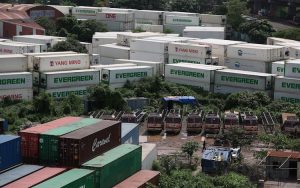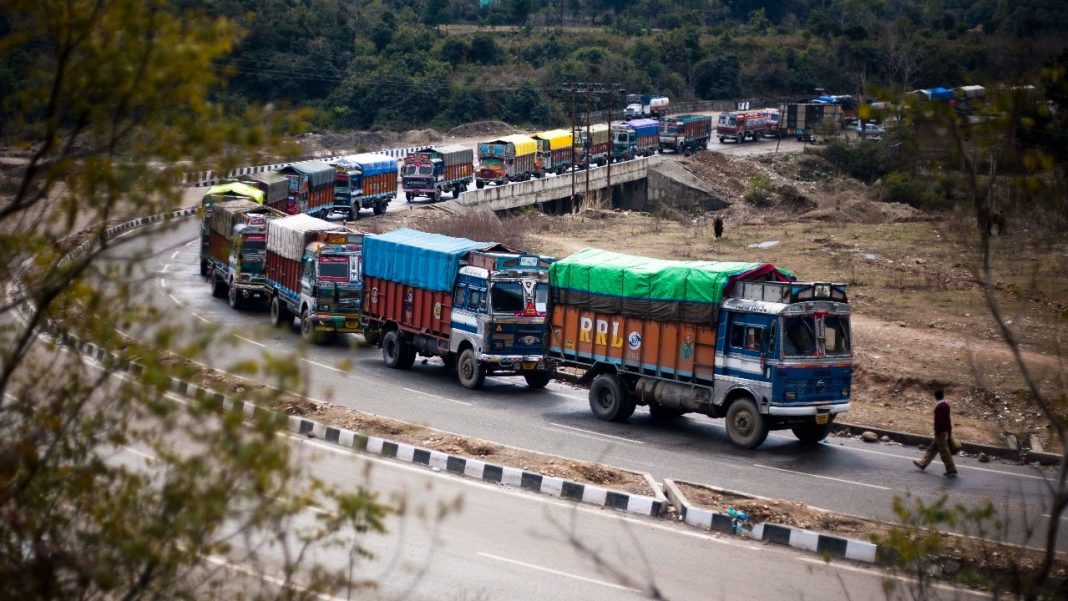
India moves billions of tonnes of goods every year.
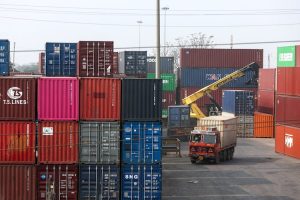
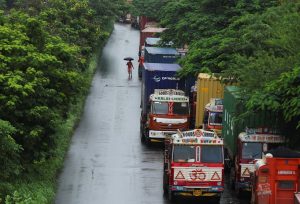
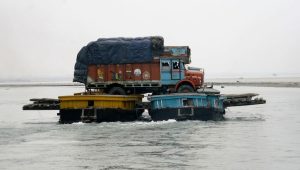
This vast amount of bulk goods is called freight, and it relies on various types of transportation to be delivered across the country. A large part of this transportation is facilitated by thousands of trucks that run day and night carrying goods and products.
Trucks make up just 3 per cent of all vehicles on Indian roads, yet they are responsible for 53 per cent of all particulate matter emissions. This includes over 60 per cent of black carbon, and more than 70 per cent of nitrogen oxide (NOx) emissions from the entire road transport sector.

In a normal scenario, emissions from medium and heavy-duty vehicles are projected to rise from 27 per cent of total road transport emissions in 2019-20 to 35 per cent by 2030-31. Meanwhile, India’s freight demand is expected to nearly triple in the same period.
A new report released by Smart Freight Centre (SFC) India, TERI, and IIM-Bangalore is now putting hard data behind the problem and proposing a national roadmap to fix it.
WHY DO TRUCKS POLLUTE MORE?
The reason why heavy, rumbling vehicles pollute more than cars or bikes or jeeps or any other vehicle comes down to age, fuel, and volume.
The majority of India’s heavy freight fleet runs on diesel, and a significant share of those trucks are over 10 years old.
Older diesel trucks are disproportionately damaging, as vehicles beyond a decade of use account for the lion’s share of black carbon and particulate matter from the entire heavy vehicle segment.
PM and NOx emissions found in frequent freight routes and regions create toxic and polluted hotspots, affecting people that live and work there, hotspots that city-wide air quality averages routinely fail to capture.

HOW MUCH OF THE EMISSIONS ARE MEASURED?
Despite the alarming scale and consistency of freight emissions, almost none of the emissions are consistently measured.
Of 800 companies reporting under SEBI’s mandatory Business Responsibility and Sustainability Reporting (BRSR) framework, only 7 per cent disclose freight-specific emissions.
“Going ahead, freight emissions accounting will need to be integrated with other pillars of logistics infrastructure, supporting efficiency, competitiveness, and sustainability together,” said Mr Sagar Kadu with India’s Ministry of Commerce and Industry.
The few that do are working from entirely different methodologies.
The report mentioned how one cement company’s freight emissions, calculated across five different global frameworks, ranged from 265 to 3,000 thousand tonnes of CO2 per year.
That four-fold variation is not a measurement quirk. It is a systemic failure that makes corporate climate disclosures on freight effectively meaningless.

CAN EMISSIONS BE FIXED AND HOW?
Think of it like standardising weights and measures at a market.
Right now, every vendor is using a different scale. Therefore, nobody really knows who is selling more or less than they claim.
The released report proposes giving every shipper, truck operator, and logistics company the same scale to work with.
That scale is ISO 14083, the globally accepted standard for calculating transport emissions, adapted with India-specific data that reflects how freight actually moves across state highways.
“You cannot decarbonise what you cannot measure,” said Deepali Thakur of Smart Freight Centre India. “The development of standardised methodologies and India-specific emission factors strengthens the technical basis for informed, targeted interventions.”
Once everyone is measuring the same way, the data becomes useful. Companies can identify their most polluting routes and fix them. Policymakers can target the worst offenders rather than guessing. And carriers can convert those verified improvements into a revenue stream using carbon credits under India’s Carbon Credit Trading Scheme.

WHAT WILL INDIA LOSE WITHOUT ACTION?
If the problem is not addressed adequately and in time, India stands to lose a lot, and not just in terms of air quality.
The rest of the world is beginning to charge a price for the pollution that is a result of certain products it imports.
The European Union’s Carbon Border Adjustment Mechanism, which came into full effect in 2026, essentially means that if an Indian exporter cannot prove how much carbon went into making and shipping their product, they will pay a penalty at the European border.
For Indian companies that move goods by road and have no reliable emissions data to show for it, this is a direct hit to their competitiveness in one of the world’s biggest markets.
Closer to home, the cost of inaction shows up in hospital bills, lost workdays, and the slow poisoning of air in towns and cities strung along India’s freight corridors.

The good news is that the problem is solvable.
The data exists, the global frameworks are available, and India now has a locally grounded roadmap to act on.
3 per cent of vehicles are causing the majority of the damage; that is also 3 per cent where targeted action can deliver outsized results.