
18.1 C
Delhi
Wednesday, February 18, 2026

What does rules-based world order mean? Why German chancellor’s statement triggered debate

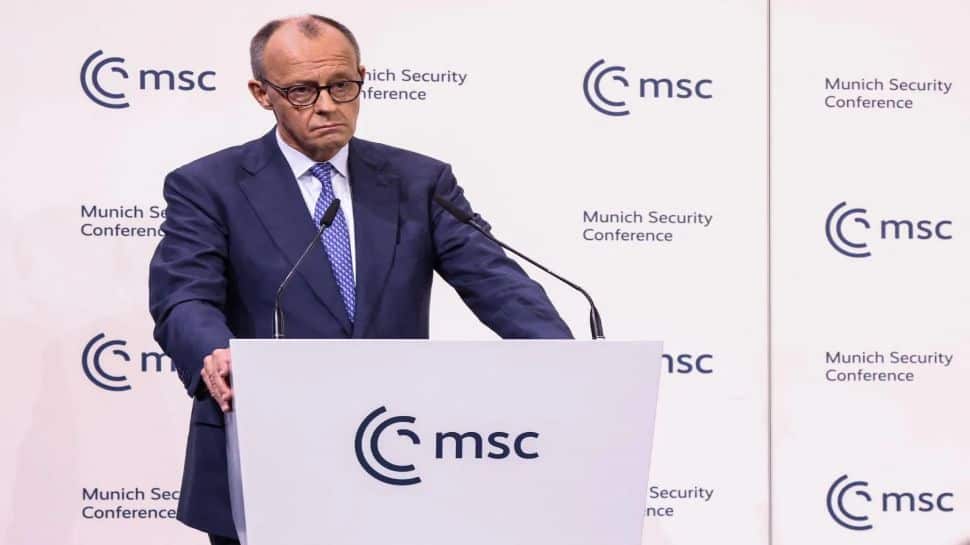
New Delhi: German Chancellor Friedrich Merz stirred a debate after he said at the 2026 Munich Security Conference that the rules-based world order has ended and has been replaced by competition among great powers. He further said that the international system established after World War II, which prioritised diplomacy and international law to maintain peace and cooperation, no longer functions as intended.

The system was designed to prevent conflicts through agreed rules rather than military might. Over time, it incorporated agreements on trade, finance, security in addition to institutions such as the United Nations (UN), the World Trade Organisation (WTO) and the International Monetary Fund (IMF).

He emphasised that the principles of a rules-based world order, including respect for democratic values, human rights, open markets, economic cooperation, multilateralism and collective action on global challenges, face growing pressure as global power dynamics changes. The purpose of the system has been to manage international disputes through established channels, reduce uncertainty, lower the risk of conflict and foster global cooperation.

Supporters say that while the system was led by Western powers, it has prevented large-scale wars, facilitated decades of economic growth and strengthened international collaboration. Critics, particularly from Russia, China and some developing nations, argue that the system shows Western bias, limits representation for emerging powers and struggles to remain relevant in a multipolar world. They point to institutions like the UN Security Council (UNSC), where permanent membership is restricted to five countries, as evidence of an outdated structure.

New initiatives from China, such as the Belt and Road Initiative, demonstrate alternative approaches to international governance, challenging the existing rules-based framework.

Analysts say that the system’s future depends on its ability to adapt to modern challenges, become more inclusive and better reflect the interests of all nations. The changing balance of global power, with emerging and regional players asserting themselves, is testing the resilience of the rules-based order.

Political observers say the world is at a crossroads. Whether the system can be reformed to maintain peace, prosperity and fairness or whether it will be replaced by a new global order is a defining question for international relations in the 21st century. The coming years will reveal whether this system can uphold its founding principles while adjusting to the realities of a changing world.


Latest

Bangladesh: Why Tarique Rahman’s BNP rejected Constitution Reform Council oath: Will BNP implement July Charter?

While BNP’s newly elected lawmakers were sworn in as members of parliament, they declined to take a separate pledge to serve on the Constitution Reform Counci

India, France announce Joint Declaration of Intent for cooperation in critical minerals

India and France welcomed the Joint Declaration of Intent on cooperation in the field of critical minerals between France and India, the joint statement shared

Flying nuclear reactor? US creates history – why this technology matters for India

The reactor involved was Ward 250, which belongs to a new class of compact microreactors.

DNA evidence yields no database match in search for Savannah Guthrie’s mother

Authorities say DNA from gloves found near Nancy Guthrie's Arizona home did not match anyone in the national database as the search and investigation continue.

Tony Clark family: Who is his wife, Frances? All on their three children amid ‘affair’

After Tony Clark resigned amid an alleged affair, attention turned to his family life: he’s married to Frances Clark and has three children.

Topics

RRB Group D Answer Key 2026 released, raise objection till February 23

Railway Recruitment Board has released RRB Group D Answer...

Bangladesh: Why Tarique Rahman’s BNP rejected Constitution Reform Council oath: Will BNP implement July Charter?

While BNP’s newly elected lawmakers were sworn in as members of parliament, they declined to take a separate pledge to serve on the Constitution Reform Counci

Quote of the Day by Father of Robotics: I can’t define a robot, but I know one when I see one

At a time when robots were only beginning to enter factory floors, Joseph Engelberger, known as the Father of Robotics, shared a thought that captured the uncer

India, France announce Joint Declaration of Intent for cooperation in critical minerals

India and France welcomed the Joint Declaration of Intent on cooperation in the field of critical minerals between France and India, the joint statement shared

Inside IIT Gandhinagar’s prototype lab: Project Madhav leads innovation

IIT Gandhinagar is set to revolutionise classrooms at an early age. The toolkit it is preparing could change how India manufactures. Here is the story of the II

School assembly news headlines, February 18: Top India, world, sports, business news

School Assembly News Headlines for February 18 : From major policy moves in Delhi and Kerala's historic milestone to global peace efforts and natural disasters,

Flying nuclear reactor? US creates history – why this technology matters for India

The reactor involved was Ward 250, which belongs to a new class of compact microreactors.
spot_img

Related Articles

Popular Categories

spot_imgspot_img