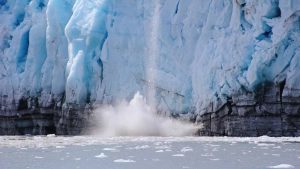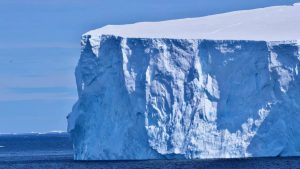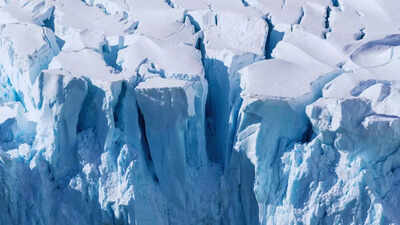
In one of the most distant and harsh environments on the planet, there is a glacier that has become a symbol of the world’s climate worries. Known commonly as the “Doomsday Glacier,” the Thwaites Glacier is situated in Antarctica, in the West Antarctic region, where it empties into the Amundsen Sea. Although it is one of the most distant places from human habitation, this massive ice body has serious implications for coastlines all over the world.
Where is the Thwaites Glacier?
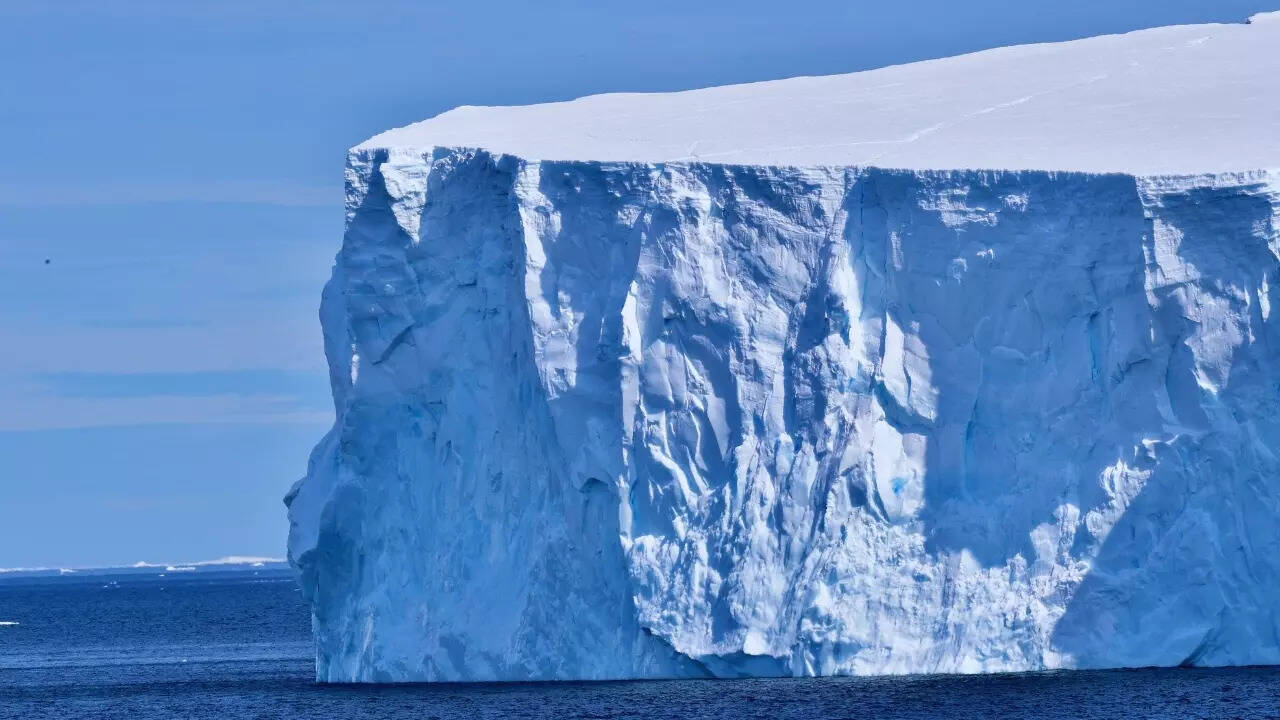
The Thwaites Glacier is situated in the Amundsen Sea region of West Antarctica. It is one of the widest glaciers in the world, measuring approximately 120 kilometers (about 75 miles) wide. With an area similar in size to Great Britain, it drains a massive part of the West Antarctic Ice Sheet into the ocean.
The glacier moves from the interior of the ice sheet towards the Amundsen Sea, where a floating ice shelf, an extension of the glacier that is in contact with seawater, helps to slow the motion of the inland ice. This floating part of the ice shelf serves as a natural buttress, resisting the pressure of the massive ice sheet that is behind it. When the resistance offered by the buttress is reduced, the inland ice moves more quickly into the ocean.
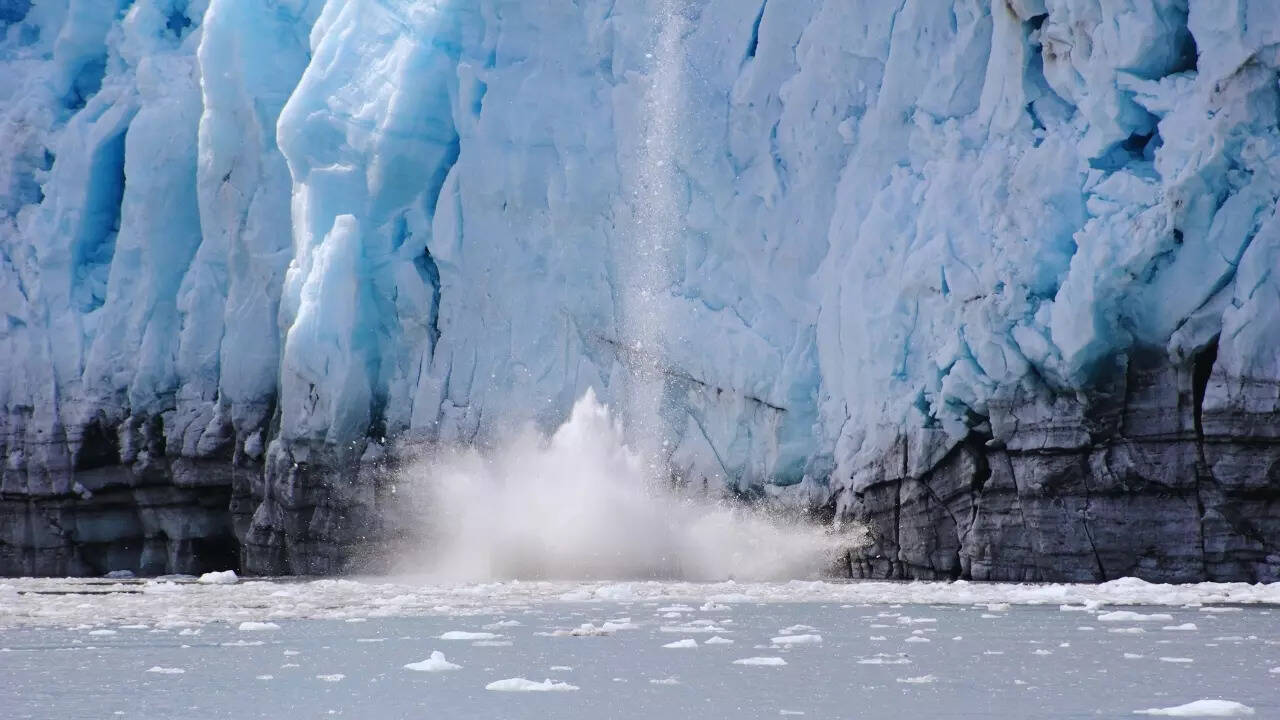
The alarming nickname ‘Doomsday Glacier’ has its roots in scientific concern rather than in sensationalism. Thwaites Glacier has been losing ice at an increasingly rapid rate, and scientists think that the continued melting of the glacier could be a major cause of global sea levels rising.
Thwaites alone contains enough ice to raise global sea levels by more than half a metre (about two feet) if it were to melt completely.
That figure by itself is alarming. However, the greater concern lies in its role as a “keystone” glacier. It helps stabilise surrounding glaciers in West Antarctica. If Thwaites were to collapse or retreat substantially, it could destabilise neighbouring ice systems.
Because of these high-stakes implications, the media began referring to it as the “Doomsday Glacier”, a shorthand for its potential long-term global impact.
Why is Thwaites so fragile?
One of the key elements that lead to the instability of the Thwaites Glacier is its position. A significant portion of the glacier is grounded on bedrock that descends towards the center. This makes the glacier susceptible to a process known as marine ice sheet instability.
In summary, the warm ocean water melts the bottom portion of the ice shelf of the glacier, and the grounding line, which is the point where the glacier starts floating on top of the bedrock, moves towards the land.
Once the grounding line reaches the deeper regions of the bedrock, the portion of the ice that comes into contact with the warm water rises, melting faster. This creates a vicious cycle that makes it difficult to stop the glacier from retreating past a certain point.
A study has shown that a warm circumpolar deep water mass is flowing into the glacier through an underwater channel. This has weakened the ice shelf and caused the glacier to move faster towards the ocean.
Some of the largest scientific endeavors that have been conducted on the glacier include the International Thwaites Glacier Collaboration (ITGC), which is a joint scientific research effort between the United States of America and the United Kingdom that started in 2018.
Notably, scientists do not foresee an imminent, abrupt collapse in the near future. Rather, the worry is about the long-term instability that may persist for decades to centuries.
The magnitude of ice sheet change occurs over a long period, but once certain tipping points are passed, the melting may become hard to reverse.
Did you know that if Thwaites Glacier melts away, it could raise global sea levels by over half a meter? However, its collapse may also have a destabilizing effect on other glaciers in West Antarctica, such as Pine Island Glacier, which are all part of the same drainage basin. It is important to note that the entire West Antarctic Ice Sheet has enough ice to raise global sea levels by several meters.
While a complete collapse would take centuries rather than years, a rise in sea levels poses a threat to coastal cities worldwide.
A rise in sea levels results in an increase in the flooding of coastal areas, erosion, saltwater intrusion into freshwater sources, and intensification of the effects of storm surges during natural disasters such as hurricanes. Cities such as Mumbai, Kolkata, New York, Shanghai, and many others could face greater long-term vulnerability as global sea levels rise.
Is the name “Doomsday” accurate?
There is no indication that Thwaites Glacier is about to catastrophically fail overnight. Rather, it is a sign of a gradual but potentially revolutionary change in the Earth’s ice dynamics. The name has at least raised awareness about the larger problem of climate change and melting polar ice caps.
Thwaites Glacier is more than a distant ice mass in Antarctica. It is a critical component of the global climate system. Its ongoing retreat illustrates the complex relationship between rising global temperatures, warming oceans, and ice-sheet dynamics.