
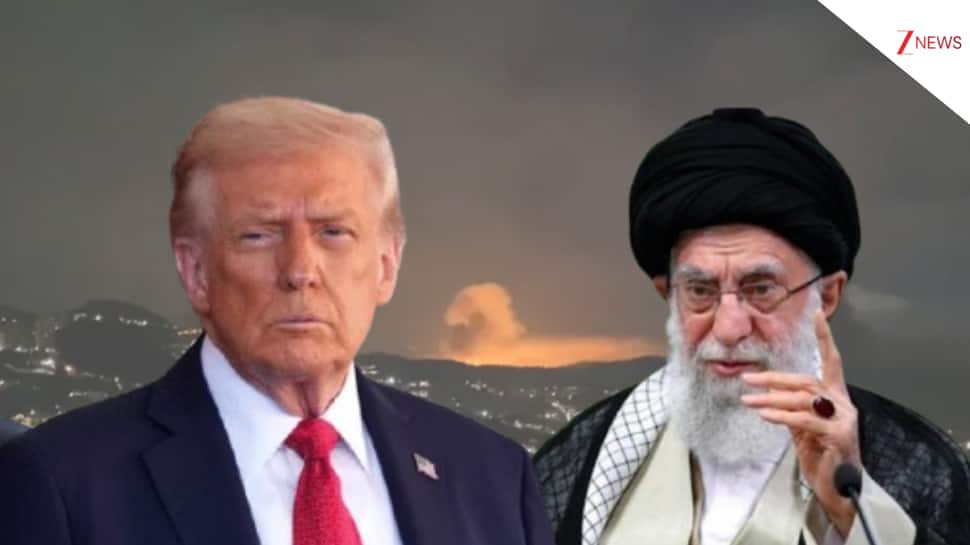
Iran launched missiles towards the Strait of Hormuz on Tuesday as indirect nuclear talks with the United States began in Geneva, amid rising tensions in the region. The United States has concurrently increased its military presence in the Middle East, while Iran conducts large-scale maritime exercises in strategic waterways through which roughly 20% of the world’s oil passes.
The semi-official Tasnim News Agency, closely associated with Iran’s Revolutionary Guard, reported that missiles fired from sites within Iran and along its coast successfully struck designated targets in the Strait of Hormuz.
Speaking about the drills, Iran’s Supreme Leader Ali Khamenei stated, “The Americans constantly say that they’ve sent a warship toward Iran. Of course, a warship is a dangerous piece of military hardware. However, more dangerous than that warship is the weapon that can send that warship to the bottom of the sea.”
Iranian state television reported that the Geneva talks would be limited to Iran’s nuclear programme, excluding discussions on domestic policies or the recent crackdown on nationwide protests.
US President Donald Trump has repeatedly warned that military force could be used to compel Iran to curtail its nuclear ambitions. Iran, in turn, has threatened retaliatory action. Speaking aboard Air Force One, Trump described Iran as “typically a very tough negotiator” but expressed hope for a deal, saying, “I think they want to make a deal. I don’t think they want the consequences of not making a deal.”
Iranian Foreign Minister Abbas Araghchi, leading Tehran’s delegation, met the head of the UN nuclear watchdog in Geneva on Monday. On X, he wrote: “I am in Geneva with real ideas to achieve a fair and equitable deal. What is not on the table, submission before threats.”
The talks follow a first indirect round held on 6 February in Oman. US envoys Steve Witkoff and Jared Kushner travelled to Geneva for the latest round, while Secretary of State Marco Rubio, visiting Budapest, emphasised that the administration prefers negotiated, peaceful outcomes.
Tensions in the Gulf have intensified after Iran conducted a paramilitary exercise early Monday in the Strait of Hormuz, the Persian Gulf, and the Gulf of Oman. EOS Risk Group reported that sailors in the region received warnings of live-fire drills in Iranian territorial waters.
The US has also increased its naval deployment, sending the USS Gerald R. Ford, the world’s largest aircraft carrier, to join the USS Abraham Lincoln and other assets in the region. US forces recently shot down an Iranian drone near the Lincoln and faced challenges when Iran attempted to block a US-flagged vessel in the Strait of Hormuz.
The heightened standoff comes amid Iran marking the 40-day mourning period following one of the deadliest days in a recent crackdown on nationwide protests, which activists say claimed at least 7,015 lives between 8 and 9 January. The government blamed “violent actions by armed groups allegedly directed by foreign intelligence agencies” and plans a memorial at the Grand Mosalla mosque in Tehran.
Iran’s Deputy Foreign Minister Majid Takht-Ravanchi indicated that Tehran may consider a compromise on the nuclear programme if sanctions relief is addressed. “The ball is in America’s court. They have to prove they want to have a deal with us,” he told the BBC.
The US-Iran negotiations aim to limit Iran’s nuclear programme and prevent weaponisation. Iran maintains that its nuclear activities are peaceful, despite previously enriching uranium to 60% purity, near weapons-grade levels.


