
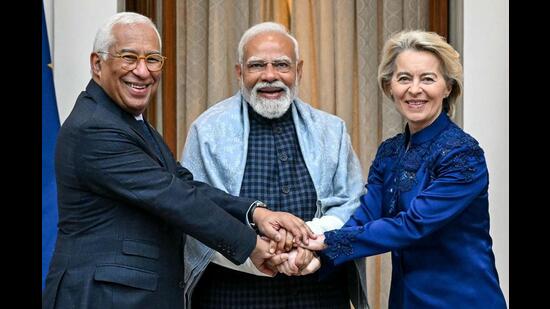
EU-India Ties Emerge as Key Global Stabilising Force
Beyond the ongoing free trade talks, the strategic partnership between the European Union and India is becoming a crucial anchor for global stability in a fractured world. Their convergence offers a democratic counterweight amid rising geopolitical tensions.
Key Takeaways
- The EU-India partnership extends far beyond trade into strategic security and global governance.
- Both powers seek to defend a rules-based international order and achieve strategic autonomy.
- Cooperation spans digital standards, green energy, infrastructure, and maritime security.
- Challenges like differing views on Russia and trade negotiations persist but are surmountable.
More Than an Economic Deal
The case for an EU-India Free Trade Agreement (FTA) is strong. India offers a vast, growing market and a tech-savvy workforce, while the EU provides technology, capital, and goods. A deal would boost jobs and growth. However, focusing only on economics misses the larger strategic picture.
A World Under Strain
The global order faces multiple pressures: the Ukraine war, China’s assertiveness in the Indo-Pacific, political volatility in the US, and struggling multilateral institutions. In this landscape, the EU and India are natural allies in upholding rules and democratic values.
Both seek —the capacity to shape their futures without being pawns of other powers. For Europe, India is key to its security and connectivity strategies. For India, Europe offers diplomatic weight and a balance in Asia.
Areas of Concrete Cooperation
Collaboration moves well beyond trade:
- Connectivity: Aligning EU’s Global Gateway with India’s infrastructure projects in Africa, Central Asia, and the Indo-Pacific.
- Digital Governance: Joint work on data privacy, ethical AI, and cybersecurity standards based on democratic values.
- Green Transition: Partnership on clean energy, green hydrogen, and climate finance to meet Paris Agreement goals.
- Security: Enhancing maritime awareness in the Indian Ocean, sharing counter-terror intelligence, and co-developing defence technology.
Navigating Challenges
The partnership faces hurdles. Differences exist over the Russia-Ukraine war, with India maintaining strategic neutrality. EU’s focus on human rights and regulation can clash with India’s sovereignty and development priorities. FTA negotiations have been slow, stuck on tariffs, intellectual property, and data flows.
Yet, these are not dead ends. Recent resumption of FTA talks, new investment and geographical indication negotiations, and the high-level EU-India Trade and Technology Council show positive momentum.
The Path Ahead
The goal is a comprehensive strategic partnership weaving together economic, tech, and geopolitical threads. An FTA is the essential foundation, but the framework must be wider. As the world faces a dangerous transition, a stronger EU-India axis can bridge continents, champion reformed multilateralism, and resist coercion. The time for Brussels and New Delhi to fully invest in this vision is now.


