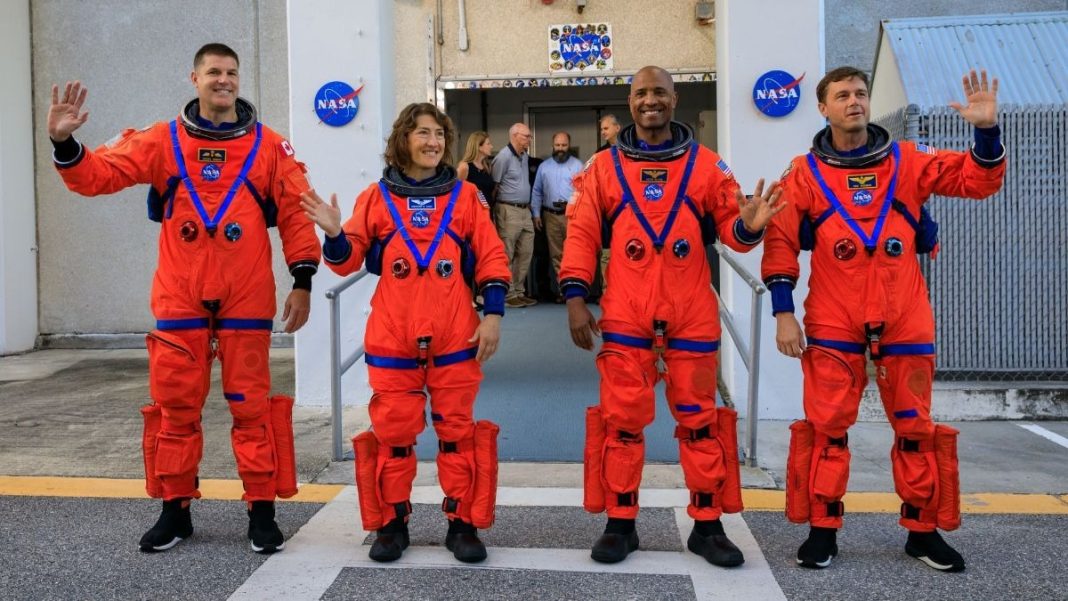
Artemis II Astronauts Face Radiation Challenge on Lunar Journey
NASA’s Artemis II mission will send astronauts around the Moon, but the crew faces a significant hurdle: intense cosmic radiation beyond Earth’s protective shield. The agency confirms the 10-day flight is designed to keep exposure within strict safety limits.
Key Takeaways
- Artemis II crew will travel outside Earth’s protective magnetosphere, facing higher radiation.
- NASA’s safety limit is based on a 3% increased lifetime risk of fatal cancer.
- The Orion spacecraft has improved shielding, radiation vests, and real-time sensors.
- Future longer missions to the Moon and Mars will need more advanced protection.

Beyond Earth’s Protective Bubble
Unlike the International Space Station, which orbits within Earth’s magnetosphere, the Artemis II capsule will venture into deep space. Here, astronauts will be exposed to galactic cosmic rays and potential solar particle events.
NASA’s Radiation Safety Strategy
“The biggest challenge for us is the radiation,” said a NASA official involved in mission planning. To manage this, the Orion spacecraft is equipped with a radiation-sensing vest, improved shielding, and onboard sensors for real-time monitoring.
Why Mission Duration Matters
The relatively short 10-day lunar flyby helps keep radiation exposure within acceptable bounds. However, NASA acknowledges that longer future missions to the lunar surface and eventually will require more robust solutions like dedicated storm shelters and advanced materials.
Learning from Past Missions
NASA is using data from previous missions and the uncrewed Artemis I test flight to model radiation risks. The agency emphasizes that while the deep-space environment is harsh, the Artemis II mission has been meticulously designed to ensure crew safety within all established health limits.