
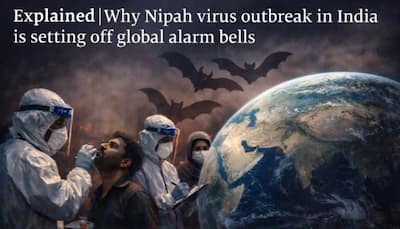
Explained | Why Nipah virus outbreak in India is setting off global alarm bells
A fresh Nipah virus outbreak in Kerala’s Kozhikode district has triggered a global health alert. The World Health Organization (WHO) is urging rigorous containment measures after the virus claimed two lives and infected five people, including a child on ventilator support.
Key Takeaways
- High Fatality: Nipah virus has an estimated case fatality rate of 40-75%.
- Global Concern: WHO classifies it as a priority disease needing urgent R&D.
- Current Status: No specific drugs or vaccines exist; treatment is supportive care.
- Transmission: Spreads from bats to humans, via contaminated food, or person-to-person.
What is the Nipah Virus?
Nipah virus (NiV) is a deadly zoonotic pathogen, first identified in Malaysia in 1999. Fruit bats of the Pteropodidae family are its natural host. The virus can jump to humans through direct contact with bats or contaminated food, like raw date palm sap, and can also spread between people.
Why is it So Dangerous?
The infection presents a major challenge due to its high fatality rate and range of symptoms—from asymptomatic cases to severe respiratory distress and fatal brain inflammation (encephalitis). Its non-specific early symptoms often lead to delayed diagnosis, hindering outbreak control.
Past Outbreaks and Geographic Spread
Major outbreaks have been recorded in:
- Malaysia & Singapore (1999): First identified among pig farmers.
- Bangladesh & India: Nearly annual outbreaks in Bangladesh since 2001, and periodic cases in eastern India.
Evidence of the virus in bat populations has been found across Asia and Africa, including Cambodia, Indonesia, Thailand, Ghana, and Madagascar, indicating a wider potential risk zone.
Diagnosis and Treatment Challenges
Diagnosis relies on laboratory testing of bodily fluids, primarily using RT-PCR and ELISA methods. The lack of specific antiviral drugs or vaccines means medical response is limited to intensive supportive care to manage complications.
The WHO’s Research and Development Blueprint highlights an “urgent need” for accelerated research into Nipah virus countermeasures, underscoring its status as a persistent global health threat.


