Key Takeaways
- A massive wildfire has spread from Nagaland’s Dzukou Valley into Manipur, threatening rare biodiversity.
- The valley’s unique dry bamboo and steep ‘chimney effect’ topography create a perfect tinderbox.
- Inaccessible terrain and erratic winds are severely hampering firefighting efforts.
- Experts warn of an annual fire cycle without urgent, science-based prevention strategies.
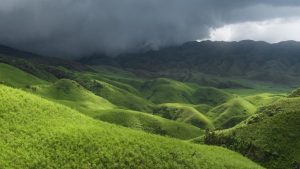
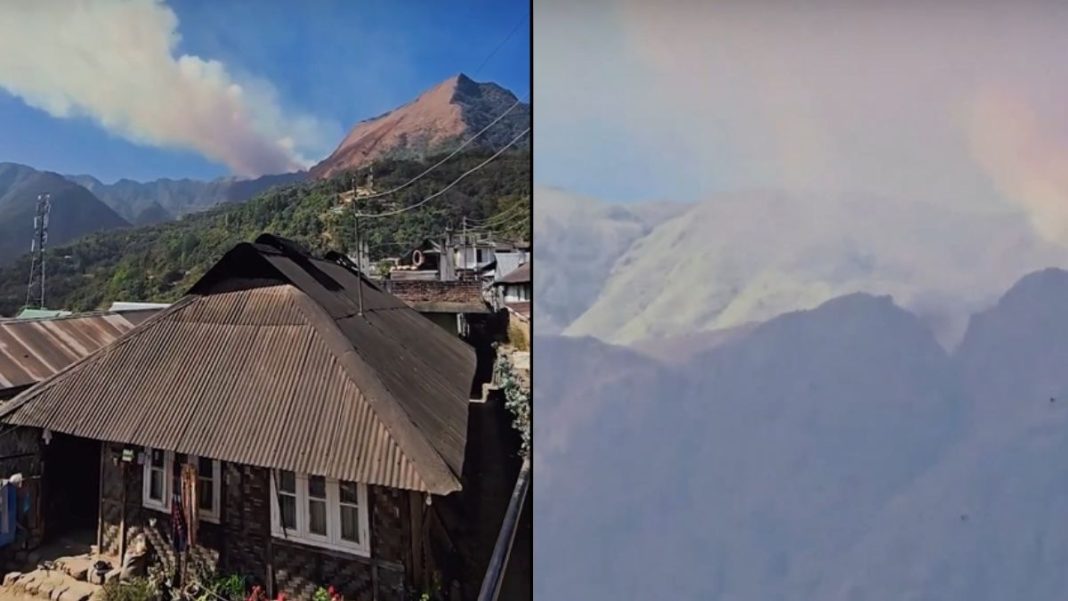
A fierce wildfire is raging across the pristine Dzukou Valley, having spread from Nagaland into Manipur and putting rare plants and wildlife at severe risk. While the exact trigger is under probe, the scientific reasons for the blaze’s rapid spread are alarmingly clear.
Why Dzukou Valley Burns: The Science Explained
The valley’s slopes are covered in dense dwarf bamboo (Arundinaria rolloana), which turns into highly flammable fuel during the dry winter. A forest ecologist explains, “The bamboo acts as a primary fuel. It dries up completely, and a single spark can set off a catastrophic fire.” The intense heat can even cause bamboo culms to explode, scattering embers and accelerating the flames.
The ‘Chimney Effect’ and Inaccessible Terrain
Dzukou’s steep, V-shaped valley worsens the situation. When fire starts, it creates a “chimney effect”—hot air rushes up the slopes, pulling in fresh oxygen that fuels the flames and drives the fire rapidly uphill.
This rugged terrain near Manipur’s highest peak, Mt. Iso (Tenipu), makes it impossible for ground crews to create firebreaks. A disaster response official stated, “We are largely dependent on aerial firefighting using helicopters with Bambi Buckets, but even that is challenged by strong, erratic winds generated by the fire itself.”
Climate Change and Human Role
Climate change is a suspected amplifier, with warmer winters and delayed monsoons extending dry periods. While lightning is a natural possibility, most fires here are believed to be human-caused, often started accidentally by campers.
Ecological Damage and a Warning
The ecological cost is severe. The valley is home to endemic species like the Dzukou Lily and rare rhododendrons. Fires destroy these plants, sterilise the soil, and force endangered wildlife to flee, often with fatal outcomes.
This is not a one-off event—major fires hit in 2021 and 2022. Experts warn that without a robust strategy involving regulated tourism, community surveillance, and better early warnings, these devastating blazes will become an annual tragedy, destroying one of India’s most unique ecosystems.