
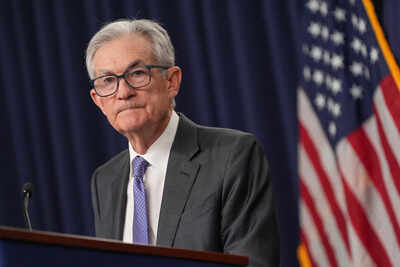
Fed Holds Rates Steady, Signals No Hike But Delays Cuts
The US Federal Reserve held interest rates unchanged for the sixth consecutive meeting, acknowledging a “lack of further progress” on inflation but downplaying the likelihood of future rate hikes.
Key Takeaways
- The Fed kept the benchmark rate at a 23-year high of 5.25%-5.50%.
- Chair Jerome Powell said the next move is “unlikely” to be a hike, but rate cuts are delayed.
- Officials need “greater confidence” that inflation is sustainably falling to 2% before cutting.
- Market expectations for the first rate cut have shifted to September.
Policy Stance and Inflation Concerns
In a significant shift, the Federal Open Market Committee (FOMC) stated it has seen a “lack of further progress” toward its 2% inflation goal in recent months. This replaced March’s more optimistic language.
“I think it’s unlikely that the next policy rate move will be a hike,” Chair Jerome Powell told reporters. He added that officials would need “persuasive evidence” that policy is not restrictive enough—a scenario they do not see currently.
“We’d need to see persuasive evidence that our policy stance is not sufficiently restrictive to bring inflation sustainably down to 2%. That’s not what we think we’re seeing.” – Jerome Powell
Powell admitted his confidence that inflation will fall “is not as high as it was” and that reaching the target will “take longer than expected.”
Market Reaction and Economic Data
Powell’s remarks triggered a rally, lifting the S&P 500 into positive territory. The dollar weakened, and Treasury yields dipped.
This shift follows strong economic data. Recent reports showed US private payrolls grew more than expected in April, and a key inflation measure rose above forecasts in Q1.
Investors have steadily delayed their expectations for the first Fed rate cut—from March to June, and now to September.
Labor Market and Future Path
Powell described the job market as having largely returned to a pre-pandemic “tight-but-not-overheated” balance. However, he clarified the Fed would consider rate cuts if the labor market weakened unexpectedly.
The Fed’s statement noted that risks to its dual goals of maximum employment and stable prices “have moved toward better balance over the past year.” This phrase is seen by analysts as a precursor to eventual easing.
Powell reiterated that the central bank still seeks “greater confidence” that inflation is cooling before initiating rate cuts. The Fed’s preferred inflation gauge, the PCE index, rose 2.7% year-on-year in March, showing little progress for a third straight month.
Balance Sheet Adjustments
In a separate move, Powell indicated the Fed could begin slowing the pace of its balance sheet reduction “fairly soon.” This measure aims to prevent stress in financial markets as the central bank unwinds its massive bond holdings.
The Fed continues to reduce its holdings of Treasury bonds and mortgage-backed securities, a process known as quantitative tightening.


