
India and EU Seal Historic Free Trade Agreement
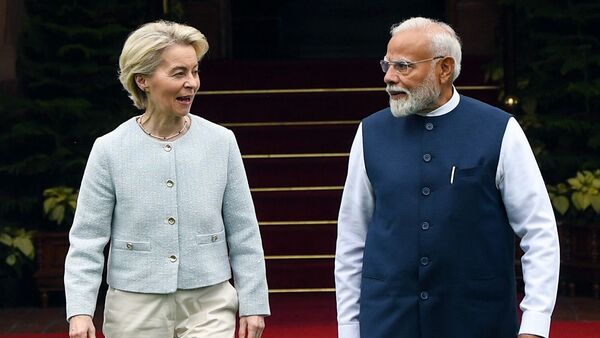
India and the European Union have finalised a landmark Free Trade Agreement (FTA) and an investment protection pact, Prime Minister Narendra Modi announced. The deal, representing a quarter of global GDP, is set to be signed at a historic summit in New Delhi.
Key Takeaways
- India-EU FTA finalised ahead of a major summit.
- The pact covers 25% of the world’s GDP.
- First in-person India-EU summit since 2017 to be held in New Delhi.
- Deal expected to significantly boost the existing €88 billion bilateral trade.
PM Modi Announces Deal
Prime Minister Narendra Modi, in a post on X, confirmed the breakthrough. “Delighted to share that the India-EU FTA has been finalised. The India-EU Trade Agreement will be a landmark moment for our economic ties,” he stated.
He praised Commerce Minister and his team for working “tirelessly” to finalise the trade and investment agreements “in record time.”
Modi emphasised the scale of the agreement, noting, “The India-EU FTA represents 25% of global GDP. This is a significant milestone… The agreement will open new doors for our businesses and create new opportunities for our youth.”
Historic Summit in New Delhi
PM Modi is scheduled to meet European Commission President Ursula von der Leyen and European Council President Charles Michel in New Delhi for the India-EU summit. This marks the first in-person summit between the two sides since 2017, with the last meeting held virtually in 2020.
Long Road to Finalisation
The FTA negotiations, stalled for years, were revived in 2021. Teams from both sides have since worked to resolve critical differences on market access, intellectual property rights, and sustainability clauses.
The EU is India’s second-largest trading partner, with goods trade valued at €88 billion in 2021. The new agreement is anticipated to provide a major boost to this economic relationship.
India’s Broader Trade Strategy
This deal is a key part of India’s active pursuit of free trade agreements with major economies. Recent negotiations have also involved the UK, Canada, and the Gulf Cooperation Council, signalling a robust push for deeper global economic integration.


