
Key Takeaways
- A top US lawmaker suggests President Trump’s aggressive stance could force UN Security Council reforms, potentially granting India veto power.
- India, part of the G4 group, has long sought a permanent seat, arguing the current council is outdated.
- The push for reform gains context amid Trump’s recent threats to defund the WHO over its pandemic response.
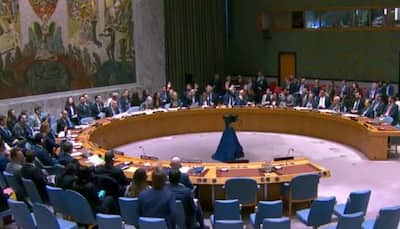
A senior American congressman has stated that President Donald Trump’s confrontational approach could be the catalyst that finally pushes the United Nations Security Council (UNSC) to reform, potentially granting India a long-sought veto power.
India has consistently led calls to overhaul the UN’s most powerful body, arguing its current structure—frozen since 1945—fails to reflect 21st-century geopolitical realities. The country asserts it rightfully deserves a permanent seat.
US Lawmaker Sees Opportunity in Trump’s Tactics
Congressman Brad Sherman, Chairman of the House Foreign Affairs Subcommittee on Asia, linked Trump’s pressure on international bodies to the possibility of UNSC reform benefiting India.
“Trump’s bullying tactics could push the UN Security Council to reform itself and give India a veto power,” Sherman said in a tweet.
Sherman’s comments followed Trump’s threat to permanently cut US funding to the World Health Organization (WHO) unless it commits to “substantive improvements” within 30 days. The President has accused the WHO of promoting Chinese “disinformation” during the COVID-19 pandemic.
A known advocate for stronger India-US ties, Sherman has previously voiced support for India’s permanent membership. In April, he tweeted that the Council “should reflect the world of 2020, not 1945.”
“The UN Security Council should be reformed to include India as a permanent member. The Security Council should reflect the world of 2020, not 1945,” Sherman had said in a tweet.
India’s Persistent Case for Reform
Indian officials have echoed the sentiment that the Council is unrepresentative and ineffective. Ambassador T.S. Tirumurti highlighted the “inequity,” noting that Africa lacks any permanent representation.
India contends that the UNSC’s lack of “representative legitimacy” hampers its ability to address complex global security challenges effectively.
The debate over Security Council reform has spanned more than a decade. India, alongside Brazil, Germany, and Japan, forms the G4 bloc, which actively campaigns for permanent membership for all its members.


