
Key Takeaways
- NASA has recorded the most powerful solar storm in two decades, triggering a severe geomagnetic storm warning.
- Stunning auroras (Northern Lights) were visible globally, with sightings reported as far south as Alabama, USA.
- The storm poses risks to power grids, satellites, and communications but astronauts on the ISS are safe.
- Experts advise using smartphone cameras to capture the aurora, as they can see more than the naked eye.
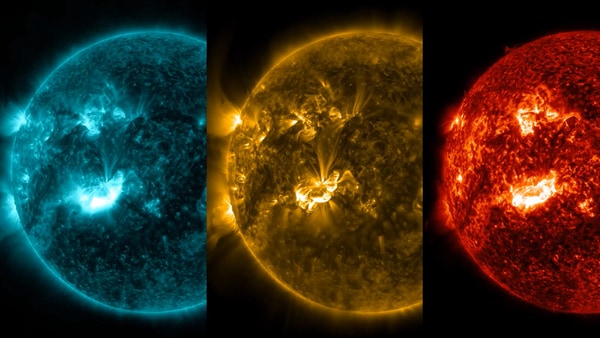
The most significant solar storm in over 20 years has been captured by NASA, unleashing a spectacular display of auroras across the world and prompting official warnings. The US National Oceanic and Atmospheric Administration (NOAA) issued a rare severe geomagnetic storm alert after a massive solar outburst hit Earth on Friday, arriving hours earlier than predicted.
Global Aurora Display and Viewing Tips
The effects of the Northern Lights, prominently seen in the UK, are expected to last through the weekend and possibly into next week. NOAA forecasts that auroras could be induced as far south as Alabama and Northern California in the United States.
Experts note the display may not be the classic dramatic curtains of colour, but rather splashes of greenish hues. “That’s really the gift from space weather: the aurora,” said Rob Steenburgh, a scientist at NOAA’s Space Weather Prediction Center.
He emphasised that the best views might come from smartphone cameras, which are more sensitive to light. “Snap a picture of the sky and there might be actually a nice little treat there for you,” Steenburgh advised. NOAA’s Brent Gordon echoed this, suggesting people try photographing the night sky even if they can’t see the lights with their eyes.
Storm Severity and Historical Context
For the first time, NOAA forecasters issued a G4 (severe) geomagnetic storm watch, which was later upgraded to a G5 (extreme) level. This is the first G5 storm since the “Halloween Storms” of October 2003, making it the most powerful in two decades. The flare erupted from a sunspot an astonishing 16 times the diameter of Earth.
Potential Impacts on Infrastructure
The solar storm carries real risks for critical infrastructure. NOAA warns it could affect high-voltage power transmission lines, potentially impacting grids. Satellites in orbit are also at risk, which could disrupt navigation and communication services on Earth.
An extreme geomagnetic storm in 2003 caused a power outage in Sweden and damaged power transformers in South Africa.
Even after the storm passes, signals between GPS satellites and ground receivers could be temporarily scrambled or lost, though any outages are expected to be brief due to the large number of navigation satellites.
Cause and Solar Cycle
The sun has been producing strong solar flares since Wednesday, resulting in five major plasma outbursts known as Coronal Mass Ejections (CMEs). Each can contain billions of tons of solar plasma. This activity is linked to a massive sunspot and is part of the sun’s increasing activity as it approaches the peak of its 11-year cycle.
Safety of Astronauts and Satellites
NASA has stated the storm poses no serious threat to the seven astronauts aboard the International Space Station. The primary concern is increased radiation, and the crew can relocate to a more shielded section of the station if needed.
Increased radiation could threaten some of NASA’s science satellites. “Extremely sensitive instruments would be turned off, if necessary, to avoid damage,” said Antti Pulkkinen, director of NASA’s heliophysics science division. Several sun-focused spacecraft are monitoring the event. “This is exactly the kinds of things we want to observe,” Pulkkinen added.


