Explosions from Sun take 4 days to reach Earth. This time it took just 25 hours
A powerful solar explosion reached Earth in a record 25 hours, triggering a severe geomagnetic storm and auroras visible in Ladakh. The event highlights the increasing intensity of space weather as the Sun nears its peak activity.
Key Takeaways
- A coronal mass ejection (CME) reached Earth in just 25 hours, far faster than the typical 4-day journey.
- It triggered a severe G4-class geomagnetic storm, one of the strongest in recent years.
- Auroras were seen as far south as Ladakh, a rare occurrence.
- The CME’s extreme speed of over 2,700 km/s was driven by multiple consecutive solar flares.
- Scientists warn such events may increase as the solar cycle peaks around 2025-2026.
Halo CME and Geomagnetic Storm
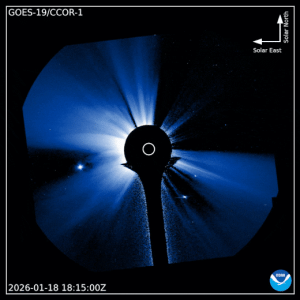
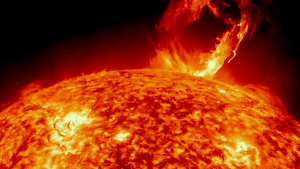
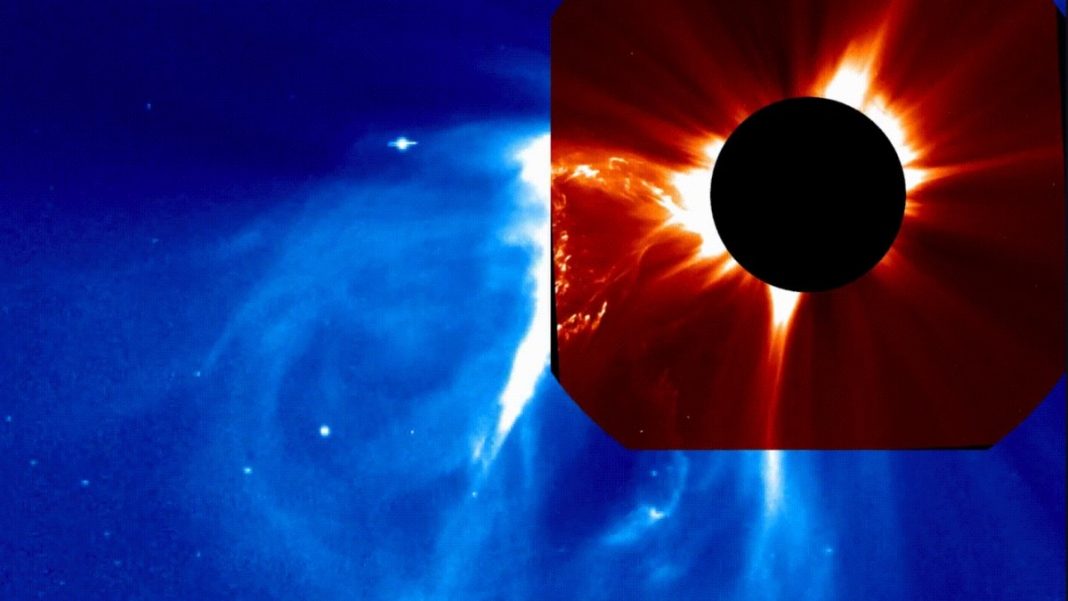
The event began with a powerful X-class solar flare from a sunspot, which triggered a massive coronal mass ejection (CME). This was a “halo CME,” visible as a ring of light expanding from the Sun in all directions.
The CME then slammed into Earth’s magnetic field, sparking a severe G4-class geomagnetic storm. The impact produced stunning auroras, with the northern lights reaching unusually low latitudes like Ladakh in India.
Unprecedented Speed
“The speed of this CME was extraordinary. It travelled at a staggering speed of over 2,700 kilometres per second. This is among the fastest CMEs we have observed in recent solar cycles,” said Dr. Ravi Shankar of the Indian Institute of Astrophysics.
Scientists attribute the record speed to the CME being propelled by multiple consecutive solar flares from the same active region, providing a sustained push.
Impacts and Future Warnings
The rapid arrival left limited time for protective measures. While India reported no major disruptions, the storm caused minor power grid fluctuations and degraded high-frequency radio communications in polar regions.
As the Sun approaches the peak of its 11-year solar cycle around 2025-2026, experts warn that such extreme space weather events could become more frequent.