
Key Takeaways
- Thailand faces three major challenges: new global trade order, technological transformation, and climate change
- Investment applications surged 94% to 1.3 trillion baht in first nine months of 2025
- Government launches Thailand Fast Pass to accelerate 80 major projects worth over 1 billion baht each
- Cabinet approves clean energy reforms to support data center investments
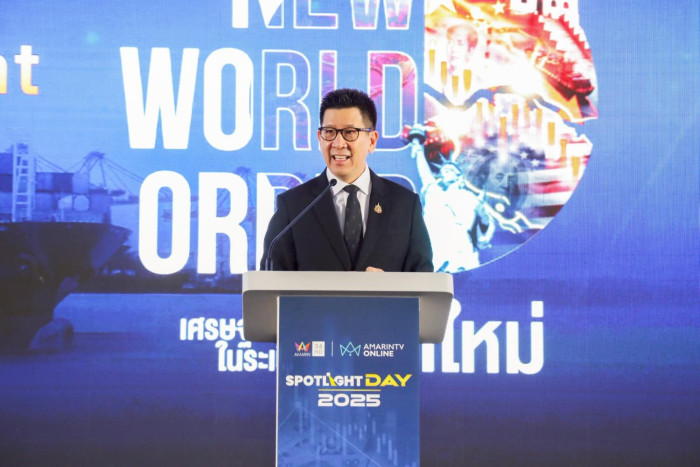
Finance Minister Ekniti Nitithanprapas has issued a urgent call for Thailand to prepare its economy for major global shifts, identifying three critical challenges that require immediate action.
In his keynote speech “Thailand’s Moment: Igniting Economic Revival,” Mr Ekniti outlined how the country must invest in infrastructure, upgrade technology, and develop human skills to navigate the changing landscape.
New Global Trade Order Brings Opportunities
The minister compared current US tariff policies to the 1980s when Japan faced similar pressure, leading to yen strengthening from ¥200 to ¥100 per dollar within six months.
“As a result, Japanese investors moved their production bases overseas, particularly to Southeast Asia. Thailand, with its strong infrastructure, became a major investment destination during that period,” he noted.
Thailand is already benefiting from the new trade reality, with investment promotion applications reaching 1.3 trillion baht in the first nine months of 2025 – a 94% year-on-year increase.
Thailand Fast Pass to Drive Real Investment
The government has introduced the “Thailand Fast Pass” initiative to remove investment obstacles and ensure Board of Investment applications translate into actual investments.
Of the total applications, 480 billion baht is ready for immediate investment across 80 projects valued at over 1 billion baht each. Mr Ekniti will instruct the BoI to directly engage with investors in all 80 projects to push for real investment.
Technology Transformation and Energy Challenges
Regarding technological transformation, Mr Ekniti said Thailand must adapt to leverage new opportunities, particularly with significant data center investments flowing into the country.
However, he acknowledged that clean energy remains insufficient. The cabinet recently approved regulatory changes to unlock investment in clean energy by allowing direct power purchase agreements.
Climate Change as Economic Opportunity
The minister highlighted how climate change has triggered new global trade rules, particularly Europe’s Carbon Border Adjustment Mechanism.
He sees this as an opportunity for Thailand, which has abundant agricultural raw materials that can produce bioethylene – a key component in the bioplastics industry.
“Thailand must prepare for the future by investing in infrastructure and clean energy projects to support the New World Order, as well as smart farming, which is one of Thailand’s strengths,” said Mr Ekniti.
He emphasized workforce development, stating: “This includes investing in workforce skill development to support new technologies, with BoI-supported private companies encouraged to specify which skills they need, making training demand-driven.”


