
Key Takeaways
- First commercial space science satellite successfully launched into orbit
- Mauve satellite will study stellar flares and exoplanets using ultraviolet observations
- Data will be shared with research institutions via subscription service
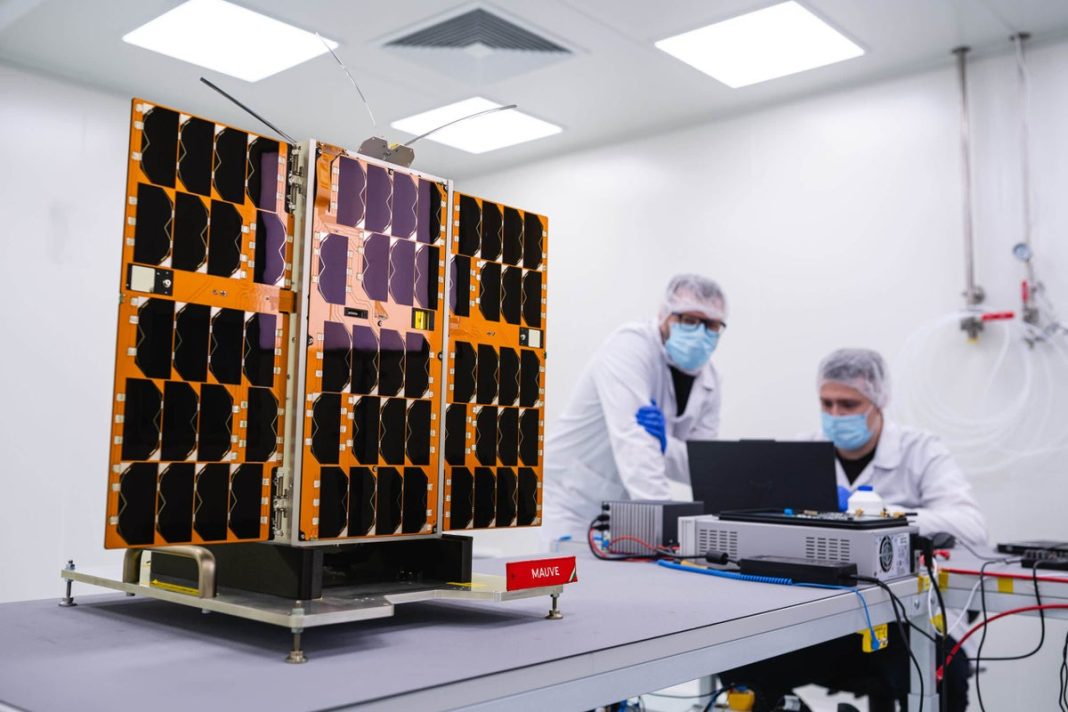
Blue Skies Space has successfully launched the world’s first commercial space science satellite designed to study stellar flares and their impact on exoplanets. The London-based company confirmed its Mauve satellite reached orbit after launching aboard a SpaceX Falcon 9 rocket from California on Friday evening.
Satellite Specifications and Mission
The microwave-sized satellite named Mauve carries specialized equipment to observe stellar activity that ground-based telescopes cannot detect. Equipped with a microscope, the satellite will focus on ultraviolet wavelengths that are impossible to study from Earth’s surface.
Professor Giovanna Tinetti, chief scientist at Blue Skies Space, explained: “Mauve will open a new window on stellar activity that has previously been largely hidden from view. By observing stars in ultraviolet light, wavelengths that can’t be studied from Earth, we’ll gain a much deeper understanding of how stars behave and how their flares may impact the environment of orbiting exoplanets.”
She emphasized that “Traditional ground-based telescopes just can’t capture this information, so a satellite like Mauve is crucial for furthering our knowledge.”
Data Sharing and Accessibility
Blue Skies Space will distribute the collected data to research institutions through its subscription service, which includes prestigious universities like Boston and Columbia. The company aims to democratize access to space science information.
Dr Marcell Tessenyi, CEO of Blue Skies Space, stated: “Our vision is to make space science data as accessible as possible.”
This landmark launch represents a significant step in and could revolutionize how scientists study distant star systems and their planetary companions.


