
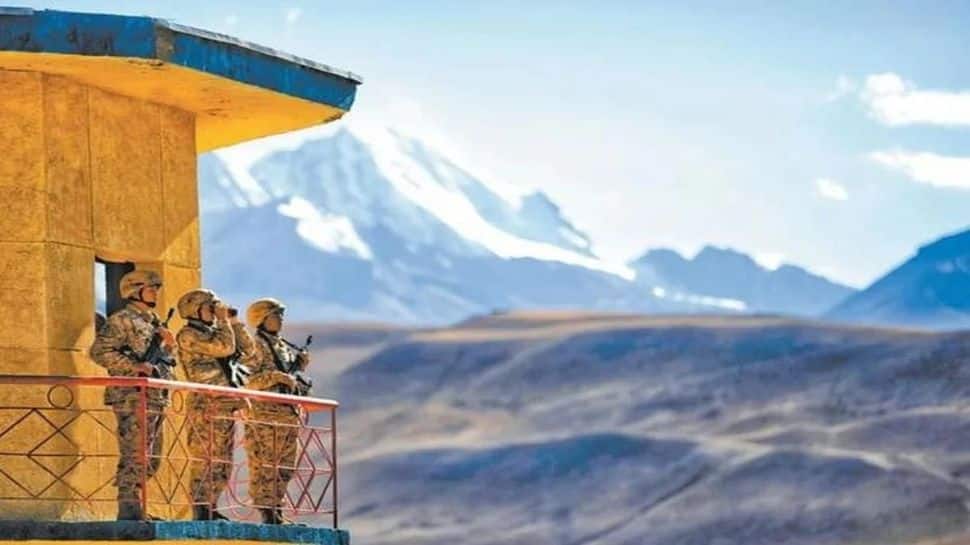
China Ramps Up Military Presence Along Nepal Border, Raising Regional Concerns
China has significantly intensified military activities along its border with Nepal, with new developments suggesting broader strategic implications for the region, particularly India’s Arunachal Pradesh which Beijing claims as its territory.
Key Developments
- PLA establishes Kunmujiya outpost in Tibet’s Zongga County near Nepal border
- New “three-pronged” patrol system using vehicles, drones, and foot patrols
- Chinese forces occupy 36 hectares of Nepalese land across 10 locations
- Strategic positioning at 5,000-meter altitudes for surveillance advantage
Strategic Outpost With Commanding Views
The People’s Liberation Army has strengthened its presence at the rugged Kunmujiya outpost in Zongga County, Tibet Autonomous Region. This strategic location provides Chinese forces with comprehensive surveillance capabilities over surrounding valleys and crucial trade routes.
Analysts suggest these military enhancements could also bolster China’s preparedness along the disputed border with India, particularly in the Arunachal Pradesh sector.
High-Altitude Patrol Network
Recent PLA footage reveals an extensive network of patrol points established near the Nepal border, with many positions situated above 5,000 meters in elevation. These snow-covered peaks offer unparalleled visibility over valleys and mountain passes below.
The elevated positioning significantly enhances China’s surveillance reach across the challenging Himalayan terrain.
Advanced Three-Pronged Patrol System
Chinese forces have implemented a sophisticated “three-pronged” patrol strategy designed to overcome the region’s difficult topography and extreme weather conditions. This multi-layered approach combines:
- Traditional foot patrols for ground coverage
- High-mobility all-terrain vehicle reconnaissance
- Continuous aerial monitoring using drone technology
This comprehensive system ensures operational continuity even during harsh winter months when oxygen levels plummet and heavy snowstorms typically isolate the area.
Beyond Surveillance: Strategic Control Points
The Kunmujiya facility represents more than just a watchpost—it’s a critical component of China’s broader security infrastructure along the 1,414-kilometer Nepal border. Constructed amid heavy snowfall conditions, the outpost exemplifies Beijing’s ongoing border modernization efforts.
It enables real-time monitoring of key crossing points including Gyirong (Rasuwagadhi) and Tatopani, along with surveillance of trade routes and migration patterns, strengthening China’s operational control in the region.
Territorial Encroachment Concerns
Official Nepalese documents from the Ministry of Agriculture (2022) confirm Chinese occupation of 36 hectares across 10 locations in northern Nepal. This territorial expansion began as early as 2016 when the PLA established a veterinary center in a Nepalese district under the guise of livestock management.
China has subsequently asserted land claims in seven of the fifteen border-adjacent districts: Dolakha, Gorkha, Darchula, Humla, Sindhupalchowk, Sankhuwasabha, and Rasuwa.
These coordinated developments indicate a steadily expanding Chinese presence near Nepal, prompting serious questions about Beijing’s long-term strategic objectives and its evolving posture along the sensitive India-China border region.


