
5.1 C
Delhi
Friday, January 16, 2026

Chandrayaan-2 Reveals Water Ice and Soil Secrets on Moon’s Poles

Key Takeaways

  • Chandrayaan-2’s orbiter has produced the first high-resolution L-band radar maps of the Moon’s poles.
  • The data reveals crucial details about potential water-ice deposits, surface roughness, and soil properties.
  • These findings are vital for planning future lunar missions and resource utilization.

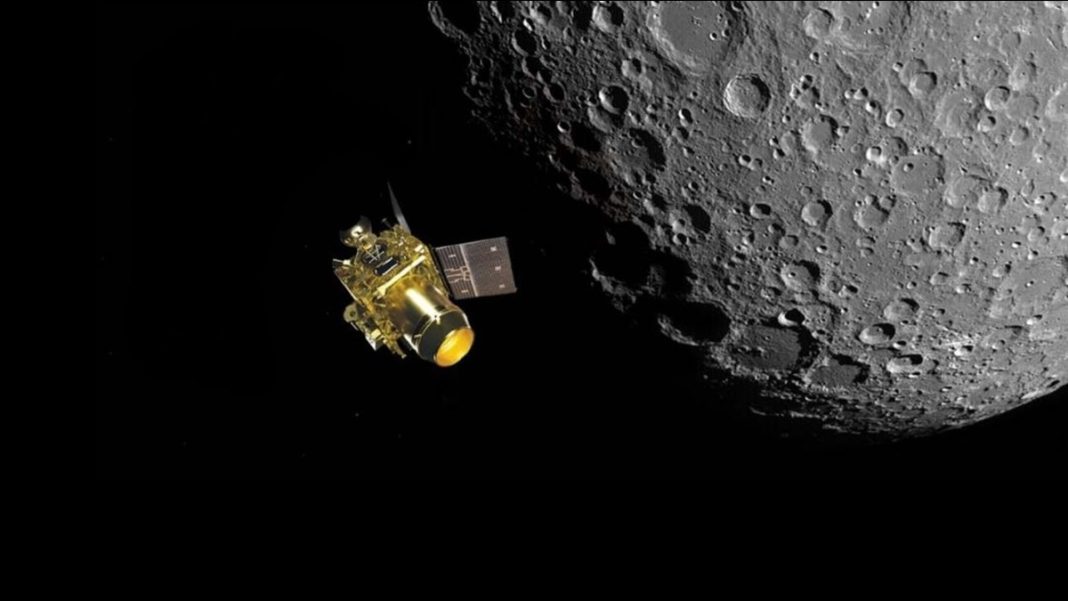
India’s Chandrayaan-2 orbiter has delivered groundbreaking insights into the Moon’s polar regions, identifying potential water ice and detailed soil characteristics. Operating since 2019, the spacecraft’s radar has mapped the poles with unprecedented clarity.

Scientists at ISRO’s Space Applications Centre (SAC) in Ahmedabad used data from the Dual Frequency Synthetic Aperture Radar (DFSAR) to create the first full-polarimetric, L-band radar maps at 25 meters per pixel resolution. This represents a major leap in lunar exploration capabilities.

Five Years of Data Collection

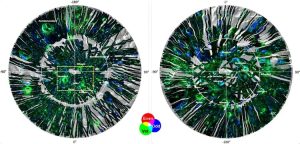
Over nearly five years, researchers processed approximately 1,400 radar datasets to generate detailed polar mosaics covering latitudes from 80 to 90 degrees in both hemispheres. The SAC team developed indigenous algorithms that provide key insights into:

  • Potential water-ice presence
  • Surface roughness variations
  • Dielectric properties indicating soil density and porosity

These parameters help characterize the Moon’s surface composition and hidden geological features beneath the surface.

Advanced Radar Measurements

The DFSAR data provides several critical measurements for lunar analysis:

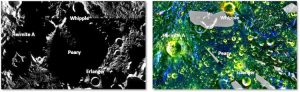
  • Circular Polarisation Ratio (CPR): Sensitive to reflections from subsurface ice deposits
  • Single Bounce Eigenvalue Relative Difference (SERD): Quantifies surface roughness
  • T-Ratio: Correlates with dielectric constant, measuring how lunar regolith responds to electromagnetic waves

Polarimetric decomposition components (Odd, Even, Volume, and Helix) further reveal distinct radar scattering processes across different lunar terrains.

Scientific Impact and Availability

The Level-3C Polar Mosaic datasets have been released freely to the global scientific community. These findings are particularly significant for upcoming lunar missions as they provide first-order insights into thermal stability zones where water-ice could persist.

This information will aid future resource utilization and landing site selection. Beyond practical applications, the research deepens understanding of the Moon’s pristine polar environments, which may preserve some of the solar system’s earliest chemical signatures.

The synergy between Chandrayaan-2’s radar and hyperspectral datasets is expected to refine global models of lunar mineral distribution, advancing our knowledge of Earth’s celestial neighbor.
Latest

ISRO Grounds PSLV After Second Consecutive Launch Failure

PSLV launches halted after January 2026 failure destroys 16 satellites. Investigation begins as ISRO's 2026 schedule faces major delays.

KID Capsule Survives ISRO PSLV Rocket Failure, Transmits Data

Spanish Orbital Paradigm's experimental KID capsule became the lone survivor of a failed ISRO launch, transmitting crucial re-entry data after the PSLV malfunctioned.

Flash Fog in Delhi: Science Behind the Sudden Zero-Visibility Event

Understand how a sudden 'flash fog' engulfed Delhi-NCR in minutes on Makar Sankranti 2026, its causes, dangers, and why meteorologists warn it may happen again.

Mysterious Dying Star Creates Colourful Cosmic Shockwave

Astronomers are puzzled by a white dwarf star ejecting gas and creating a vibrant, long-lasting shockwave in space, defying current scientific explanations.

PSLV-C62 Failure: Why 16 Satellites Were Lost After Launch

An ex-ISRO engineer explains the third-stage anomaly that caused the PSLV-C62 mission to fail, detailing the fate of its 16 satellites including the Anvesha Earth observatory.

Topics

Delhi AQI Hits 354: Air Quality ‘Very Poor’ Amid Fog and Cold Wave

Delhi's air quality deteriorates to 'very poor' with AQI at 354. IMD predicts dense fog and cold wave conditions for North India. Get the latest updates.

India’s Scramjet Success: Why Fighter Jets Still Use Conventional Engines

India joins the hypersonic club with scramjet tech. We explain why this breakthrough won't power fighter jets yet and what it means for missiles and space travel.

Mustafizur Rahman Visa Row: A Strategic Signal in India-Bangladesh Ties

How India's visa denial to a Bangladeshi cricketer reflects a broader, more assertive foreign policy under S. Jaishankar and impacts bilateral relations.

15 Hindus Killed in Bangladesh in 45 Days, Rights Group Reports

A rights group reports escalating violence against Hindus in Bangladesh, with 15 killed in 45 days. Urgent government action and legal reforms are demanded.

Why Pakistan is Trapped Between Saudi Arabia and UAE Rivalry

Analysis of how Saudi-UAE competition for influence leaves Pakistan in a diplomatic bind, impacting its economy and regional stability.

Trump’s Greenland Push Tests NATO Unity Ahead of Election

Donald Trump's serious interest in buying Greenland highlights a transactional foreign policy that could fracture NATO at a critical time for global security.

Trump’s Greenland Purchase Interest Sparks Diplomatic Row with Denmark

US President confirms interest in buying Greenland, but Denmark and Greenland firmly reject the idea. Explore the strategic reasons and the criticism behind the move.

Machado Meets Trump, Gifts Nobel Replica in Venezuela Power Play

Barred Venezuelan opposition leader María Corina Machado's strategic meeting with Donald Trump aims to maintain pressure on Maduro ahead of the July election.
spot_img

Related Articles

Popular Categories

spot_imgspot_img

