
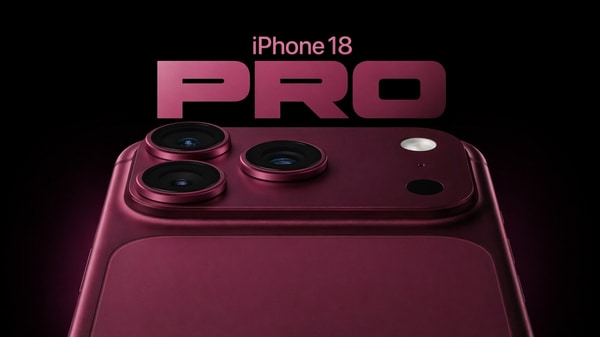
Apple’s iPhone 18 Pro lineup is still a few months away, but the outpour of leaks about the flagship devices has given us a good hint at what to expect from them in terms of price, display, processor, and even the colour variants.
iPhone 18 Pro: What to expect
Expected price and release date:
TheiPhone 18 Pro series is expected to be released in September, just like its predecessor. The new iPhones will likely be launched alongside the iPhone Ultra/Fold, while the base iPhone 18 could be pushed to next year.
Current leaks suggest that Apple could be planning to absorb the recent hike in manufacturing costs, and the iPhone 18 Pro could begin at the same starting price as last year. This could mean that the phone would likely start at a price of $1,099 in the US and other global markets.
However, there could still be an increase in the Indian pricing of the device, as was evident with the recent iPhone 17e launch, which launched at the same $599 price in the US but received a price hike in India.
iPhone 18 Pro colour variants:
As per a new report by Macworld, the iPhone 18 Pro series could come in four colourways: Light Blue (Pantone 2121), Dark Cherry (Pantone 6076), Dark Gray (Pantone 426C), and Silver (Pantone 427C).
Another leak by Chinese tipster Ice Universe showed what seemed like the camera plateau of all four iPhones, showing the devices in Black, Silver, Wine Red (Burgundy), and Blue colour variants.
As if that wasn’t enough, Bloomberg’s Mark Gurman has also confirmed that a ‘Deep Red’ colour variant could be the new lead colour variant on the iPhone 18 Pro lineup, replacing the Orange colour variant on the current lineup.
iPhone 18 Pro design:
Apple is said to be fitting a bigger battery on the iPhone 18 Pro series, and that is also expected to take a toll on the thickness and weight of the devices.
A recent dummy image shared of the two iPhones by YouTuber Vadim Yuryev showed that the iPhone 18 Pro series could have a much thicker camera plateau than their predecessor, and the back glass on the camera could protrude a little bit more as well.
The company has also reportedly worked on reducing the colour difference between the rear glass and aluminium frame on the 18 Pro lineup in order to create a more unified appearance.
Apart from that, the iPhone 18 Pro is expected to look much the same as its predecessor, with a horizontal camera module and the Apple logo in the middle.
Display:
Apple is expected to give a 6.3-inch ProMotion 120Hz display on the iPhone 18 Pro, just like last year. However, the big change this year could be the placement of under-display Face ID, which could allow the company to significantly reduce the size of Dynamic Island.
As per Ice Universe, the Dynamic Island of the iPhone 18 Pro series could be trimmed down by up to 35 percent.
Processor and battery:
The iPhone 18 Pro will likely run on the latest A20 Pro chipset, which could also power the iPhone Ultra. The new processor is said to be based on TSMC’s 2nm process and bring about 30% faster performance and 15% efficiency gains.
The Pro lineup is also expected to finally ditch the Qualcomm modems in favour of Apple’s in-house solution. Reports suggest that Apple could be planning to introduce the C2 modem on the iPhone 18 Pro series, which could add support for 5G satellite connectivity along with full internet access over satellite and mmWave 5G connectivity, along with on-par performance with Qualcomm modems.
While the iPhone 18 Pro Max is expected to have a bigger 5,100–5,200mAh battery, it’s not yet clear if the iPhone 18 Pro could have the same kind of upgrade in battery life. However, the efficiency in the chipset could still lead to better battery life compared to the iPhone 17 Pro.
Cameras:
Current leaks suggest that the iPhone 18 Pro could have the same 48MP triple camera setup as last year. However, the big upgrade this year could be the addition of a mechanical variable aperture system that could potentially allow users to adjust the amount of light that enters the camera and, in effect, allow them to take better pictures, especially in low-light scenarios.
Meanwhile, the telephoto and ultra-wide angle lenses could have larger apertures that could help in reducing noise in low light while improving shutter speed and lead to improved background separation.


