
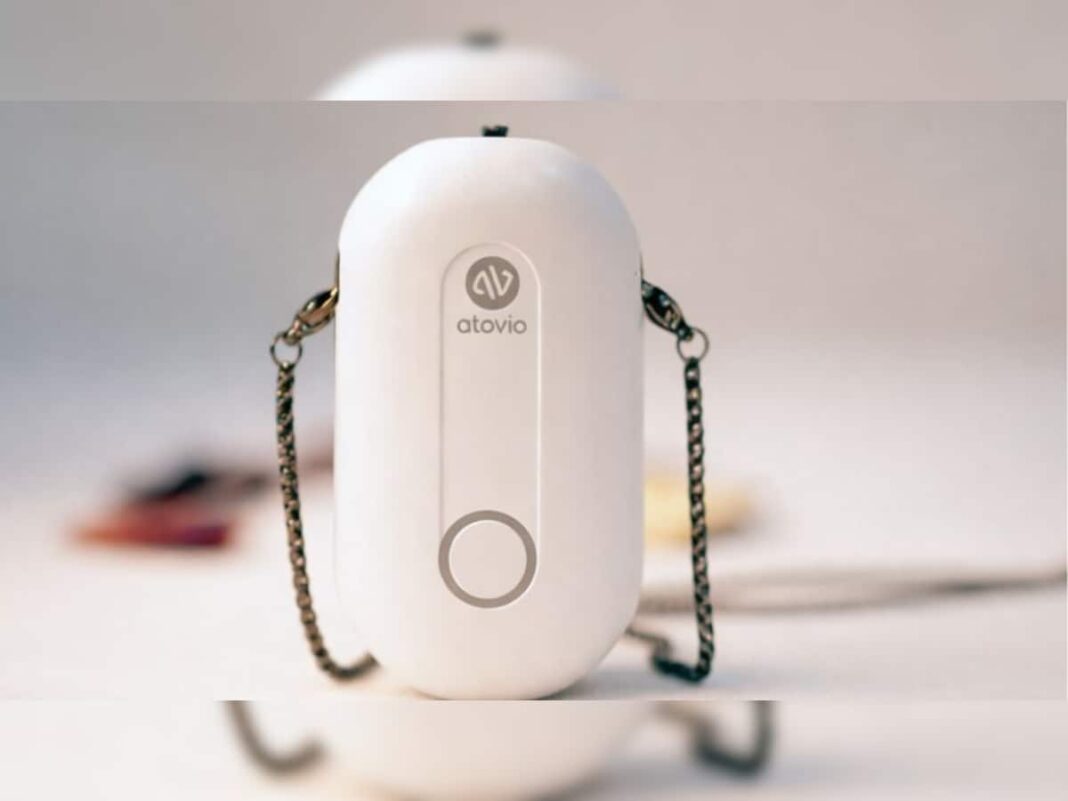
Atovio Pebble Review: Clean air is no longer limited to your home. With pollution levels rising across cities, people are now looking for ways to stay protected even when they step outside. This is where devices like the Atovio Pebble come into the picture. It is a simple, wearable air purifier that stays with you wherever you go. You wear it around your neck like a pendant, and it creates a small bubble of cleaner air near your face. This helps reduce exposure to dust, smoke and allergens in real time.
Air purifiers are already common in homes and offices, but most of them are designed for indoor use and cannot be carried around. That is what makes portable options like this interesting. Priced at Rs. 3,499, the Atovio Pebble focuses on improving the air in your immediate breathing zone rather than cleaning an entire room.
With more people considering such gadgets for daily use, the idea sounds promising. But can this small device actually make a difference in real life? We have been using the Atovio Pebble for some time, and here is what we think.
IIT Kanpur data backs claims
Atovio positions the Pebble as a wearable solution for personal air purification, especially for everyday environments like homes, offices, and travel. What stands out is that the brand backs its claims with multiple reports from IIT Kanpur, which makes the proposition more credible.
According to IIT Kanpur’s National Aerosol Facility reports, there is up to 99.9 per cent reduction in airborne particles in controlled lab conditions. Field tests show around 40 to 50 per cent reduction in particulate matter in the breathing zone. The device has been tested for safety and shows zero ozone emission, making it suitable for regular use. These findings are interesting, and what works in Atovio’s favour is that the brand is fairly transparent about sharing this data.
Design and Build
The Pebble is small, light and genuinely wearable in daily life. It comes with a lanyard and hangs at chest level. Five colour options are available including Moonlight Black, Cloud White, Sky Blue, Blush Pink and Lavender Mist, which makes it feel more like a lifestyle accessory than a medical device. If you are going to wear something around your neck all day, it should not look like a hospital gadget. It does not. Two modes, Normal and Turbo, keep the interface as simple as possible.
How to Use
Using the Pebble is straightforward. Hang it around your neck using the lanyard so the device sits at chest level, close to your breathing zone. Switch it on and choose Normal mode for everyday indoor use. If the AQI around you crosses 200, switch to Turbo mode for stronger output. That is essentially all there is to it during regular use.
Maintenance is minimal but necessary. A quick clean restores performance. There is no app, no filter schedule, and no complicated setup. Charge it for 3 hours and it is ready for up to 48 hours of use.
Performance
In IIT Kanpur’s controlled lab tests, the Pebble achieved over 99.9 per cent reduction in PM2.5 and PM1 particles. Those numbers sound extraordinary, and they are, inside a sealed chamber under ideal conditions. Atovio’s own 90 per cent claim is actually more conservative than what the sealed lab showed, but that framing still needs context.
In the real-world field test, also conducted by IIT Kanpur, with a room door left fully open to simulate actual indoor and semi-enclosed use, the reduction at the breathing zone averaged around 43.8 per cent across three trials. That is the honest number for the kind of environment the device is actually useful in: offices, homes, cars and airports. Still meaningful, but a long way from the 90 per cent headline.
Step outdoors, and the picture changes further. In open air, moving wind constantly replaces the air around your face, and the Pebble cannot maintain a clean zone. Atovio does mention vehicles and balconies as valid use cases, and the field data does support semi-enclosed outdoor settings to a degree, but a busy roadside or open market is a different story. The device was not designed for that and the test data reflects that limitation clearly. On ozone, the claim of zero emission holds up.
As mentioned in the report, over 24 hours in a sealed chamber, ozone levels stayed between 1.8 and 2.8 ppb, far below the CARB limit and WHO guidelines. This is one area where Atovio’s claim and the independent data align cleanly.
Battery and Charging
The Pebble has a circular LED light on the front that shows whether the device is on or charging. For charging, it comes with a USB Type-C port at the back, so you can easily use a standard cable. I charged it for around 3 hours as recommended, and the battery lasted nearly two days, which is quite convenient for everyday use.
Price
The wearable device is currently available at Rs. 3,199 (marked down from Rs. 7,999) across Atovio’s website, 20 plus airports, and major e-commerce platforms. At that discounted price it is a reasonable ask, especially since there are no filter replacements or recurring costs.
Pros
1. Actual lab data, not just brand claims. IIT Kanpur’s National Aerosol Facility tested and signed off on the results. That puts the Pebble well ahead of the unverified imports dominating this price range.
2. Zero ozone emission confirmed. Tested over 24 hours in a sealed chamber. The ionization process does not generate harmful ozone.
3. No recurring costs. Clean the anion brush and you are done. No filters to replace, no cartridges to reorder. The upfront price is the total price.
4. Works quietly in the background with no noticeable noise.
Cons
1. Ineffective outdoors. Open-air and windy conditions prevent the Pebble from maintaining any meaningful clean zone around you. If outdoor protection is your primary concern, look at a good N99 mask instead.
2. It would be helpful to have a battery percentage indicator.
3. The lanyard could be more comfortable for long-term use.
Verdict
It feels like a thoughtfully designed lifestyle gadget for those who spend most of their time in enclosed or semi-enclosed polluted spaces. The science behind it checks out, the ozone safety is reassuring, and at Rs. 3,199, the price makes it easy to consider giving it a try. But like any device, it works best when you understand its limits. Indoors, it quietly does its job and earns its place. Step outside into open, polluted streets, and you will still find yourself reaching for a reliable mask.


