India’s dream of sending astronauts to space just got one step closer to reality.
On April 10, the Indian Space Research Organisation (Isro) successfully completed the second Integrated Air Drop Test, known as IADT-02, for the Gaganyaan mission at the Satish Dhawan Space Centre in Sriharikota, Andhra Pradesh.
WHAT WAS TESTED?
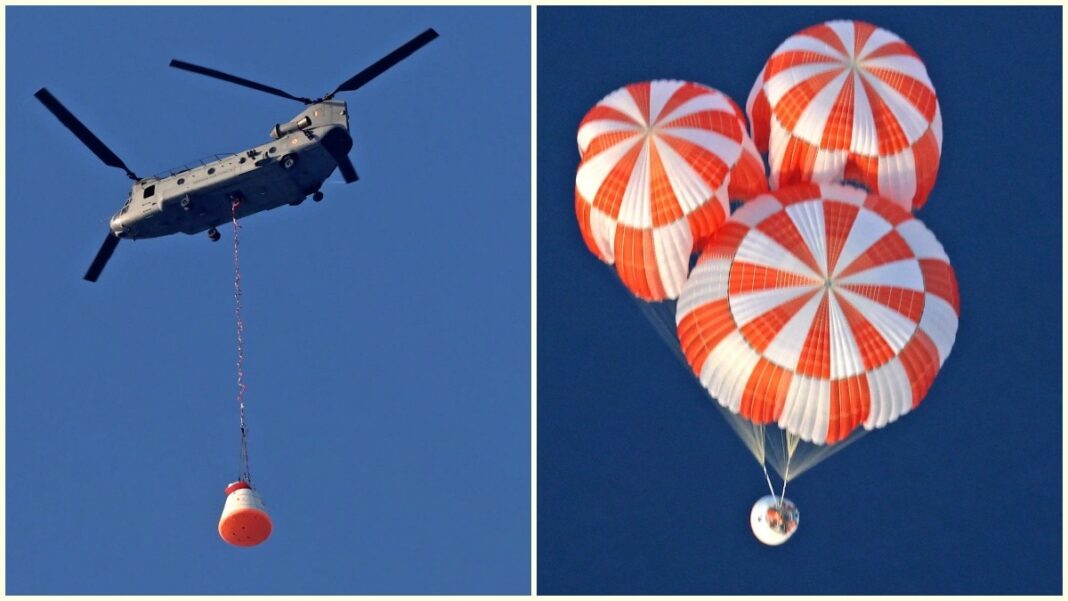
IADT-02 is a simulation designed to test how the crew module of Gaganyaan, which will house the astronauts, will land safely back on Earth.
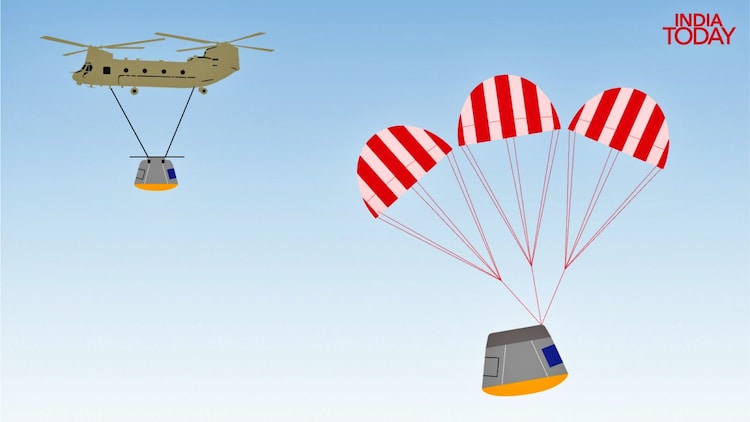
The parachute-based deceleration system plays a crucial role during the final phase of descent, ensuring the crew module lands safely in the sea by reducing the speed at which it falls. The system comprises multiple parachutes, including Apex Cover Separation parachutes, Drogue parachutes, Pilot parachutes and Main parachutes, all deployed in a precise sequence.
During the first test in August 2025, a simulated crew module weighing approximately 4.8 tonnes was dropped from an altitude of around 3 kilometres using the Indian Air Force’s Chinook helicopter. The test successfully validated the deployment sequence and performance of the parachutes, ultimately reducing the module’s touchdown velocity to about 8 metres per second.
IADT-02 builds on that success, testing the system under different conditions to further ensure its reliability.
IS IT A BIG DEAL?
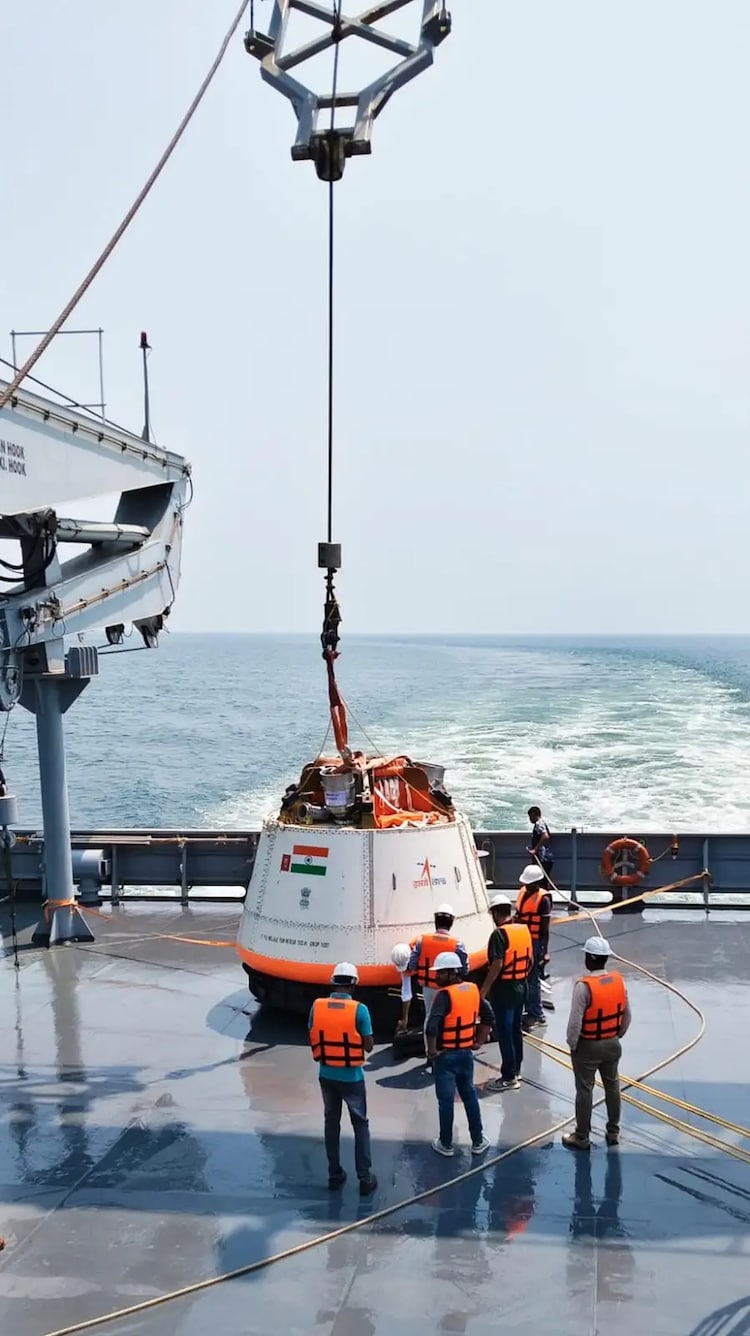
If the timing or deployment fails, the module could hit the water too fast. That is why Isro is repeatedly testing and validating this system.
Gaganyaan will consist of two parts: the crew module and the service module.
The crew module will sit on top and is designed to carry up to three astronauts. Upon re-entry, it will separate from the service module and splash down in the ocean.
Union Minister Jitendra Singh called the test “an important milestone towards the readiness for the Gaganyaan mission.”
Three uncrewed Gaganyaan test flights are planned before the first crewed flight in 2027, with the first uncrewed flight planned for 2026. That first uncrewed mission will carry Vyommitra, a humanoid robot built to simulate crew functions and monitor spacecraft conditions.
The Gaganyaan programme has seen collaboration from multiple agencies, including DRDO, the Indian Air Force, the Indian Navy and the Coast Guard, with more tests planned to further validate system performance.
If all goes well, India will become only the fourth nation in history, after Russia, the US and China, to independently send humans to space.