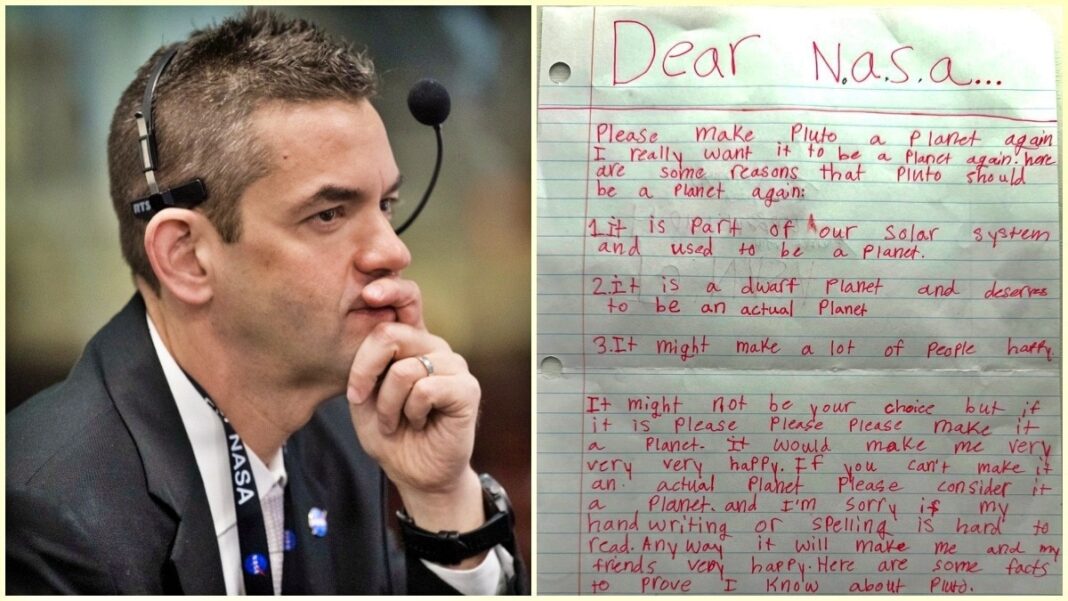
A heartfelt letter written by a 10-year-old has reignited a long-running debate in astronomy, after it caught the attention of Nasa chief, who responded with a simple but encouraging message: “Kaela — We are looking into this.”
The handwritten note, addressed to “Dear Nasa,” passionately appeals for Pluto to be reinstated as a full-fledged planet. The letter lays out a child’s earnest reasoning, blending basic scientific facts with emotional appeal.
“Please make Pluto a planet again. I really want it to be a planet again,” the 10-year-old wrote, before listing three key reasons. Among them: Pluto is part of the solar system and once held planetary status; it is already classified as a dwarf planet and “deserves to be an actual planet”; and restoring its status would make “a lot of people happy.”
The young writer goes further, adding a polite and personal plea. “It might not be your choice, but if it is please, please, please make it a planet,” the letter reads, ending with an apology for handwriting and spelling, and a hopeful note that the change would bring joy to friends as well.
WHY WAS PLUTO REMOVED AS A PLANET?
Pluto was reclassified as a dwarf planet in 2006 because it failed to meet one key criterion set by the International Astronomical Union: clearing its orbital neighbourhood.
To qualify as a planet, an object must orbit the Sun, be spherical, and clear its orbital neighbourhood. Pluto meets the first two but not the third; it shares its orbit with many Kuiper Belt objects, so it was labelled a dwarf planet.
The student included a short list of facts about Pluto, highlighting that it is located in the Kuiper Belt, was discovered in 1930 by Clyde Tombaugh, is smaller than Earth’s Moon, and has five known moons, demonstrating both curiosity and effort.
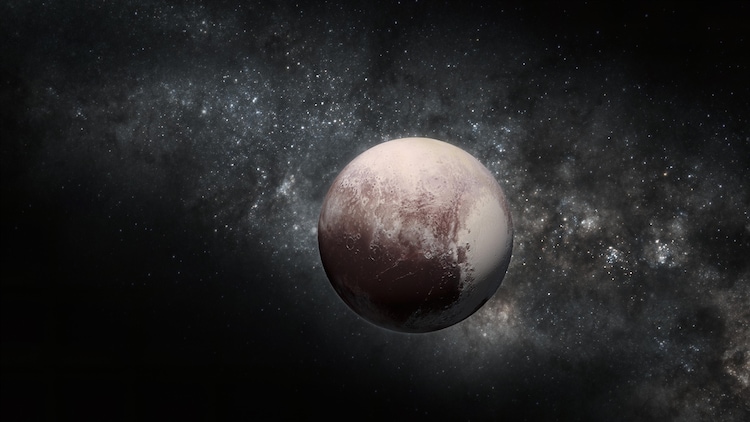
Pluto was reclassified as a “dwarf planet” in 2006 by the International Astronomical Union, a decision that remains controversial among scientists and the public alike. While Nasa itself does not define planetary status, the agency plays a major role in exploring and studying such celestial bodies.
Nasa chief Jared Isaacman’s brief but warm response has since drawn attention online, with many praising the agency for engaging with young space enthusiasts.
While there is no indication that Pluto’s classification will change anytime soon, the exchange highlights something just as powerful, the ability of curiosity and passion, even at a young age, to spark global conversations about science and space.