
Pakistan is all set to host talks between the US and Iranian delegations in Islamabad on Saturday, though Iran’s participation is still uncertain after deadly Israeli strikes in Lebanon that threaten the temporary truce.
On Wednesday, Israel’s heaviest attacks on Lebanon since Hezbollah entered the Middle East war in early March killed hundreds, rattling the uneasy ceasefire between Washington and Tehran less than 48 hours after it came into force.
Pakistan and the US have had a bumpy relationship since a US operation secretly killed Al-Qaeda leader Osama bin Laden in a compound just 75 miles north of Islamabad in 2011. But ties blossomed again last year. At the same time, Pakistan shares close relationships with its neighbour Iran, as well as China and other Gulf countries. The exception is Israel, which is not officially recognised by Islamabad and is not attending the talks.
The White House has confirmed that Vice President JD Vance will head the delegation for talks on a sustained peace agreement with Iran. The negotiations mark the first trip by a top US official in years to the Pakistani capital. Former Secretary of State Mike Pompeo visited the city in 2018.
How is Pakistan preparing for the meeting?
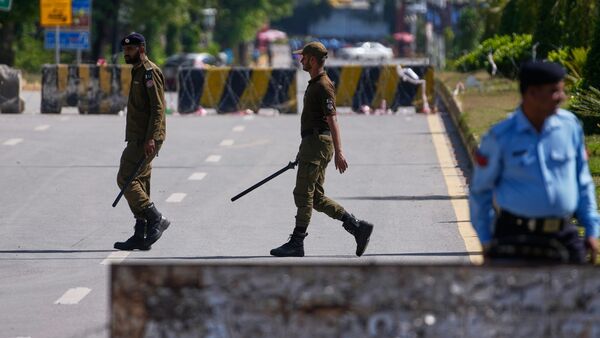
Across Islamabad, signs of intense preparations for Saturday’s talks were clearly visible.
As per Bloomberg, “workers hoisted green crescent-moon Pakistani flags all along the Srinagar Highway, which bisects the city’s checkerboard downtown. Businesses have closed up after city administrators announced an impromptu two-day public holiday on Thursday and Friday.”
The Serena Hotel — the sprawling luxury venue favoured by international cricket teams — was being sealed off on Thursday in preparation for the arrival of delegates. It asked its guests to clear out on Wednesday. A similar cordon was evident at the nearby Marriott, the imposing grey accommodation on the city’s northeast fringe.
Security is at the forefront of officials’ minds. Top hotels across the country have been a frequent target for militancy in the past.
What’s on the agenda?
The talks will canvass several sensitive points, including Iran’s nuclear enrichment and the free flow of trade through the strategic Strait of Hormuz maritime chokepoint.
Washington’s reported 15-point proposal centres on Iran’s enriched uranium, ballistic missiles, sanctions relief and the reopening of the Strait of Hormuz. Tehran has countered with a 10-point plan demanding control over the strait, a toll for vessels crossing the strait, an end to all regional military operations and the lifting of all sanctions. Lebanon is also a major sticking point.
The talks themselves are expected to be indirect: the two delegations sitting in separate rooms with Pakistani officials shuttling proposals between them, mirroring the format used in earlier Oman-mediated rounds.
Who are attending the meeting?
JD Vance will lead the American team, joined by special envoy Steve Witkoff and the president’s son-in-law, Jared Kushner.
Iran’s parliament speaker, Mohammad Bagher Ghalibaf, and Foreign Minister Abbas Araghchi are expected to lead the Iranian delegation. Ghalibaf is a former IRGC commander, and it remains unclear whether any active IRGC representative will attend.
But Pakistani officials, as reported by Al Jazeera, cautioned that nothing was a certainty until the delegations actually arrived.
What Iran said
The Islamic Republic has said that its participation could hinge on a halt in Israeli attacks on Lebanon.
“The holding of talks to end the war is dependent on the US adhering to its ceasefire commitments on all fronts, especially in Lebanon,” Esmaeil Baqaei, Iran’s foreign ministry spokesman, said.
“If the travel plan is finalised, the composition of the delegation will also be announced,” he added.
Iran’s ambassador to Pakistan, Reza Amiri Moghadam, briefly announced on X that the Iranian delegation would arrive on 9 April “despite skepticism of Iranian public opinion due to repeated ceasefire violations by the Israeli regime to sabotage the diplomatic initiative”. He added that the delegation had come for “serious talks based on the 10 points proposed by Iran”. But he later deleted the post.
Nevertheless, Iran’s powerful Revolutionary Guards signalled their commitment to the ceasefire, according to the state broadcaster.


