
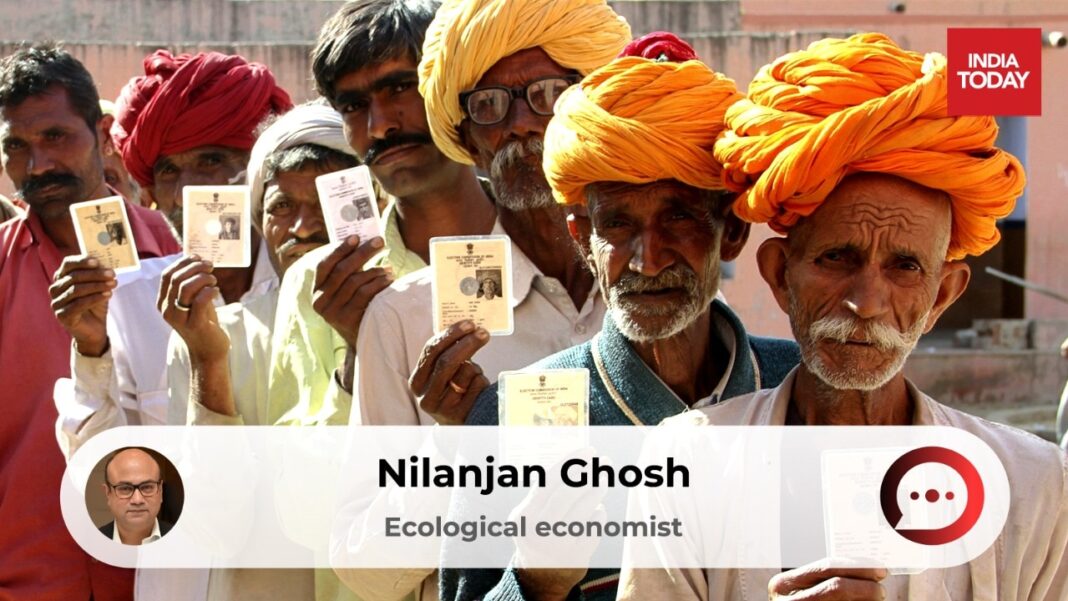
The initiation of Census 2027, after more than one and a half decades, should not be construed as a mere statistical exercise but as a structural reset of India’s developmental, political, and administrative architecture. The last Census was conducted in 2011. Since then, India has urbanised rapidly, migration patterns have shifted, digital access has expanded, and demographic transitions have accelerated unevenly across regions. Continuing to rely on projections derived from outdated data defeats the purpose of targeted subsidies and transfers.
In such a populous country with a massive, heterogeneous setting, policies have to hinge on precision. The absence of updated population data distorts targeting welfare schemes, urban planning, and electoral representation, thereby profoundly distorting decision-making and efficient ground-level policy implementation.
A DIGITAL CENSUS, BUT NOT AN INSTANT ONE
Time is opportune, opportunities are galore, and so are the challenges. With the Census being conducted through a fully digital architecture, namely, mobile-based data collection, self-enumeration portals, and real-time monitoring dashboards, there is definitely the potential for a step change in both speed and scale. Phase I, covering house-listing and asset mapping, will begin in 2026, followed by population enumeration in early 2027.
Here lies the nuance: while digitalisation accelerates processes, it does not eliminate complexity. Therefore, one can definitely expect the headline numbers to emerge quickly. But there will be highly complex variables, such as caste, migration, and occupational categories, that are dynamic, multi-layered, and deeply embedded in the historical, cultural, social, and economic realities. They cannot be presented as they appear on the surface in the very first iteration. They require a more nuanced approach with careful validation, harmonisation, classification and interpretation. The cost of speed can never be statistical robustness. In that sense, Census 2027 will test India’s ability to balance technological ambition with methodological rigour.
FROM SAMPLE ESTIMATES TO POPULATION TRUTHS
In the absence of updated population data, India’s welfare architecture, policy decisions, and debates depended heavily on sample surveys and administrative datasets — PLFS, NFHS, and NSSO. While their importance is unquestionable, they can only provide a partial picture of an extremely heterogeneous population estimated at more than 1.45 billion. At times, estimates based on these various samples lead to divergent conclusions due to what statisticians call sampling error. Hence, policy decisions based on these sample surveys will perennially bear the risk of improper targeting.
A Census, by contrast, provides population-level truth and completely eliminates this risk of sampling error. This distinction matters. Welfare targeting, subsidy design, and last-mile delivery depend critically on knowing not just how many people exist, but where they live, what they lack, and how households are structured. These nuances will be captured during Phase I, which is designed to record housing conditions, sanitation, water access, electricity, and digital connectivity. These records should be used effectively for shifting toward more granular, infrastructure-linked policy design.
Therefore, Census 2027 has the potential to recalibrate the spatial economics of development. It will reveal where migration has reshaped settlements, where peri-urban growth has outpaced governance, and where service deficits are most acute.
THE POLITICAL ECONOMY OF COUNTING
Now comes the critical question of “power” and “politics” behind the numbers. This is more so because delimitation, or the redrawing of electoral boundaries, is constitutionally tied to the first Census after 2026. This makes Census 2027 a precursor to a potential reconfiguration of India’s political equilibrium.
If population numbers form the sole basis of the delimitation formula, the implication is clear: states with higher population growth — primarily in the Hindi belt and parts of the northeast — may gain greater representation. States that have achieved demographic transition, particularly in the south, may perceive a relative loss. This creates a classic federal tension: demographic proportionality versus perceived fairness.
The emerging North–South discourse reflects this underlying fault line. The big question now is how the Parliament will navigate this. Will this navigation be done through a mathematical formula? Will there be other safeguards? What will be the basis of political negotiation? All these will determine whether delimitation strengthens democratic legitimacy or amplifies regional anxieties.
On the other hand, this is supposed to have implications for the implementation pathway of women’s reservation in legislatures. So, the Census numbers are not merely a numerical and statistical exercise; they are slated to become politically consequential.
REIMAGINING INDIA’S URBAN FUTURE
Over the last 15 years, India’s urban design has far outpaced its statistical systems. Cities have expanded into peri-urban belts, informal settlements have proliferated, and “functional urbanisation” has outstripped administrative recognition. The result: planning deficits, infrastructure stress, and governance gaps. Census 2027, with its digital and geospatial capabilities, can correct this.
Mapping population density, migration flows, and service deficits at a granular level will provide the empirical foundation for transport systems, housing policy, water provisioning, and climate-resilient urban design. In short, better data can enable better cities.
THE CASTE CONUNDRUM
There is no doubt that the most complex dimension of this Census is the enumeration of caste. The initial source of complexity arises because caste in India is a heterogeneous, multi-layered construct rather than a neat, uniform variable. It is localised, linguistically diverse, and socially fluid, often shaped by sub-caste identities, sect affiliations, and evolving claims of social mobility.
While enumeration is only the first step, the real challenge lies in classification, i.e. how these diverse self-identifications are coded, aggregated, and interpreted. This creates a paradox: the Census may generate an extraordinarily rich dataset, but one that is analytically and politically sensitive. While, on the surface, it can deepen understanding of inequality and even lead to better analysis of whether affirmative actions based on caste are still valid or should be based on other economic and social parameters, it could open a Pandora’s box of contestation.
TRUST IN DIGITAL AGE
With the Census being conducted digitally, the question of data security inevitably arises. Operating under the Census Act, 1948, the legal framework ensures strict confidentiality: only aggregate data are released, and individual information cannot be accessed under RTI or used as legal evidence.
But legal assurances and technological resilience are different animals. Cybersecurity depends on architecture, encryption, access controls, audit trails, and rapid incident response. At India’s scale, even small vulnerabilities can have large consequences. Ultimately, public trust will hinge not on statutory promises, but on demonstrated robustness. Therefore, it is of utmost necessity that the data security architecture is made robust and foolproof – no doubt this poses a challenge.
A MIRROR MOMENT FOR VIKSIT BHARAT?
Census 2027 arrives at a pivotal moment— two decades from India’s avowed vision of Viksit Bharat@2047. This offers India a mirror moment: a chance to see not as it was 15 years ago, but where it stands today, and an opportunity to project its future pathways. Census 2027 will shape how India thinks about welfare, how it plans its cities, how it negotiates its federal compact, and how it prepares for emerging demographic realities—especially the rise of an ageing population. Various projections suggest that India will move past its demographic dividend before 2045, with the dividend peaking by 2041. The “silver dividend” (i.e., the economic and social potential, value, and opportunities created by an ageing population) needs to be harnessed through a healthy ageing formula (active, healthy, and engaged older adults contribute to the economy) to mitigate this loss. For that, it needs an accurate baseline. Census 2027 will provide that baseline. And, in doing so, it will not only count India, it will redefine India.
Nilanjan Ghosh is Vice President – Development Studies at the Observer Research Foundation.


