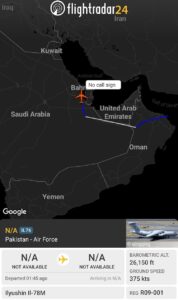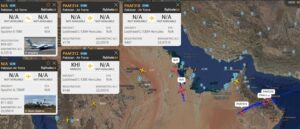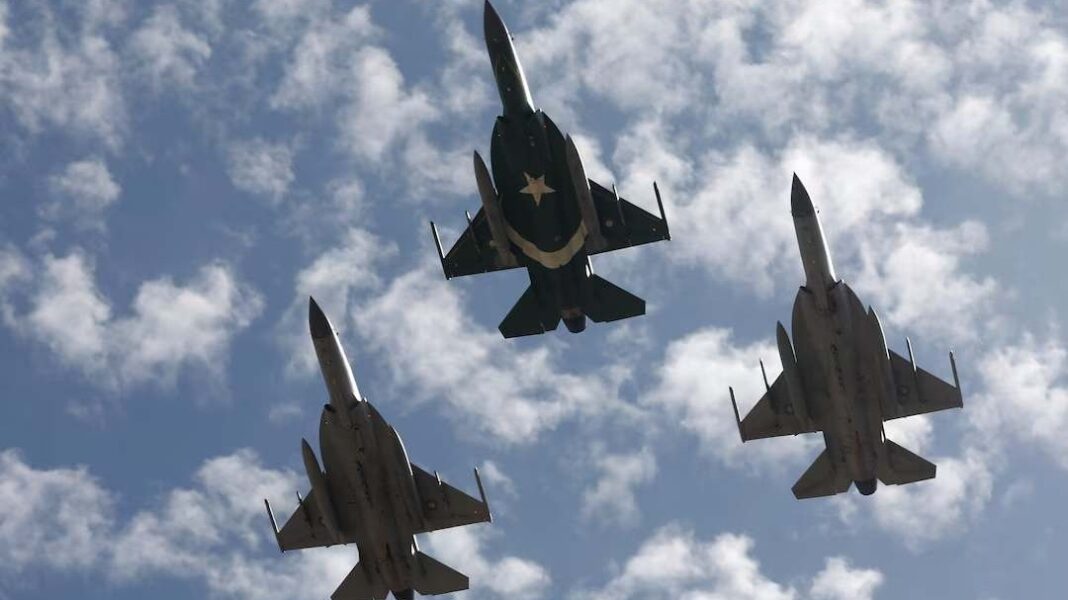
With all eyes on Islamabad, which will host the high-stakes US-Iran peace talks on Saturday, Pakistan seems to be taking no chances. With tensions still high in the Middle East despite a two-week ceasefire, Pakistan faces a critical task – to secure the aircraft of the Iranian delegation from any Israeli “misadventures”. It has resulted in one of the largest Pakistan Air Force (PAF) peacetime operations, with Islamabad scrambling fighter jets, C-130 transport aircraft, refuelling tankers, and AWACS to the Middle East.
The scale of the air shield, dubbed by some experts as an “Iron escort”, underlines the huge pressure Pakistan is under as it hosts the most consequential diplomatic meeting in recent years. On April 8, Pakistan, with help from China, managed to broker a ceasefire between the US and Iran, halting a month of fighting that killed over 2,000 in Tehran. Pakistan now needs to negotiate a permanent end to the conflict.
ISLAMABAD TURNS INTO A FORTRESS
It has, however, left no stone unturned. Pakistan clearly knows its international profile is at stake. Apart from locking down parts of Islamabad, Pakistan has activated its air defence systems in its southern and western airspaces.
“A comprehensive plan has been prepared to provide foolproof security to all foreign guests,” Pakistani minister Mohsin Naqvi told The Dawn.
US Vice President JD Vance, who is leading the American delegation, is already on his way to Islamabad. From the Iranian side, the negotiations are likely to be led by Parliament Speaker Mohammad Ghalibaf and Foreign Minister Abbas Araghchi.
If the talks do happen, it would be the highest-level face-to-face meeting between these adversaries since the 1979 Islamic Revolution.
However, with Iran’s air force almost wiped out in the war, Pakistan has deployed a large arsenal of its aircraft to set up a protective shield over Iran and the Persian Gulf for the Iranian delegation.
The reason? To avert any sabotage to the peace talks or any Israeli misadventure. Friday already saw a round of sharp exchanges between Pakistan and Israel. It started after Pakistani Defence Minister Khawaja Asif called Israel “evil” and a “curse for humanity”. Israeli Prime Minister Benjamin Netanyahu called the remarks “outrageous”. Asif, however, deleted the post after backlash.
It is under the shadow of these tensions that Pakistan deployed an expansive air security cover for the Iranian officials.
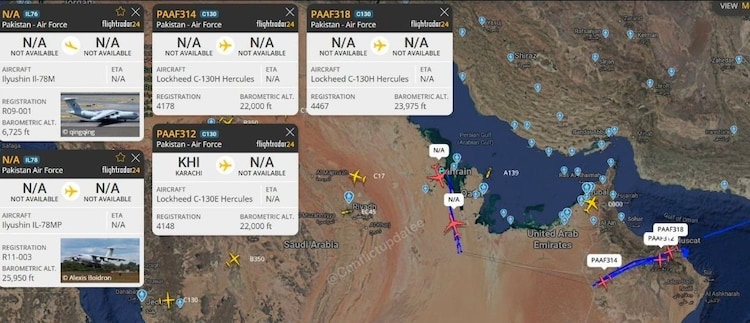
PAKISTAN DEPLOYS AIR ARMADA IN MIDDLE EAST
Flight tracking data shows Pakistani fighter jets, JF-17 Thunder and F-16s, near the Iranian port city of Bandar Abbas. The jets will escort the aircraft carrying the Iranian delegation as it begins its journey to Islamabad, which takes around three hours.
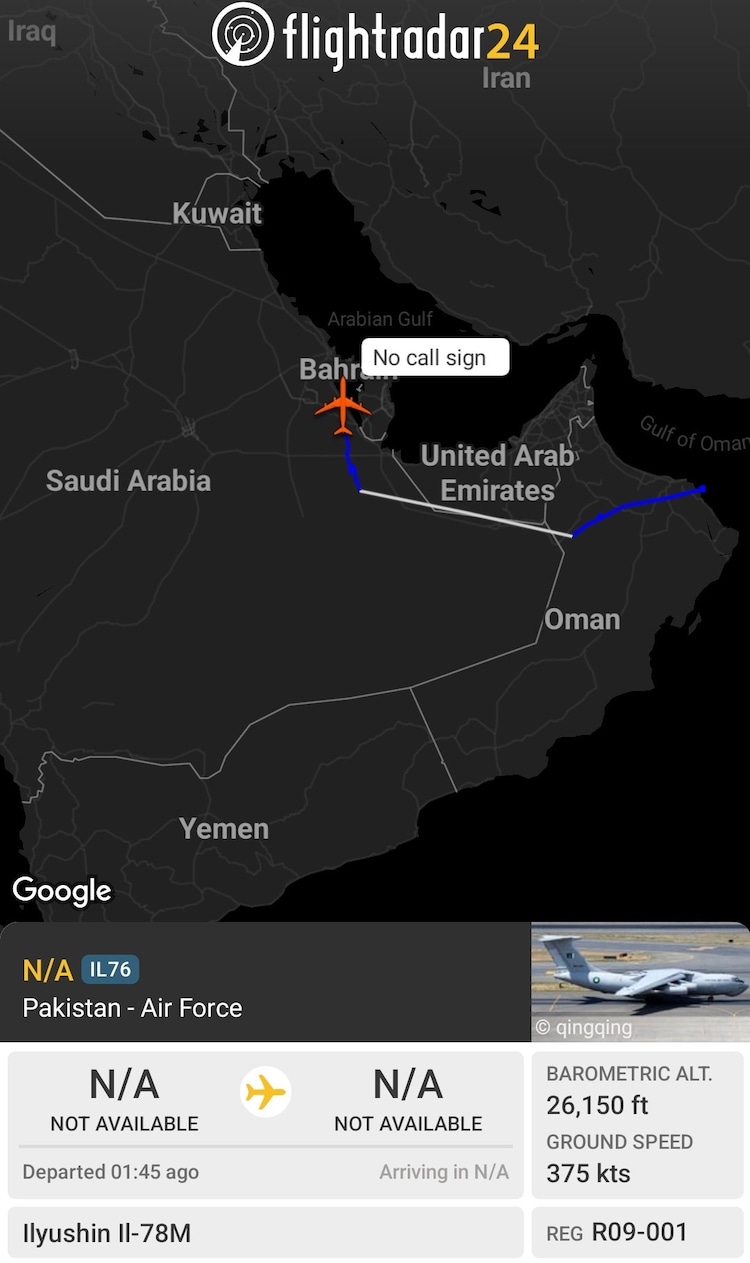
Besides, the PAF has also deployed IL-78 refuelling tankers, which allow fighter jets to stay longer in the air. Pakistan has also deployed C-130 Hercules aircraft, likely for logistics and support.
At the same time, Airborne Warning and Control Systems or AWACS, known as the “eyes in the sky”, are maintaining a continuous watch over the airspace from Pakistan to the Persian Gulf.
Interestingly, the deployment is not just limited to Iranian airspace. PAF jets have also been spotted near the UAE and Saudi Arabia, with which Pakistan has a NATO-style defence agreement, flight radar data showed. It points to a broader coordination effort with the Gulf majors.
It marks an unprecedented deployment. For Pakistan, the subtext is clear – take no chances.
“The whole world is anxiously watching the outcome of these talks, as the future of the region depends on them,” Ishtiaq Ahmad, a professor at Islamabad’s Quaid-e-Azam University, said.
LAST-MINUTE HICCUP?
However, there seems to have been some last-minute hiccups. It is still unclear whether the US-Iran talks will go ahead in Islamabad amid confusion over the inclusion of Lebanon in the ceasefire agreement.
In fact, the Iranian negotiating team has not yet left for Islamabad, according to a report in Al Jazeera. “The continuation of the attacks in Lebanon has created uncertainty about the talks,” an Iranian official said.
While Pakistan and Iran maintained that the deal included a halt in attacks on Lebanon, the US and Israel rejected it. Thus, within hours of the ceasefire deal, Israel unleashed its most furious airstrikes across Lebanon, targeting the armed group Hezbollah, a proxy of Iran. It left over 300 dead in 24 hours.
However, over the past few hours, Israel has curtailed its bombardment after Netanyahu claimed Lebanon sought direct negotiations “as soon as possible”. It remains to be seen whether the Iranian delegation will eventually take the flight to Islamabad.