
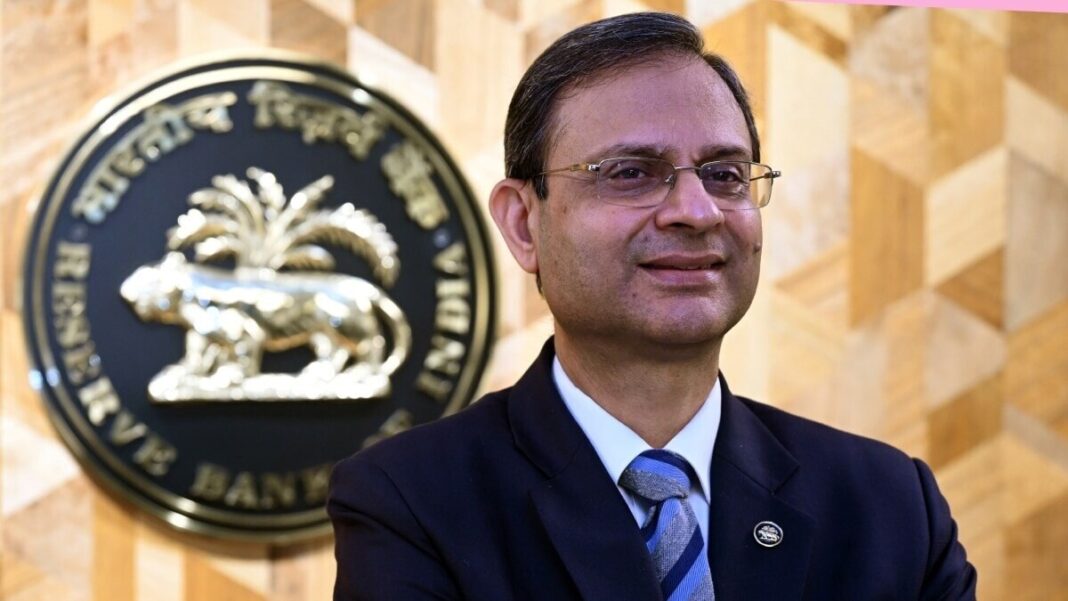
Reserve Bank of India Governor Sanjay Malhotra on Wednesday explained the central bank’s approach to the rupee, saying it will not target any fixed level even after the currency’s recent fall to around Rs 95 against the US dollar.
He said the RBI’s focus will remain on managing sharp swings in the currency rather than controlling its direction, as global factors continue to drive movements in the rupee.
His comments come after the rupee touched a record low of around Rs 95 against the US dollar and declined more than 4% during the March quarter, amid global uncertainty and rising oil prices.
POLICY REMAINS MARKET-DRIVEN
The Governor made it clear that the RBI does not target any specific level for the rupee and will continue to allow market forces to decide its value.
“Despite a stronger macroeconomic fundamental, the Indian Rupee in the last financial year depreciated more than the average in the previous years,” he said.
He added, “Our exchange rate policy remains unchanged intervention in the foreign exchange market is aimed at smoothing excessive and disruptive volatility without targeting any specific level or band.”
The RBI has followed this approach for several years, stepping in only to reduce sharp movements rather than control the direction of the currency.
FOCUS ON CURBING VOLATILITY
The Governor said the central bank’s role is to prevent extreme swings that could hurt the economy or financial markets.
“This is consistent with our long-standing policy of exchange rates being market-determined,” he said.
He added that the RBI aims to “contain excessive or disruptive volatility” so that currency movements do not go beyond what economic fundamentals justify.
GLOBAL FACTORS WEIGH ON RUPEE
The rupee’s weakness has come at a time when global risks have increased due to the West Asia conflict.
Higher crude oil prices, strong demand for the US dollar as a safe asset, and volatility in global markets have all added pressure on emerging market currencies, including the rupee.
The RBI had earlier noted that safe-haven flows into the US dollar have led to depreciation pressure on currencies of major economies.
LIQUIDITY AND FINANCIAL SYSTEM REMAIN STABLE
Despite currency pressures, the RBI said domestic financial conditions remain stable.
System liquidity has been in surplus, averaging about Rs 2.3 lakh crore since the last policy meeting, according to the Governor.
He added that the central bank will continue to manage liquidity actively to ensure that the banking system has enough funds to support economic activity.
Banks and non-banking financial companies also remain in good health, with strong capital levels and stable asset quality, the RBI said.
The RBI’s comments suggest that while the rupee has come under pressure, the central bank is not looking to defend any specific level.
Instead, it will continue to monitor global developments and step in only if volatility becomes excessive.
With oil prices, global interest rates and geopolitical tensions still uncertain, the rupee is likely to remain sensitive to external factors in the near term.


