
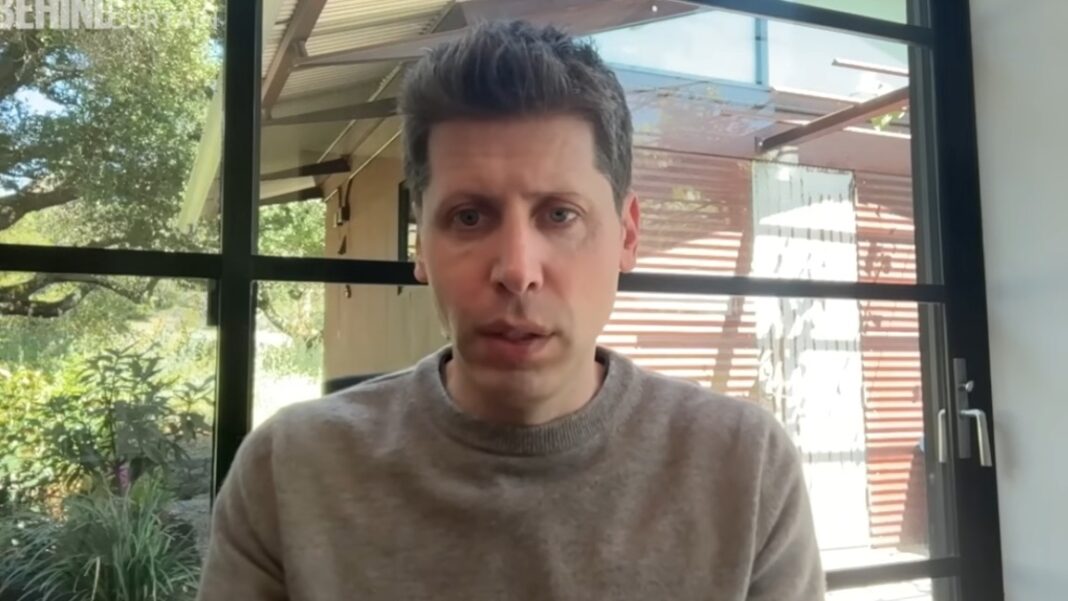
As AI continues to advance at a fast pace, Sam Altman has shared a sharp view on how the upcoming AI models could change software development. In a fresh interaction with Axios’ Mike Allen, Altman suggested that upcoming systems could allow a single individual to take on workloads that currently require an entire team of engineers, pointing to a major change in how coding work is done.
Altman said that while AI tools today are already improving developer productivity, the next phase could bring a much larger jump. He noted that some programmers currently report being two to three times more efficient with AI assistance. However, future models may push this further to a point where an individual, supported by AI and computing resources, can handle the output of a full software team.
“I’m able to do like the work of a whole team with these tools,” is the kind of statement Altman expects to become more common. This, he indicated, could change how companies approach hiring and team structures, especially for certain types of software projects where automation and AI-driven workflows can take over repetitive and time-consuming tasks.
Such a change may not necessarily replace teams entirely, but it could reduce dependency on large groups for specific tasks. Instead, smaller teams or even solo developers may be able to build, test and deploy products faster than before.
Coding roles already changing rapidly
Altman also pointed out that this transition is not a distant possibility, but something that has already begun. According to him, the nature of software development has changed noticeably in a short span of time. The difference between what coding looked like at the beginning of 2025 and early 2026 is already visible, with developers increasingly relying on AI for writing code, fixing errors and even suggesting approaches to problems.
At present, AI tools largely act as assistants that support developers in their work. But with the next generation of models, their role could expand significantly. Instead of just helping with parts of the process, AI systems may be able to handle larger portions of development tasks, allowing programmers to focus more on decision-making and system design.
Altman indicated that such improvements could also lead to faster innovation cycles, as developers spend less time on routine work and more time building new features or solving complex problems.
Altman suggests big changes coming to research and other roles
Beyond software development, Altman linked these changes to a bigger change across knowledge-based industries. As AI models improve, similar gains in productivity could be seen in fields such as research, data analysis and scientific work. He suggested that future systems may not only assist with tasks but also contribute to more meaningful outputs.
Altman noted that while current models can support smaller discoveries, the next class of AI tools could help individuals achieve what he described as “career-defining” outcomes. This could include breakthroughs that have a lasting impact on a person’s work or field.
At the same time, he acknowledged that such rapid progress raises important questions around how organisations adapt and how roles evolve. While the full impact is still unfolding, Altman’s comments suggest that AI is moving towards a stage where individual capability could increase sharply, potentially redefining the scale at which one person can operate in the software industry and beyond. But, this also raises job loss fears among people as one person will be able to do, say 10 people’s work, so what will other people do? Well, Altman has seemingly seen this future, which is why his OpenAI company has released a 13-page document, titled “Industrial Policy for the Intelligence Age,” giving ideas aimed at preparing governments and institutions for this change.


