
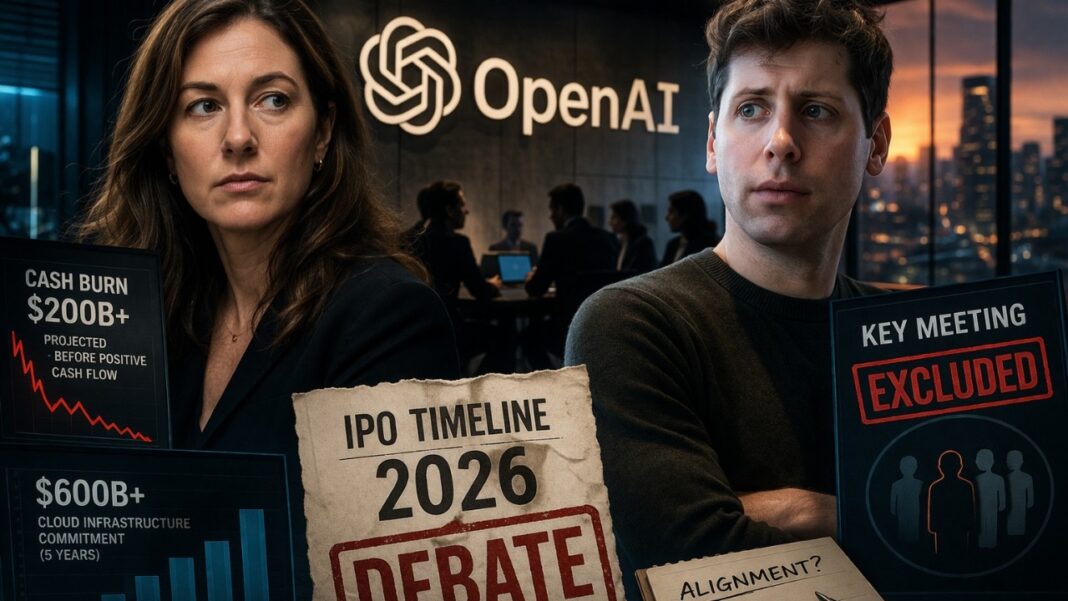
At a time when OpenAI is racing to build the backbone for its next wave of AI systems, an internal tug-of-war over money and timing is beginning to surface. A new report suggests that the company’s top leadership is not fully aligned on when it should step into the public markets, and the disagreement is now spilling into how financial decisions are being handled behind closed doors. According to The Information, Chief Financial Officer Sarah Friar has been urging caution when it comes to a potential IPO. Her internal view is that OpenAI may need more time before it is ready to face public market scrutiny, possibly pushing any listing beyond 2026.
The hesitation is not without reason. Preparing a company of OpenAI’s scale for an IPO is not just about revenue numbers, it involves tightening internal systems, ensuring compliance readiness, and building processes that can withstand regulatory checks. Friar is said to have flagged that much of this groundwork is still ongoing.
On the other hand, CEO Sam Altman appears more willing to explore an earlier timeline, with discussions hinting at a possible move as soon as the fourth quarter. This difference in approach has quietly turned into one of the key talking points inside the company.
OpenAI facing money problems? CFO flags IPO risk, Sam Altman ignores
Beyond IPO timing, the bigger worry seems to be the sheer scale of OpenAI’s financial commitments. The company is investing aggressively in computing infrastructure, a space that demands enormous capital. Estimates suggest that OpenAI’s cash burn could cross $200 billion before it reaches a stage where it generates positive cash flow.
At the same time, the company has committed over $600 billion across five years to secure cloud server capacity. This kind of long-term spending shows the intensity of the AI race, but it also raises questions about financial sustainability.
Friar has reportedly also examined how OpenAI is raising and deploying capital. A large portion of its recently announced $122 billion funding is expected to come from partners like Amazon and NVIDIA, companies that are not just investors but also key suppliers. This dual role, she believes, could complicate how financial risks are managed.
There is also the company’s close relationship with Microsoft. While the partnership has powered OpenAI’s growth so far, internal discussions have acknowledged that any disruption here could directly impact operations.
Amid all this, the report points to signs that Friar’s different approach may not be fully helping with key decisions. She was reportedly left out of some high-level financial meetings, including one involving a major investor tied to server procurement. In a move that has drawn attention, she now reports to Fidji Simo instead of directly to Altman, something that is unusual for a CFO role.
Speaking of which, there is also some chatter online suggesting that Fidji Simo may have been sidelined, though there is no official confirmation to support this claim. The speculation appears to stem from the lack of clarity around the duration of her absence after she went on medical leave. Recently, OpenAI announced a major internal reshuffle. Simo, who serves as CEO of applications, has stepped away for a few weeks to focus on her health. At the same time, Chief Operating Officer Brad Lightcap is moving into a “special projects” role. Meanwhile, Chief Marketing Officer Kate Rouch has also taken time off for health-related reasons.
Even as these developments unfold, both Friar and Altman have maintained in public that they are aligned on OpenAI’s long-term compute plans. But internally, the conversations seem far more layered, with questions around timing, spending, and control still very much in play.


