
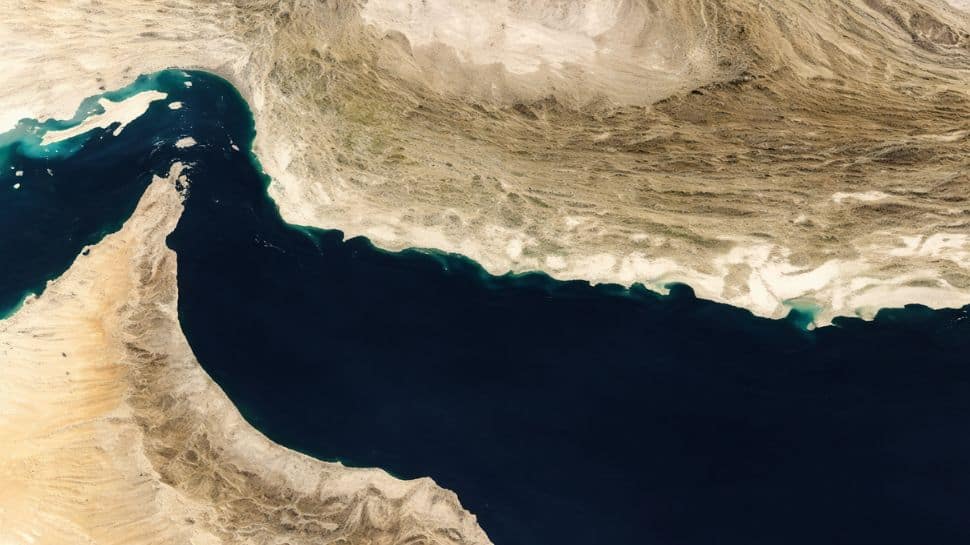
Hours after the US President Donald Trump announced a deadline for opening the vital global maritime trade route, the Strait of Hormuz, Iran’s Islamic Revolutionary Guard organization (IRGC) announced the new ‘Persian Gulf order’.
In an X post, IRGC Naval Command wrote, “The Strait of Hormuz will never return to its former state, especially for the US and Israel.”
“The IRGC Navy is currently completing the operational preparations for the plan communicated by Iranian officials regarding the “new order” of the Persian Gulf,” the post further read.
The head of Parliament’s Civil Commission announced a new bill titled “Exercising Sovereign Rights of the Islamic Republic of Iran in the Strait of Hormuz.”
The bill, with broad economic, security, and political implications, has entered the legislative review cycle.
The free flow of trade has been restricted since February 28, after the US and Israel launched ‘pre-emptive’ strikes on Iran.
What is the New Persian Gulf Order?
The proposed new Persian Gulf order requires toll payments in Iran’s national currency, bans transit for US and Israel-linked vessels, and restricts access for countries imposing unilateral sanctions against Iran.
Iran and Oman control the Strait of Hormuz, which connects the Persian Gulf to the Gulf of Oman and then to the Arabian Sea. The narrow passage oversees almost 20 % of the global trade.
Earlier, Iran’s Foreign Minister Abbas Araghchi declared that the future of the Strait of Hormuz will be decided collaboratively by Iran and Oman once the ongoing conflict concludes, excluding foreign nations from the process.
Iran-Oman talks for smooth transit through Hormuz
On Sunday, Oman’s Foreign Ministry announced that the Sultanate and Iran have initiated discussions to ensure uninterrupted maritime traffic through the vital Strait of Hormuz amid the regional conflict, now in its second month.
The ministry’s statement on X noted a Saturday, April 4 meeting at the deputy foreign minister level, with specialists from both countries participating.
The statement emphasised discussions on “possible options for ensuring smooth transit flow” through the Strait of Hormuz, a vital global energy chokepoint handling much of the world’s oil and gas shipments.
“The Sultanate of Oman and the Islamic Republic of Iran held a meeting on April 4, 2026 CE, at the level of deputy ministers in the foreign ministries of the two countries, attended by specialists from both sides. The meeting discussed possible options for ensuring the smooth flow of transit through the Strait of Hormuz amid the circumstances currently prevailing in the region,” it stated.
Experts from both sides shared various proposals and viewpoints during the meeting to sustain regional stability and seamless maritime traffic. The statement added that these will undergo further review.
Earlier, Iranian Deputy Foreign Minister Kazem Gharibabadi stated in a Sputnik interview that Iran was finalising a draft protocol for a new navigation regime in the Strait of Hormuz and plans to discuss a joint framework with Oman.
During the interview, Gharibabadi stated, “The draft of this protocol is currently in the final stages of preparation. Once we have it ready, we will begin negotiations with Oman so that we can draft a joint protocol.”
He stated that the proposed protocol aims to regulate navigation in the strategically vital Strait of Hormuz, with Tehran seeking Oman’s cooperation for a mutually agreed mechanism, as reported by Sputnik.
The developments followed new threats from US President Donald Trump, who warned of strikes on Iran’s power plants and bridges unless the critical shipping route is reopened.


