
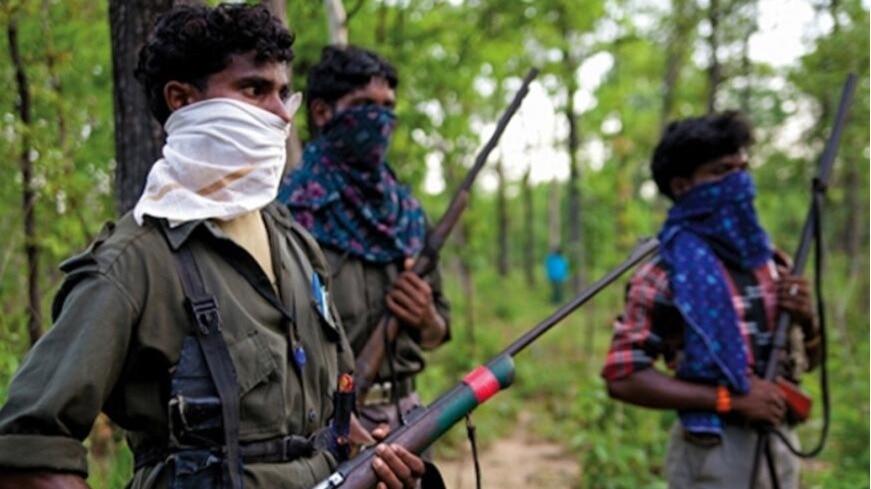
By the end of March 2026, India’s sustained campaign against Left Wing Extremism (LWE) had reached an important stage, marked by a visible contraction in the scale and spread of Maoist activity across its traditional strongholds.
The March 31, 2026 milestone in this effort reflects not a sudden shift, but the outcome of a long-term strategy combining security operations, development outreach and rehabilitation measures.
Within this broader context, the surrender of senior Maoist commander Paparao alias Mangu in the Bastar region in late March assumes significance as a clear indicator of the changing ground realities.
Active for more than two decades in the forests of Indravati–Abujhmad, Paparao was associated with a network that once challenged the state’s presence across large parts of central India. His decision to lay down arms reflects a wider pattern of weakening organisational structures and declining ideological appeal within the Maoist movement.
For decades, Maoist insurgency remained one of India’s most serious internal security challenges. Vast forested and remote areas across Chhattisgarh, Jharkhand, Odisha, Maharashtra and parts of Andhra Pradesh were long considered part of the so-called Red Corridor, where administrative reach was limited and the state’s authority was seen as weak.
In these regions, Maoists exploited local grievances, difficult terrain and the distance of governance to build a durable presence. But over the past decade, this entire picture has changed significantly. Areas once identified with landmines, ambushes and recurring violence are now gradually moving toward security, development and democratic participation.
One of the clearest signs of this transformation has been the steady rise in Maoist surrenders.
Official data show that between 2019 and 15 January 2026, 5,880 Left Wing Extremist cadres surrendered across the country. This is not merely a statistical shift; it reflects declining morale, broken confidence and weakening structures and fading ideological conviction within the Maoist organisation. In recent years, the trend has accelerated further.
In 2025 alone, 2,337 cadres surrendered, while over 630 surrenders were recorded in just the first three months of 2026. This clearly suggests that the organisation no longer retains the confidence it once did. In particular, the large number of cadres giving up arms in Chhattisgarh and Telangana shows that the Maoist network is struggling to hold its ground. This shift reveals not only changes on the ground, but also ideological and organisational fatigue within the movement.
This situation did not emerge overnight. It is the result of a long-term, coordinated and multi-layered strategy pursued by both the Union and state governments. Security forces maintained continuous pressure. The CRPF, CoBRA battalions, state police forces and other specialised units carried out operations that steadily weakened the Maoist structure.
This pressure was not limited to major encounters or large offensives; it was also sustained through area domination, regular patrols, intelligence-based actions and local coordination. Places where Maoists once moved freely have now seen greater access by security forces, reducing the space available to them. This has had a deep impact on their movement, supply chains and local support networks.
A key strength of the government’s strategy has been that it did not rely on security measures alone. Treating the Maoist problem as a multi-dimensional challenge, the Centre and the states attempted to address it through security, development, administration, connectivity and rehabilitation together.
This multi-pronged approach recognised that unless roads, mobile connectivity, banking services, education, healthcare and livelihood opportunities reached remote regions, security action alone would not create durable change. It was with this understanding that efforts were made in many Maoist-affected areas to expand infrastructure, roads, telecom towers and administrative access. As a result, areas that once felt cut off are gradually becoming more connected to the mainstream structures of governance.
Various central schemes have also accelerated this change. Programmes such as the Security Related Expenditure Scheme provided state governments with support for operational costs, security infrastructure and other essential arrangements. The establishment of fortified police stations, improved transport, access to modern equipment and better road connectivity in remote areas significantly enhanced the capacity of security forces.
Across Left Wing Extremism-affected areas, 656 fortified police stations have been built and more than 15,000 kilometres of roads have been constructed under the two LWE-specific road schemes. As a result, it became increasingly difficult for Maoist groups to retain their old bases. Terrain that once worked in their favour has, because of the state’s growing presence, increasingly turned into a space of pressure for them.
Yet the other side of this story, equally important, is development and welfare. Many districts that once experienced deep Maoist influence were brought under initiatives aimed at improving health, education, nutrition, roads, employment and basic services. When a road reaches a village, when banking services become available, when mobile networks arrive and when people begin receiving the benefits of government schemes directly, the presence of the state is felt not only as authority but also as access and opportunity.
In remote tribal and forested regions, this change has been especially significant. It has given local communities confidence that integration with the mainstream is in their interest.
Even so, the most humane and perhaps the most effective reason behind the weakening of the Maoist movement has been the Surrender-cum-Rehabilitation Scheme.
This is not merely a surrender policy; it is a pathway back. Former cadres who abandon violence are offered financial assistance, skill development training, housing support, security and other rehabilitation measures. Under the present framework, higher-ranking surrendered cadres are eligible for immediate financial assistance of 5 lakh, while other cadres are provided 2.5 lakh, along with incentives linked to surrendered weapons and vocational training supported by a monthly stipend of 10,000 for three years.
The message is crucial: the state’s doors are not closed to those willing to leave the gun behind. Many former Maoists are now living normal lives as farmers, small entrepreneurs, labourers, or community volunteers. This is not only a sign of policy success, but also proof that when the path of violence closes and a dignified alternative is available, change becomes possible. Paparao’s surrender symbolises this wider transition.
Bastar remained synonymous with Maoist violence for a long time. Its geography, dense forests and limited administrative reach gave Maoist networks space to survive. But the changes now visible show that the balance of power on the ground has shifted. The surrender of a senior commander like Paparao indicates that confidence within the organisation is eroding. This is not only the outcome of security pressure, but also the result of a broader environment in which the state has simultaneously advanced pressure, development and rehabilitation.
India’s experience shows that defeating extremism is not merely a matter of military strength. It requires political resolve, institutional coordination, sustained administrative effort, the trust of local communities and a practical framework for rehabilitation.
The gradual decline of Maoist influence across Bastar and beyond reflects the success of this integrated approach. The contraction of Left Wing Extremism is now visible not only in surrender figures, but also in the shrinking geography of violence.
Official data show that the number of districts reporting LWE violence fell to 32 in 2025 and by 29 January 2026 only 5 districts and 11 police stations were still reporting such violence. Over the longer term, LWE violence incidents have declined from 1,936 in 2010 to 234 in 2025, while resultant deaths of civilians and security personnel have fallen from 1,005 to 100 over the same period. In areas where the language of the gun once dominated, a new language of surrender, development and democratic participation is beginning to take shape.
That is why Paparao’s surrender is not just an isolated event involving one individual. It signals the passing of an era. The period when the Red Corridor stood as a symbol of state weakness and Maoist strength now appears to be receding. Rising surrenders indicate that the promise of peace, development, democratic participation and dignified rehabilitation is increasingly overtaking the appeal of armed rebellion.
The story of Bastar today is not only one of security success; it is also the story of rebuilding trust between the state, society and local communities. And that is why Paparao’s laying down of arms stands as a sign of a much larger historic shift.
Mayank Chandra is a social development leader with over two decades of on-ground experience. He specialises in rural development, women’s empowerment and large-scale social initiatives.


