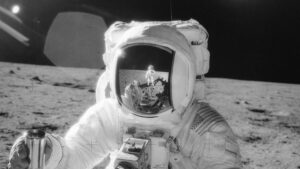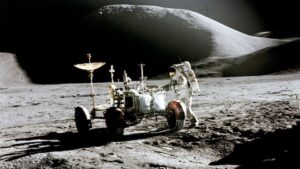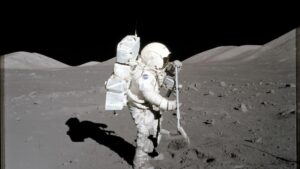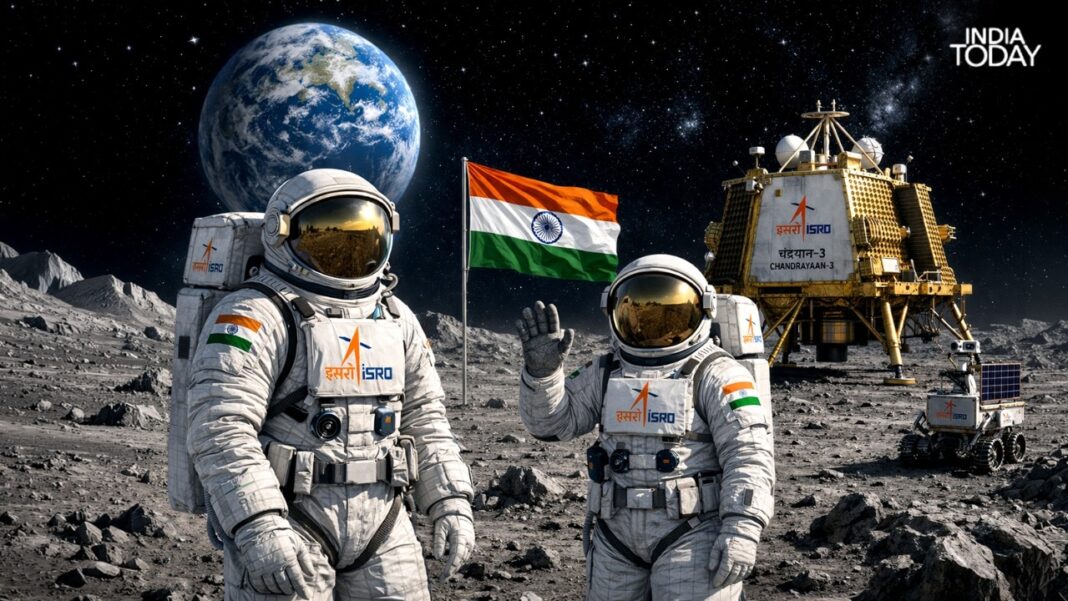
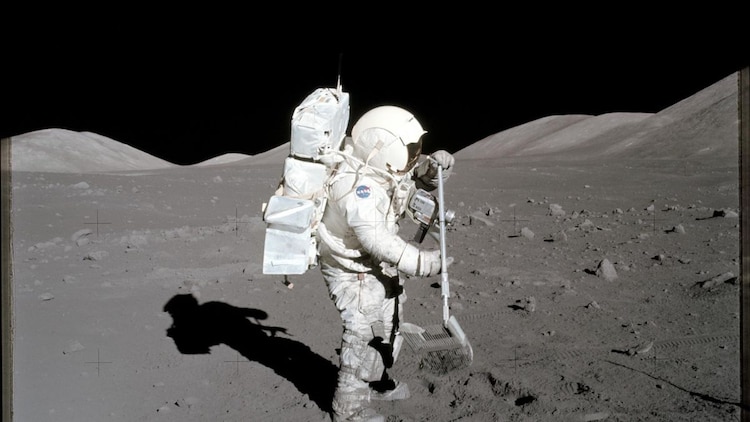
The last human footprint on the Moon is 54 years old, and nobody has gone back to make another one.
The astronaut who made it climbed back into the lunar module in December 1972, sealed the hatch, and left. No one has returned since. Not because science ran out. Not because the destination lost its pull. Because the will, and the money, and the appetite for risk ran out first.
In April 2026, that silence finally broke. Nasa launched four astronauts on Artemis II, the first time humans ventured beyond low Earth orbit, the band of space extending roughly 2,000 kilometres above Earth’s surface where the International Space Station circles, since Apollo.
Astronauts Reid Wiseman, Victor Glover, Christina Koch, and Jeremy Hansen are not landing. They are rehearsing.
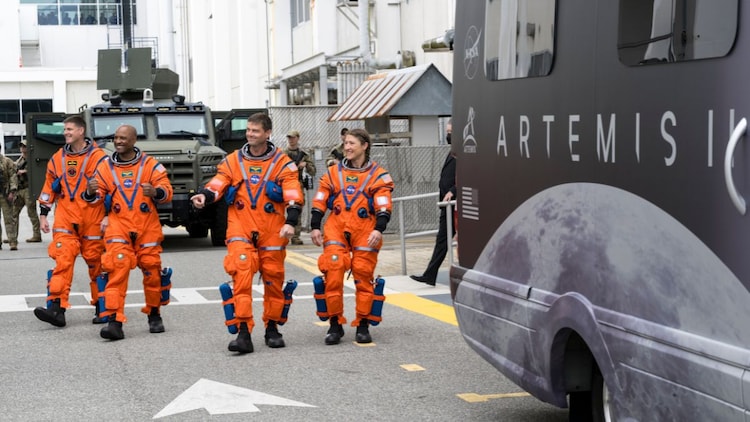
The mission exists to prove that humans can survive the journey to lunar distance and return safely. The actual touchdown comes later. And India, watching from the ground, has circled its own date: 2040.
Fourteen years to build a rocket that does not yet exist, master a propulsion system never before used in an Indian vehicle, return lunar samples for the first time in the country’s history, and keep a crew alive for 15 days in deep space, beyond the Van Allen belts, the two doughnut-shaped zones of high-energy radiation that surround Earth and are held in place by its magnetic field, where radiation has no atmosphere to soften it and no rescue is possible.
Every one of those tasks is, by itself, the hardest thing the Indian Space Research Organisation (Isro) has ever attempted.
A parliamentary audit presented to both Houses of Parliament on March 25, 2026, arrived at precisely this moment. The 410th Report of the Department-Related Standing Committee on Science and Technology did not question the goal.
But it put the machinery behind that ambition on the public record. The numbers it contained were pointed. They were not, however, the whole story.
IS INDIA’S MOON ROCKET ACTUALLY BEING BUILT?
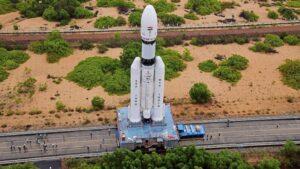
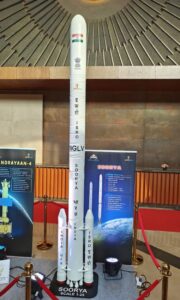
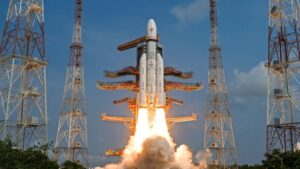
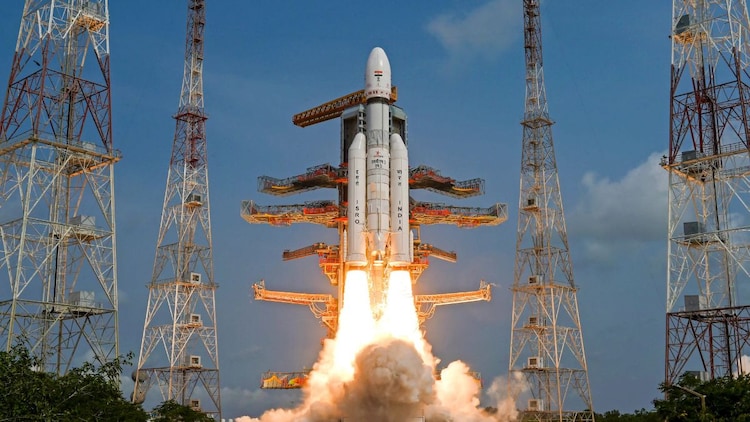
The Next Generation Launch Vehicle, or NGLV, named Soorya, was approved by the Union Cabinet in 2024.
Its project duration is 96 months from the date of approval, covering facility commissioning, systems development, and three developmental test flights.
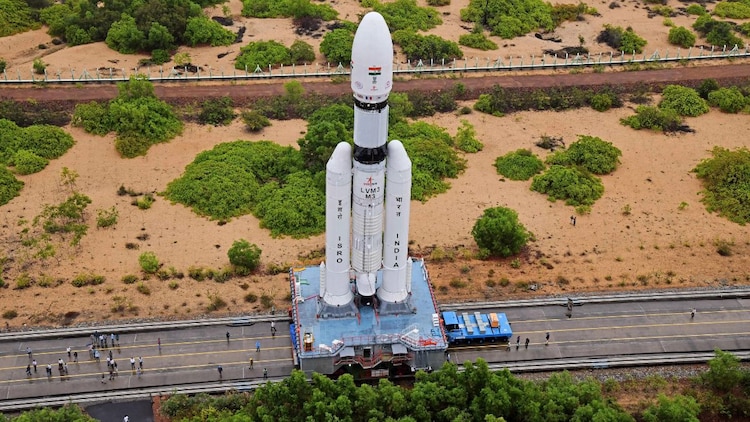
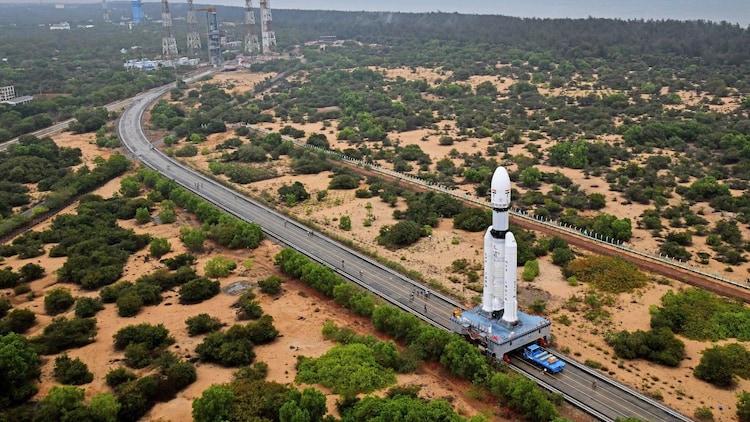
The first of those flights is targeted within 84 months. In its heavy-lift expendable configuration, or the version that is used once and not recovered, Soorya will place 30 tonnes into low Earth orbit, roughly three times the maximum payload of the current LVM3, or Launch Vehicle Mark 3, which is India’s most powerful operational rocket today.
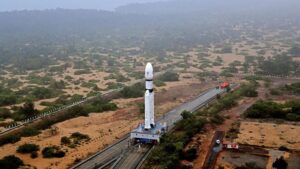
According to Isro’s published specifications, Soorya will stand approximately 93 metres tall, roughly the height of a 30-storey building, with a lift-off mass of around 1,000 tonnes.
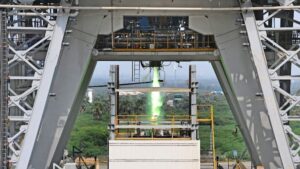
What separates Soorya from everything India has built before is its engine. The first and second stages use LOX-methane engines, or engines that burn liquid oxygen and liquid methane as propellants, designated LME-1100, each producing a nominal thrust of 1,100 kilonewtons.
Thrust is the force that pushes a rocket upward, and one kilonewton is roughly the force needed to lift 100 kilograms against gravity.
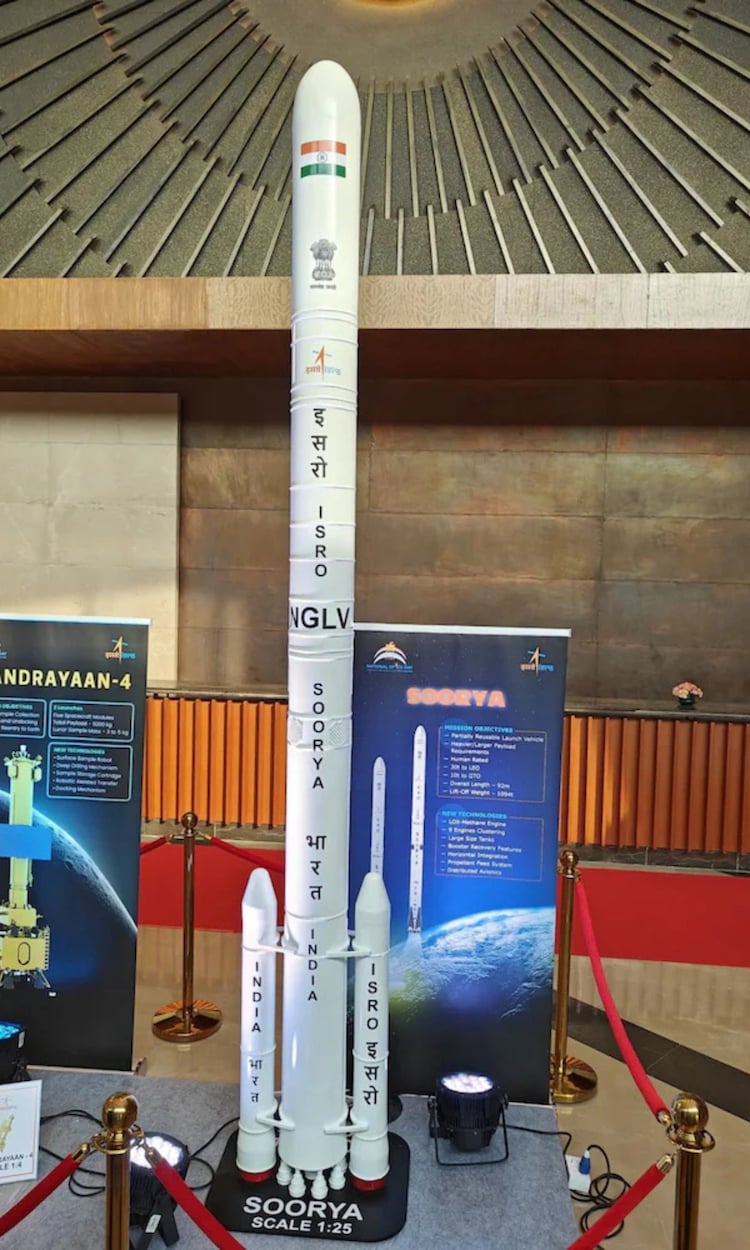
Nine of these engines will cluster on the first stage. Two will power the second. The third stage will be an uprated or more powerful version of the cryogenic stage from the LVM3.
A cryogenic stage uses propellants stored at extremely low temperatures. In the case of LVM3, these are liquid oxygen and liquid hydrogen. The stage produces 22 tonnes of thrust.
Methane has never been used in an Indian launch vehicle. It is cleaner than kerosene, denser than liquid hydrogen, and storable at temperatures far less punishing than cryogenic hydrogen, which must be kept at minus 253 degrees Celsius.
SpaceX uses it in Starship. Europe is developing it for the Prometheus engine.
Isro is building it from scratch, which means the propellant storage, handling, and fuelling infrastructure at the launch base must also be built from scratch.
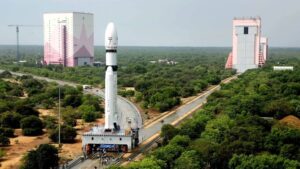
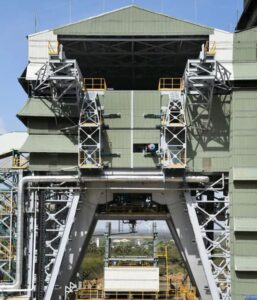
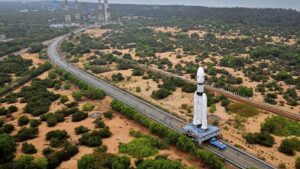
The scale of what needs to happen at Sriharikota, India’s only orbital launch facility located on a barrier island off the coast of Andhra Pradesh, before Soorya can fly is considerable.
A retired senior scientist at Isro chooses his words carefully when describing where that process stands.
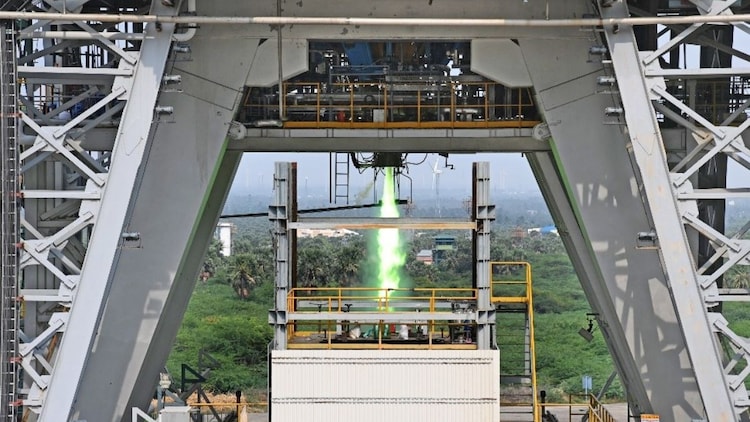
The NGLV is a new generation launch vehicle, where it can carry roughly 30 tonnes of payload to LEO and is under development, he says. The required launch pad is planned to be constructed at Satish Dhawan Space Centre (SDSC), he tells indiatoday.in
Planned. Not built. Not under construction.
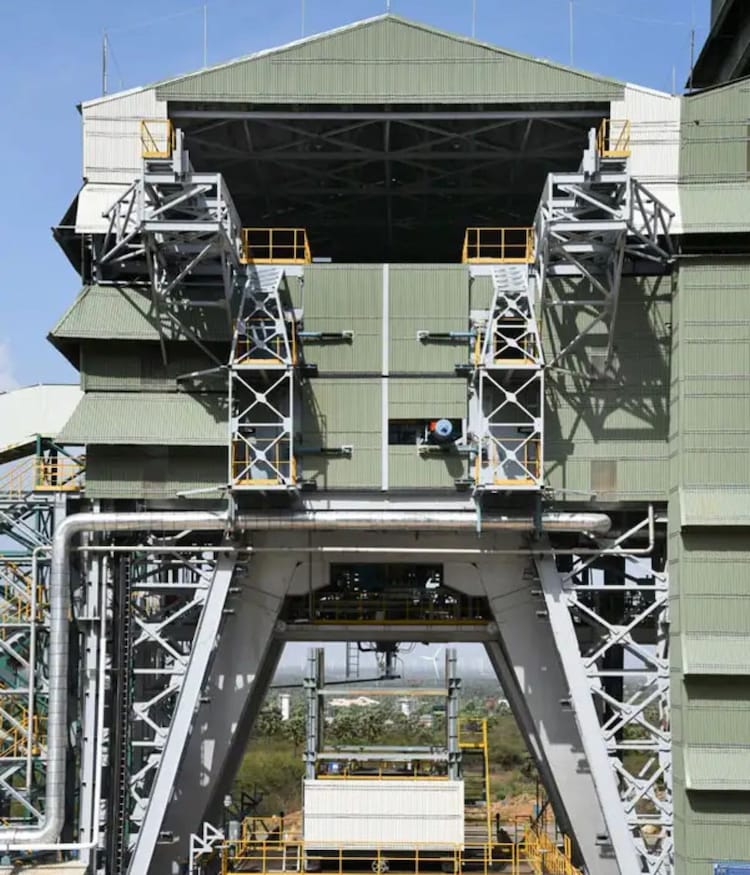
The Third Launch Pad, or TLP, was approved in 2025 with a sanctioned budget of Rs 3,984.86 crore and a target commissioning date of 2029-30.
It is being designed with a universal and adaptable configuration to support the NGLV, which is an LVM3 with a semi-cryogenic stage, and future vehicles intended for crewed lunar missions.
It will also serve as a standby for the Second Launch Pad, which has been in operation for over two decades and will carry the Gaganyaan crew. Without the Third Launch Pad, Soorya has nowhere to stand.
A crewed Moon landing using Soorya will also require two launches, not one.
The rocket cannot carry the lunar lander, the propulsion stage, and the crew in a single flight.
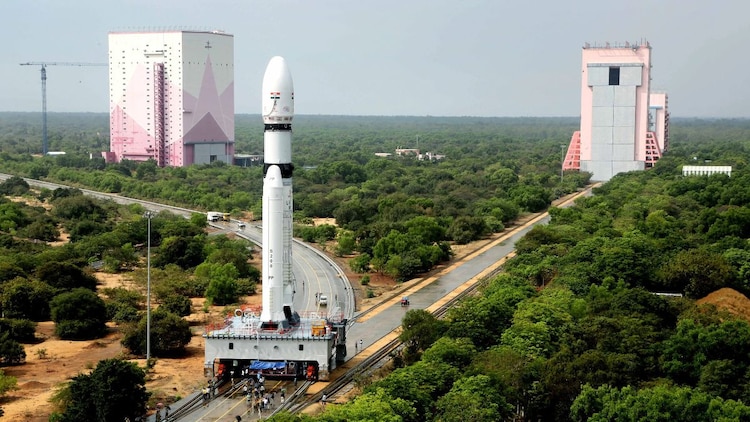
The architecture currently under study calls for the lander to launch first into Earth orbit, followed within roughly 30 days by the crew.
The two spacecraft then dock in orbit, which means they physically connect with each other in space, before the combined stack fires toward the Moon.
This approach is called Earth Orbit Rendezvous, and it is the same foundational logic that reinforced the Apollo programme, though Apollo managed it on a single Saturn V rocket. India does not yet have a rocket powerful enough to do it in one shot.
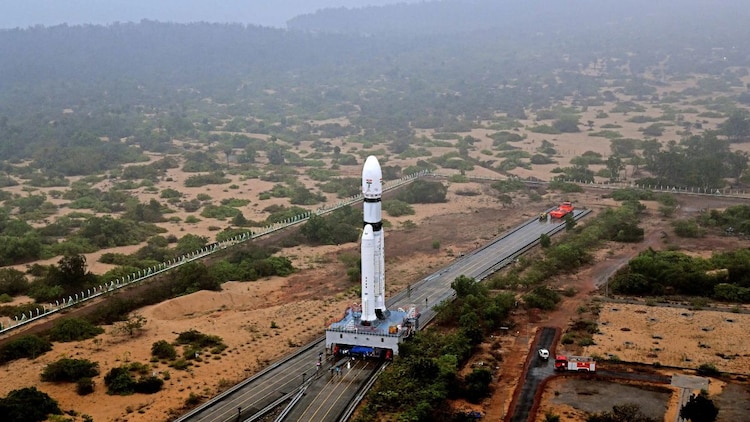
The retired scientist describes the concept for back-to-back launches at SHAR, which is the informal name for the Sriharikota range: one vehicle can be assembled at the launch tower and simultaneously a second can be prepared in the PIF, or PSLV Integration Facility, a separate building where rockets are assembled before being rolled out to the pad.
This is a concept, he says, where, after the initial launch from the pad, the assembled one at the PIF can be rolled out to the pad for a successive launch. It depends on facilities that are going to be planned.
The semi-cryogenic engine programme runs alongside all of this.
A semi-cryogenic engine uses a combination of liquid oxygen, which must be stored at cryogenic temperature, and kerosene, which can be stored at normal room temperature, making it easier to handle than a fully cryogenic engine.
The SE-2000, Isro’s semi-cryogenic engine under development, is being built as a high-thrust booster for an upgraded LVM3.
Several sub-assemblies, which are the individual components of the engine, have been fabricated, and an integrated hot test, referring to a full engine firing on the ground, is targeted by the end of 2026.
On propellant handling, the retired scientist is confident: semi-cryo development activities are with LPSC, or the Liquid Propulsion Systems Centre, the Isro centre responsible for developing liquid and cryogenic propulsion systems.
SDSC handled the cryogenic stage. Semi-cryo can be handled with that experience.
Pad abort protocols, or the emergency procedures that would be activated to pull the crew to safety if something went wrong on the launch pad before lift-off, were once tested at SDSC, the retired scientist confirms.
Safety teams will be preparing plans ahead of time for handling crew and vehicle safety.
Everything is planned, conceptual, or forthcoming. That is not a criticism. It is a description of where a programme of this complexity must necessarily be at this stage.
The NGLV was approved two years ago. A 96-month programme is not expected to have hardware on the pad in year two. What matters is whether the sequencing holds.
WHAT IS MOON THE ACTUALLY HIDING?
The engineering argument for going to the Moon is inseparable from the scientific one.
If India is going to spend what it will cost to land humans on the Moon, science has to justify it.
Dr Anil Bhardwaj, Director of the Physical Research Laboratory (PRL) in Ahmedabad, one of India’s premier space science institutions, makes that case with precision and without hesitation.
Dr Bhardwaj, who supervised the development of the ChaSTE and APXS payloads on Chandraayaan-3 payloads, explained how India’s Moon mission changed something fundamental regarding our lunar understanding.
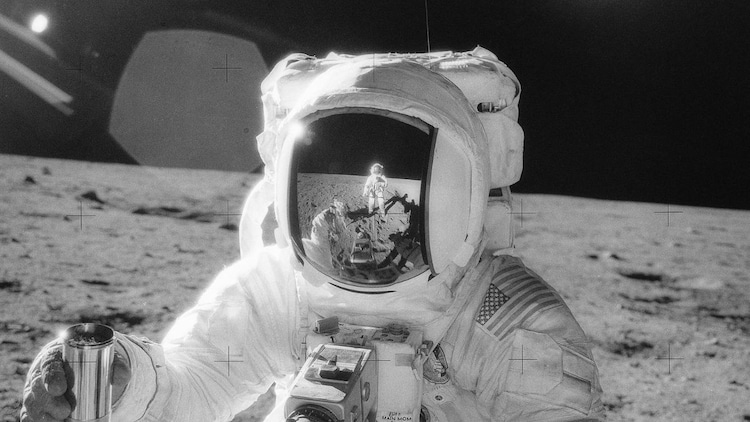
The ChaSTE probe acted as a sophisticated thermometer that measured how the lunar soil traps or releases heat at different depths, while the APXS scanner functioned as a chemical analyser to identify the specific minerals and elements present in the soil.
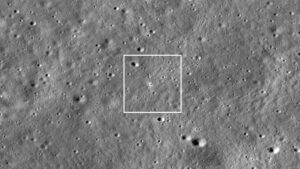
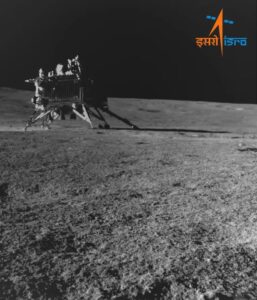
What the probe confirmed at the Shiv Shakti landing site, the name given to the spot where the Vikram lander touched down near the lunar South Pole in August 2023, was not what scientists had fully anticipated.
The lunar surface does not conduct heat downward the way Earth does. Within the top 10 centimetres of regolith, which is the layer of loose, fragmented material covering the solid rock of the Moon’s surface, Chandrayaan-3 recorded a temperature drop of almost 50 Kelvin.
A drop of 50 Kelvin is a dramatic change at just 10 centimetres of depth.
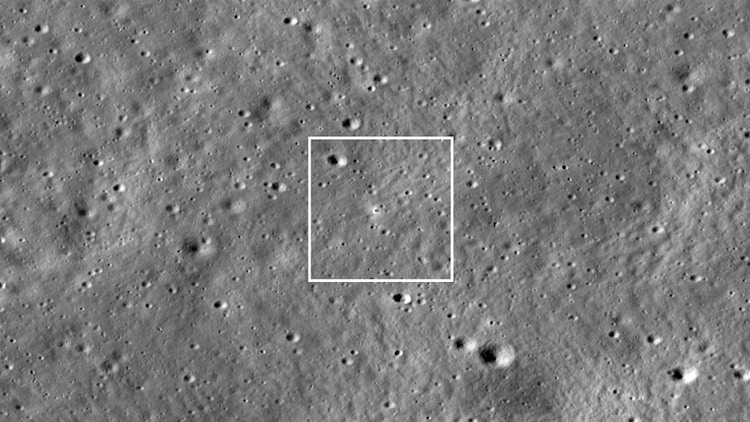
Dr Bhardwaj, who served as principal investigator on the Chandrayaan-1, Mars Orbiter Mission, Chandrayaan-2, and Aditya-L1 missions, tells indiatoday.in that his team has published simulations corroborated by Chandrayaan-3’s observations showing that water ice can sustain itself even at higher latitudes on the Moon, and not just the permanently shadowed craters.
These are craters near the lunar poles that never receive direct sunlight because of the low angle at which sunlight strikes, and where temperatures can drop to minus 200 degrees Celsius.
“We don’t have to go to the poles,” Dr Bhardwaj says. “We can find ice and water ice beneath the lunar surface even at the Shiv Shakti point.”
This is not a small finding. It means the scientific return of the 2040 mission is not limited to a single destination. The lunar South Pole remains the target, but the water available to sustain a human presence on the Moon is more accessible, and more widely distributed, than the pre-Chandrayaan understanding suggested.
The Lupex mission, which stands for Lunar Polar Exploration mission and is formally designated Chandrayaan-5, will be the first attempt to verify and quantify this below the surface.
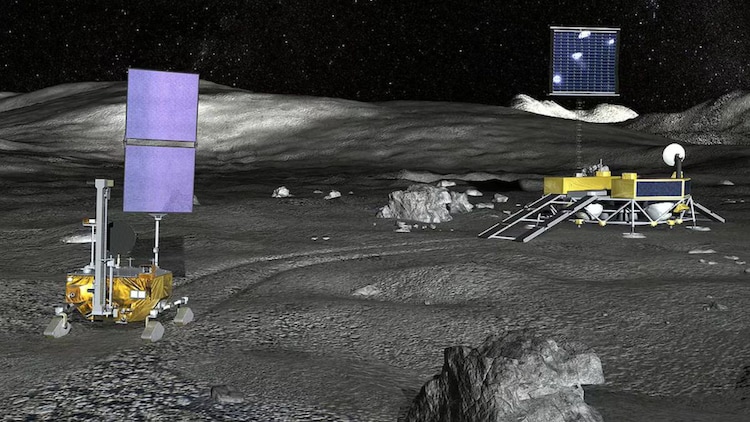
India is providing the lander. Japan’s JAXA, or Japan Aerospace Exploration Agency, is providing the rover, which also carries instruments from Nasa, the European Space Agency (Esa), and other partner agencies, and will launch the spacecraft on its H3-24L vehicle.
The mission recently cleared a critical joint design review between Isro and JAXA, confirming that the lander and rover configurations have been formally approved and the programme is cleared to move into the next phase of development.
It is a significant milestone for one of India’s most ambitious international collaborations, bringing the 2028 launch target meaningfully closer.
PRL is contributing a rover payload called Prathima, which will measure permittivity beneath the surface of permanently shadowed regions.
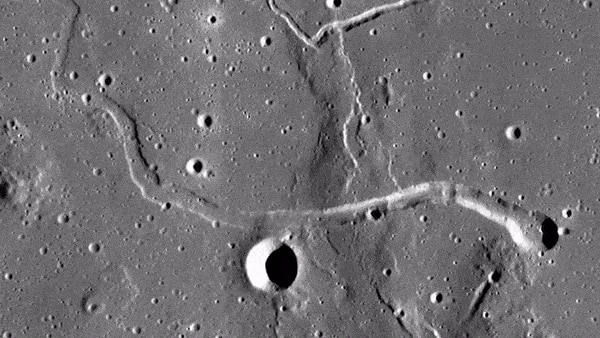
Permittivity is a measure of how easily an electric field passes through a material, and water ice has a very different permittivity from dry lunar soil, which is why measuring it allows scientists to detect and quantify water ice without physically drilling into the ground.
From permittivity, the team will derive water ice abundance, or the concentration of water ice present.
A second PRL instrument on the lander will track how that water ice changes, by conducting experiments for three months.
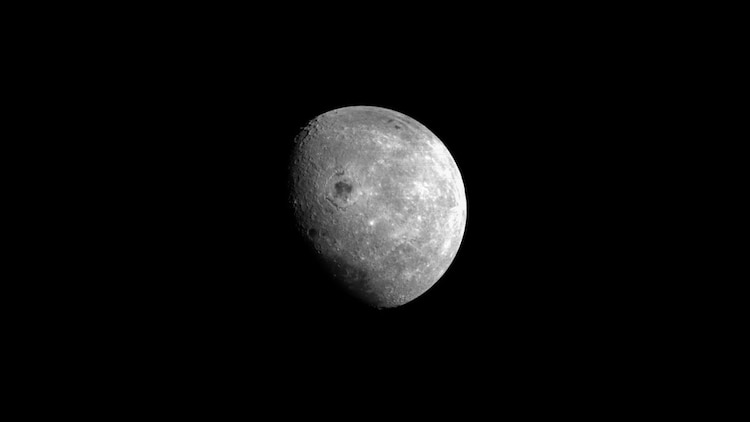
The rover will pre-charge its batteries in sunlight before descending into the icy cold, permanently shadowed craters, collect its measurements, and then return to the light to recharge, repeating this cycle throughout the mission.
The Lupex mission is targeted for September 2028.
“It will be the first mission where we will actually be making in-situ measurements, those taken directly at the location rather than from orbit or from a distance, in the permanently shadowed regions of the Moon,” Dr Bhardwaj says. “So far, we have known only through remote sensing.”
Remote sensing refers to the technique of observing from orbit using instruments that detect radiation reflected or emitted by the lunar surface, without physically the Moon.
But Lupex is preparation. The scientific prize is the crewed mission, for a reason no robotic programme can fully address.
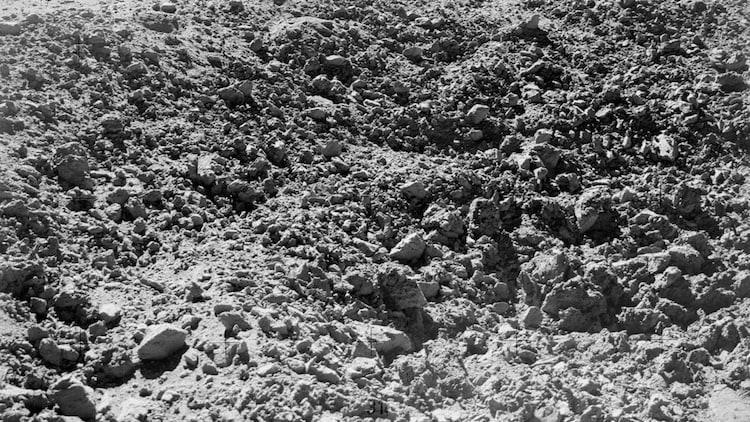
“Robots are always limited by the sensors they carry and the algorithms they run on. Humans have many other sensors,” Dr Bhardwaj says.
“These include our eyes, our ears, and our hands. They are able to see a much larger area at a given point of time compared to any camera on board, which is directional. The amount of data a human can collect will be much larger and more intelligently full compared to a robotic mission,” the PRL Director adds.
When a human returns to the Moon, they will bring samples. Not just surface regolith, but material preserved at depth, each layer separated without contamination and for laboratories on Earth.
If the sample comes to the lab, Dr Bhardwaj says, the science becomes manifold. “A hundred times more. A thousand times more.”
His laboratory at PRL has been analysing samples from Apollo, Luna, and both Hayabusa asteroid missions, the Japanese space agency’s missions that collected samples from asteroids and returned them to Earth, for five decades.
When we talk about samples, he says, we are referring to one nanogram or one milligram of material.
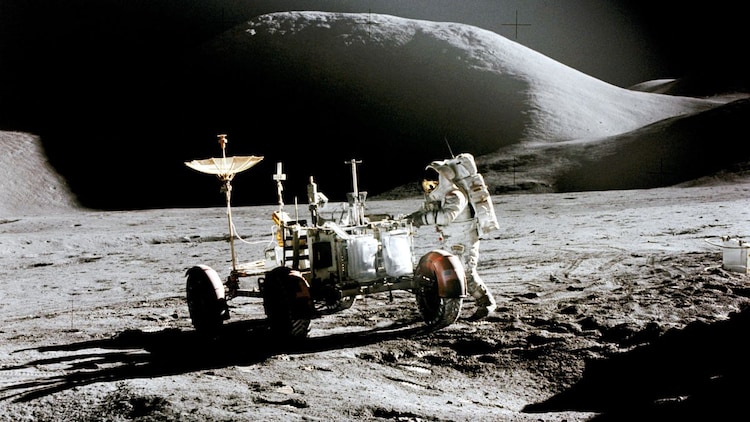
A nanogram is one billionth of a gram, which gives us a sense of how sensitive the analytical instruments at PRL are, and how much science can be extracted from a quantity of material so minute.
“These are very precious samples. There is no cost tag for them, but in terms of science, they are highly resourceful,” Dr Bhardwaj says.
The deepest question, for the PRL Director, is the Moon’s origin itself.
The giant impact hypothesis, which is the leading scientific theory for how the Moon formed, predicts that a Mars-sized object, called Theia, struck early Earth approximately 4.5 billion years ago, and the debris thrown into orbit coalesced into the Moon.
This is a process that would have left the entire lunar body molten.
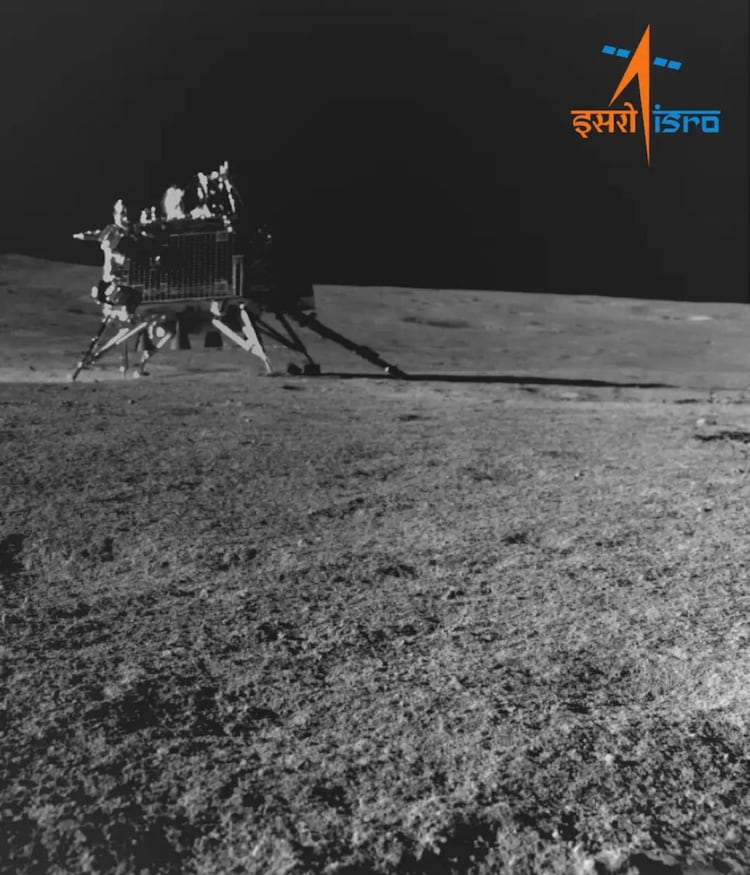
“There should be a lunar magma ocean,” Dr Bhardwaj says, referring to the theoretical period when the Moon was entirely covered in molten rock.
“And if you want to prove that, there can be samples which are 4.5 billion years old, and which you can analyse to understand what was there at that point of time,” the astrophysicist adds.
These are the puzzle pieces which help us get back to the original solar system and the kind of collisions which took place when the solar system was forming.
“The Moon is one place where humans should settle in case something happens on this planet,” Dr Bhardwaj explains.
It is against that ambition, scientific, strategic, existential, that the 410th Parliamentary Report examined India’s space budget.
Its tone was constructive rather than adversarial. It noted that expenditure across several programmes had run below historical utilisation rates, largely because missions of this complexity are being built in India for the first time.
These space missions demand repeated cycles of testing, redesign, and re-validation that no budget cycle can fully anticipate.
The committee asked for stronger quarterly monitoring, while expressing confidence that the department, a historically responsible steward of public funds, would course-correct. It was scrutiny, not indictment.
WHO IS ACTUALLY GOING TO FLY TO THE MOON?
Rockets and launch pads are the visible architecture of a Moon mission. The less visible architecture is human.
Somebody has to sit on top of that rocket. And India has not yet decided who.
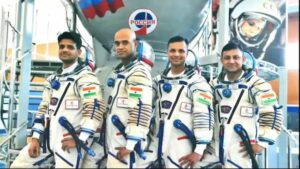
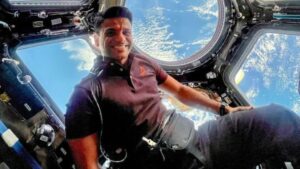
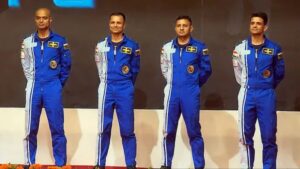
India currently has four Gaganyaan-trained astronauts, Group Captain Prashanth Balakrishnan Nair, Group Captain Ajit Krishnan, Group Captain Angad Pratap, and Wing Commander Shubhanshu Shukla, all of them Indian Air Force test pilots selected and trained for a mission designed to last roughly three days in low Earth orbit.
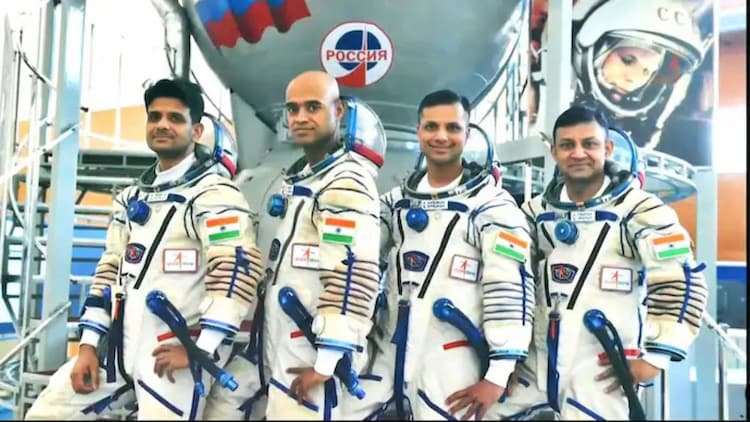
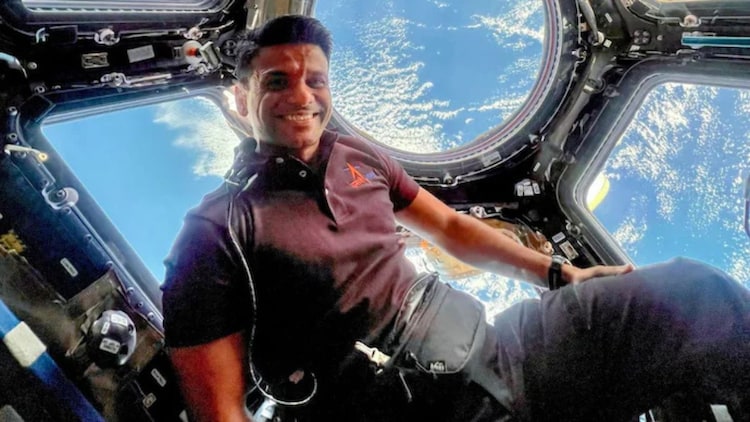
Shubhanshu Shukla flew to the International Space Station in 2025 as part of a collaborative mission, the Axiom Mission 4, making him India’s most experienced active astronaut.
But a three-day low Earth orbit mission and a 15-day deep space mission to the lunar surface are not the same challenge in different quantities. They are different challenges entirely.
Beyond the Van Allen belts, the radiation environment changes dramatically. In low Earth orbit, Earth’s magnetic field provides partial shielding.
In deep space, that protection disappears.
A 15-day lunar mission exposes the crew to cosmic radiation, or high-energy particles originating from outside the solar system, and to solar energetic particle events, or sudden bursts of radiation from the Sun that can deliver a dangerous dose within hours.
The astronaut selected for the 2040 mission will need to be evaluated not just for piloting skill and psychological resilience, but for radiation tolerance, bone density, cardiovascular fitness, and the capacity to perform complex geological fieldwork in a pressurised suit on an uneven surface.
None of that training infrastructure currently exists in India. The Gaganyaan crew training facility was built for low Earth orbit.
Deep space training, including lunar surface simulation, extravehicular activity training, or training for spacewalks and surface walks in a pressurised suit, and the medical protocols for a mission beyond rescue range, requires a new generation of facilities that have not yet been announced, funded, or built.
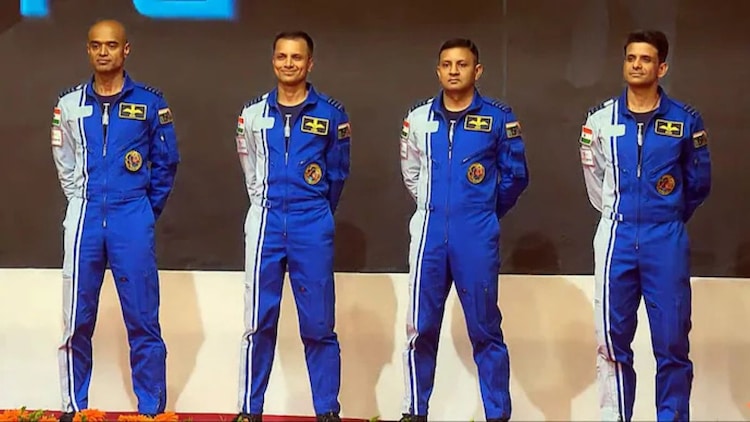
Dr Bhardwaj noted that India now has four trained Gaganyaan astronauts, and more are in the pipeline.
We already have a human space programme, he says.
But the pipeline for a lunar crew is a different pipeline.
The 2040 mission will require not just a crew, but a pool large enough to select from, train rigorously over years, and support with the medical and psychological infrastructure that deep space demands.
Building that pool and the infrastructure is the human dimension of the 2040 blueprint that no parliamentary report has yet put a number on.
THE ROAD TO 2040
What the 410th Report ultimately captures is not a programme in trouble.
It captures a programme in transition, moving from the era of robotic exploration that gave India Chandrayaan-3 and Aditya-L1, India’s first dedicated solar observation mission, into something categorically more demanding.
The institutional muscles required for human spaceflight, for deep space certification, and for the kind of systems integration that a crewed lunar mission demands, are being built in real time, under Parliamentary observation, with a deadline.
The milestones ahead are formidable and sequential.
Chandrayaan-4, India’s first lunar sample return mission and the foundational technical precursor to a crewed landing, is targeted for October 2027.
Lupex, which follows in September 2028, will make the first in-situ measurements inside permanently shadowed regions and characterise the water ice that future astronauts will depend on.
The first module of the Bharatiya Antariksh Station, or BAS, India’s planned space station in low Earth orbit, is targeted for launch by 2028, with a fully operational station expected by 2035.
The NGLV’s first developmental flight is targeted within 84 months of its 2024 approval. The Third Launch Pad at Sriharikota is targeted for 2029-30. Each of these is a necessary rung. None can be skipped.
Dr Bhardwaj frames 2040 not as a single event but as the terminal point of a carefully sequenced series of missions, each one making the next possible.
“The year 2040 is what we are targeting. Before that, many other technologies have to be developed within the country. We expect this to be done on time. But these are technologies no other country gives you. You have to develop them yourself. So we are hopeful that it will happen,” Dr Bhardwaj anticipates.
The Moon has had no visitors since 1972. India intends to change that by 2040.
The blueprint exists. The science is compelling. The engineering is underway. The audit has begun.
The first Indian footprints are 14 years away.