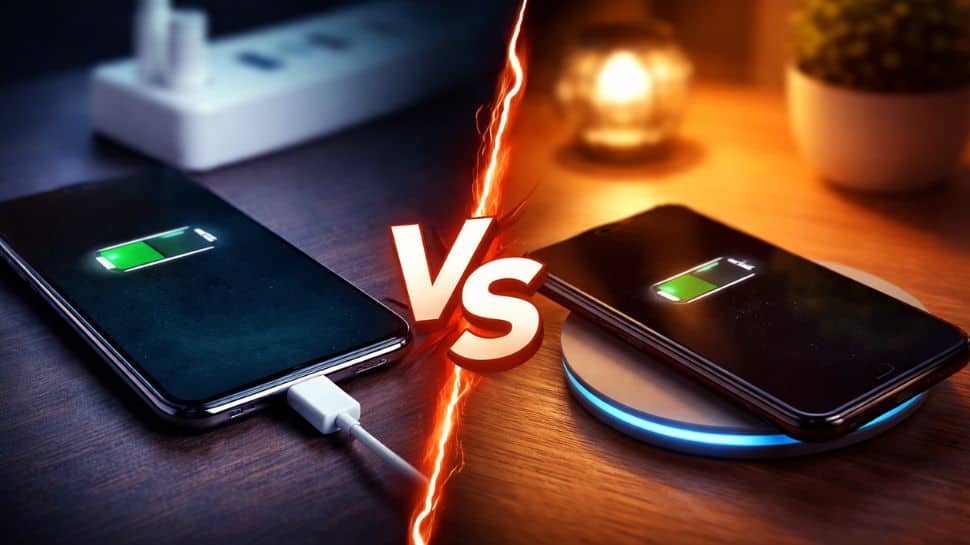
Wire vs wireless charging: Everybody charges their phone daily, but many users still don’t have a proper idea of whether wired or wireless charging is better. Both methods have their own advantages, especially when it comes to speed, safety and long-term battery health. When it comes to charging speed, wired charging clearly has the upper hand. Most modern wired fast chargers can take a phone from 0 to 50 percent in just 15–30 minutes.
In comparison, wireless charging is usually slower. Standard wireless chargers typically take longer due to lower power output and efficiency. Even though many latest wireless technologies are improving, wired charging is the preferred option for users who want fast charging.
Wireless charging offers convenience
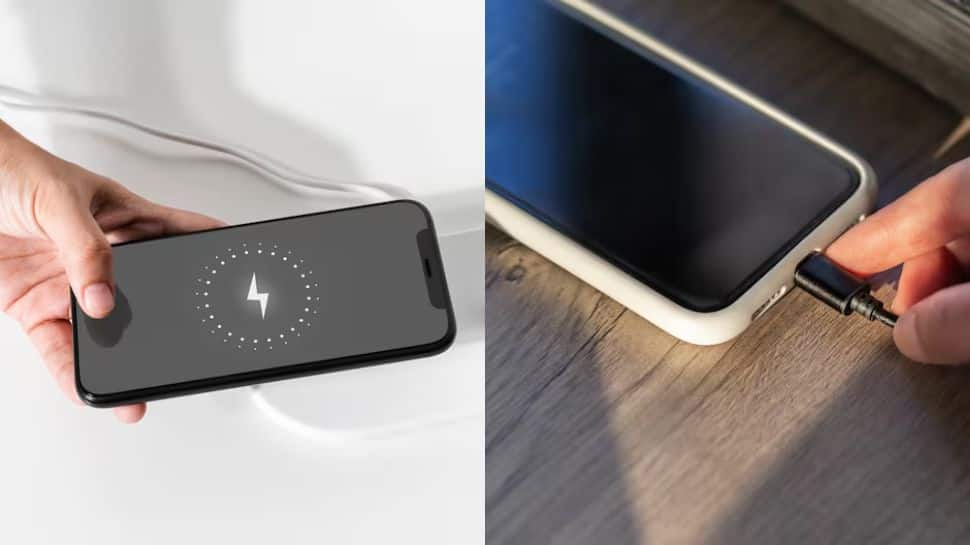
On the other hand, wireless charging is designed for ease of use. Users can simply place their phone on a charging pad without dealing with cables.
This makes it ideal for overnight charging or desk use. However, convenience comes at a cost—wireless charging is generally less efficient, meaning some energy is lost during the process.
Impact on battery health
Battery health depends largely on heat. Smartphone experts say that heat is one of the biggest factors that can affect battery lifespan over time. Wireless charging generates more heat because energy is transferred through electromagnetic induction, which is less efficient.
However, modern smartphones are designed with safety systems that control temperature and prevent overcharging. This means both wired and wireless charging are generally safe for daily use.
Which one should you use?
If you need speed and efficiency, wired charging is the better choice. It charges faster and produces less heat overall.
If convenience is your priority, wireless charging will work better for regular use, especially while travelling. It is suggested to use both methods wisely—wired for quick charging and wireless for everyday convenience.