
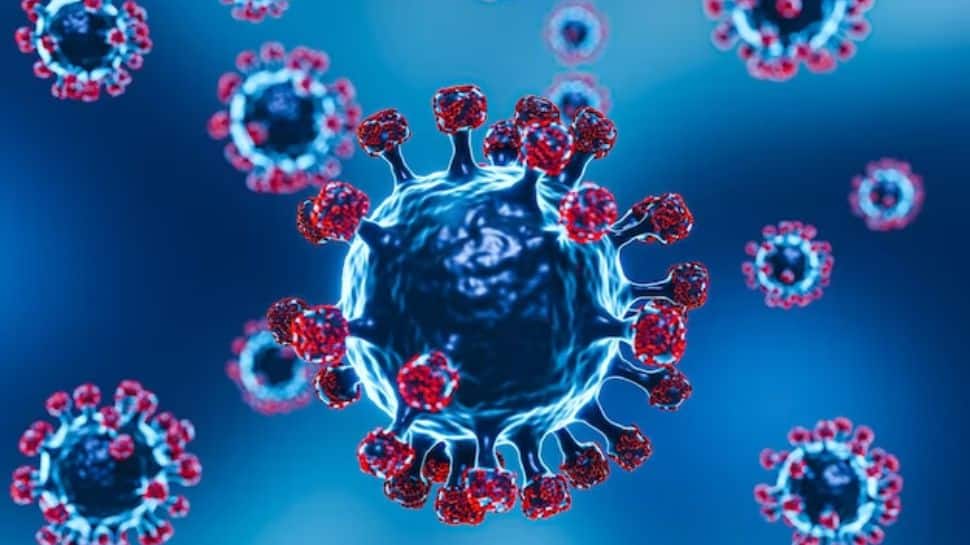
Since its outbreak in January 2020, contagious, infectious disease caused by the coronavirus SARS-CoV-2, Covid-19- had brought the world to its knee, literally. The virus-induced pandemic led to the death of millions of people across the globe, while millions others were severely affected by the virus. While the World Health Organization (WHO) declared that the COVID-19 global health emergency ended on May 5, 2023, different variants of the virus has been doing the rounds.
Recently, BA.3.2 — widely nicknamed the “Cicada” variant — has been doing the rounds and sparked a fresh wave of anxiety globally. First identified in South Africa in November 2024, the variant remained largely under the radar before resurging to spread across more than 23 countries, including the US, Germany, and the Netherlands. The BA.3.2 sub-variant, which belongs to the Omicron family, has seen a rise in cases since September 2025.
With the rise of the new variant, and with cases rapidly spreading in the US, many misinformation regarding the virus started doing the round. Dr Souradeep Chowdhury, Infectious Diseases and Internal Medicine, Medanta Noida, busts some common myths about the “Cicada” variant.
‘Cicada’ Covid-19 variant: Busting Common Myths
Amidst the rapid circulation of information, several misconceptions have taken root when it comes to the BA 3.2 Covid variant. Dr Souradeep Chowdhury lists the following myths and corresponding facts.
Myth 1: The Cicada variant is significantly more dangerous and deadly than previous strains.
Fact: While it is true that the BA.3.2 variant is highly mutated, carrying an unusually high number of 70 to 75 mutations in its spike protein (compared to roughly 30 in the original Omicron strain), there is currently no evidence that it causes more severe disease or an increase in mortality. Global health agencies, including the WHO and CDC, report that the vast majority of cases have been mild to moderate, with no unusual rise in hospitalizations. The virus actually appears to be less efficient at binding to the ACE2 receptor on lung cells, which may limit its severity.
Myth 2: Existing vaccines are completely useless against this new variant.
Fact: The high number of mutations in the Cicada variant’s spike protein does give it an “immune escape” advantage, meaning it can cause reinfections and evade neutralising antibodies more easily than older strains. As a result, vaccines may be less effective at preventing you from catching a mild infection. However, vaccines and updated boosters continue to provide robust, strong protection against severe illness, hospitalization, and death. Vaccination remains your best defense against the worst outcomes of the virus.
Myth 3: The Cicada variant causes completely new, undetectable symptoms.
Fact: The symptoms of the BA.3.2 variant are not new or unusual; they primarily affect the upper respiratory tract and strongly resemble earlier Omicron infections or a flu-like illness. The most common symptoms include sore throat, fever and chills, fatigue, cough, body aches, and a runny nose. Additionally, standard diagnostic tools like rapid antigen and PCR tests target stable regions of the virus and remain effective at detecting the Cicada variant. If you feel symptomatic, a standard COVID-19 test is still the recommended course of action.
Myth 4: India is on the brink of a massive BA.3.2 outbreak, and we need to panic.
Fact: Currently, there is no evidence of a major outbreak linked to the BA.3.2 variant in India, and there is absolutely no need to panic. While international travel could introduce the variant, the Indian SARS-CoV-2 Genomics Consortium (INSACOG) is actively monitoring and sequencing new variants. Surveillance systems are on alert, but global data so far indicates that while the variant transmits easily, it has not yet replaced dominant strains worldwide.
Tackling New Covid-19 Variant: The Way Forward
Dr Chowdhary points out that the emergence of the Cicada variant is a reminder that the COVID-19 virus is constantly evolving and becoming endemic, leading to regular seasonal waves. “It is important to focus on preparedness and not panic. We must continue to follow standard public health precautions: maintaining hand hygiene, testing if symptomatic, staying home when sick, and ensuring that our vulnerable populations, the elderly and immunocompromised, are fully vaccinated and boosted,” the doctor adds.


