
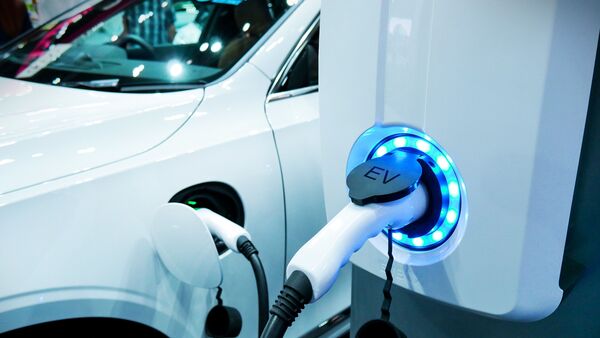
The Middle East war, which is now entering its second month, is expected to push drivers towards electric vehicles (EVs), compelling them to ditch their traditional internal combustion engine (ICE) vehicles, CNBC reported.
Citing analysts, the report said the shift would not happen overnight but unfold gradually. This comes after Iran’s Islamic Revolutionary Guard Corps (IRGC) announced the closure of the Strait of Hormuz — a key waterway through which nearly a fifth of the world’s oil and liquefied natural gas (LNG) supplies pass.
The move followed days of conflict, with the US and Israel targeting Iran’s military and naval assets, reportedly killing several senior leaders, including former Supreme Leader Ayatollah Ali Khamenei.
Ever since the Strait of Hormuz has been shut, countries are now scrambling and at the mercy of Tehran, with some even forced to declare a national emergency. It has severely disrupted the oil exports, pushing the prices to a record high. Additionally, it has underlined the extent to which the world depends on fossil fuel trade routes.
US, Europe see increased interest in EVs
According to the report, since the war began in late February, several car-selling platforms in the US and Europe have seen an uptick in consumer interest in EVs. This comes at a time when much of the traditional auto industry is shifting back toward ICE vehicles.
According to Autotrader, an online vehicle marketplace, on 26 March, it reported a 28% hike in inquiries regarding buying a new EV and a 15% jump in inquiries about buying a used one. EV specialist Octopus Electric Vehicles said on 25 March it had seen EV leasing inquiries rise 36% since the start of the conflict.
Despite an increased interest in inquiries, major US automakers, including Ford, General Motors, and Stellantis (the parent company of Jeep), have all pulled back from their earlier EV plans. Slower-than-expected consumer demand and changing political conditions have compelled them to revise their strategies, leading to tens of billions of dollars in losses and restructuring costs.
Iran war fallout could influence EV demand: Experts
An expert noted that while the situation is currently still evolving, it is already clear that the fallout from the US-Iran war could influence EV demand. He said that owning a battery electric vehicle (BEV) is now more compelling for drivers who cover a lot of mileage, given that conventional gasoline cars have become more expensive due to a sharp increase in oil prices.
Additionally, owning an EV could give households an extra layer of energy independence.
Higher gas prices to push consumers towards EVs
According to Erin Keating, Cox Automotive’s senior director of economic and industry insights, consumers are likely to consider all-electric vehicles if gas prices continue to rise; however, changing buying behaviours from traditional vehicles to EVs can be slow. For any notable increase to be observed, the company expects gas prices to remain elevated for another 6 months or more, a move that could then compel consumers to purchase EVs.
Beijing’s EV makers to benefit from war: Report
According to a March CNN report, EV makers in Beijing are likely to benefit from the ongoing war as gasoline prices rise and EV prices fall. The move could boost the Chinese EV industry’s global expansion, particularly in Asian countries most affected by fuel shortages. Citing analysts, the report also suggested the oil crisis could act as a turning point for Asian countries’ clean energy industries, similar to Russia’s invasion of Ukraine in 2022, which eventually increased renewable energy investments in Europe.


