
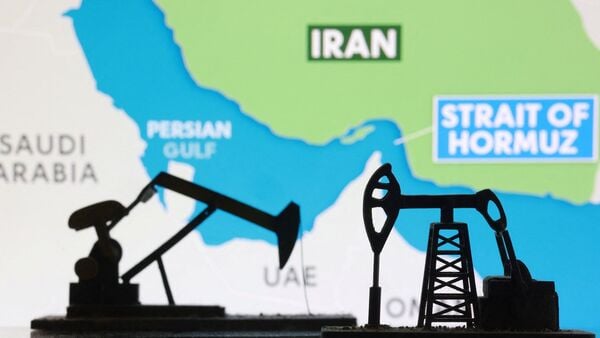
As the world awaits the reopening of the Strait of Hormuz, Iran and Oman are drafting a protocol to “monitor transit” via the Strait, CNBC reported on Thursday, citing IRNA.
Kazem Gharibabadi, Iran’s deputy foreign minister of legal and international affairs, said the tanker traffic through the key oil-shipping route must be supervised and coordinated. He reportedly added, “Of course, these requirements will not mean restrictions, but rather to facilitate and ensure safe passage and provide better services to ships that pass through this route.”
Iran drafting law to introduce toll for Hormuz transit
The development came days after reports suggested that Tehran was working on a draft bill that would impose a fee on vessels seeking safe passage through the Strait of Hormuz. Citing an unnamed lawmaker, the semi-official Fars news agency said the plan would be finalised next week. However, no confirmation has been issued by Tehran yet.
Another Iranian lawmaker also claimed that the Islamic Republic is planning to impose two million dollar fee to allow ships safe passage from the Strait of Hormuz. However, the Iranian embassy in India issued a clarification, stating that the reports are baseless.
Strait of Hormuz shut
The development comes as the US-Israel war in Iran has entered its second month. With that, the Strait of Hormuz, an arterial waterway, has also been shut for a similar time. Days after the war began in late February, Iran’s Islamic Revolutionary Guard Corps (IRGC) announced the closure of the Strait, which is responsible for transporting nearly one-fifth of the world’s oil.
Tehran’s decision to use this potent weapon of shutting the Strait has left countries panicking across the world, with some even declaring a national emergency. The move has rattled the global energy markets and spooked traders. In March, the oil prices jumped to a $120 a barrel before retreating.
The move also compelled the International Energy Agency (IEA) to intervene and release 400 million barrels of oil from its emergency stockpile to dispel the fears.
Trump seeks reopening of Hormuz
US President Donald Trump, who delivered a prime-time address on Thursday, has consistently sought the reopening of the Strait of Hormuz by deploying various tactics. From threatening to obliterating Tehran’s power plants to keeping it as one of the main demands for a ceasefire, however, the Islamic Republic does not appear to be budging from its decision.
He has even sought help from allies in Europe and Asia to reopen the Strait of Hormuz; however, the US President did not achieve much success with it, a move that did not sit well with him. After countries in Europe denied helping Trump by engaging directly in the war, he criticised the European leaders, claiming that the US does not need support.
Over 40 countries in talks to get the Strait reopened
Earlier today, Britain said that around 40 countries discussed joint action to reopen the Strait of Hormuz and prevent Iran from holding “the global economy hostage”, Reuters reported. The development came after Trump said that securing the narrow yet crucial waterway was for others to resolve.
In his address to the US, Trump insisted that the country is unaffected by the closure of the Strait because it imports comparatively little oil via the Strait. He said, “We haven’t needed it, and we don’t need it,” shifting the focus to other countries to get the waterway reopened.
Britain’s Foreign Minister Yvette Cooper noted that Tehran’s “recklessness” in blocking the waterway was “hitting households and businesses in every corner of the world” as she chaired the virtual meeting, which included France, Germany, Canada, the United Arab Emirates, and India.


