
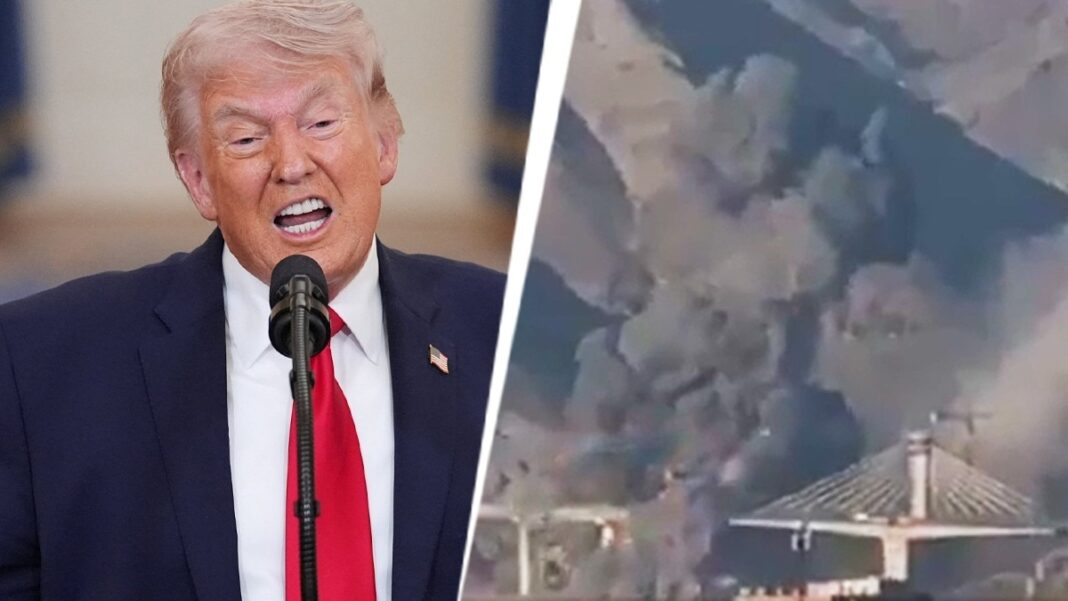
US President Donald Trump has directed Iran to reach a deal “before it is too late”, as fresh strikes hit B1 bridge. He posted a video on social media on Thursday of what he said was the biggest bridge in Iran being taken down in a strike.
A highway bridge linking Iran’s capital Tehran to the western city of Karaj was hit by air strikes on Thursday, Fars news reported. Two people were repotedly killed in the attack. The video shared by Trump showed the bridge erupting in a burst of fire and thick smoke after an airstrike earlier in the day.
Trump struck an attacking tone, stating Iran risks severe damage if it does not change course. “AND THERE IS NOTHING LEFT OF WHAT STILL COULD BECOME A GREAT COUNTRY!” he said.
The US President appeared to be suggesting that the US was responsible for the strike. However, no country has officially claimed responsibility so far. The Israeli Defense Forces earlier told the BBC they were not aware of the attack, while The Times of Israel reported that the bridge was hit in a US strike.
Responding to attacks, Iran’s foreign minister Abbas Araghchi said that attacks on civilian structures, including unfinished bridges, will not compel Iranians to surrender.
IRAN MAINTAINS PRESSURE WITH STRIKES
Meanwhile, Iran has sent a clear message by firing continued missiles at Israel and Gulf Arab states on Thursday even as Trump claimed the country’s threat had been largely diminished.
Meanwhile, Iran launched more missiles at Israel and Gulf Arab states on Thursday, showing it can still hit targets across the region even as Trump said the threat from Tehran had been nearly eliminated. Iran’s strikes on Gulf states, along with its grip on the Strait of Hormuz, have disrupted global energy supplies with impact far beyond the Middle East. That has become Iran’s biggest strategic advantage in the war. Britain held a call with nearly three dozen countries on how to reopen the strait once fighting ends.
Trump had said the strait can be taken by force — but not by the US. In a national address, he urged countries that rely on Hormuz oil to “build some delayed courage” and go “take it.”
Before the US and Israel launched strikes on Iran on February 28, the waterway was open, with 20 per cent of global traded oil passing through it.


