On April 2 at 3:54 am IST, Nasa launched its Artemis 2 mission from the Kennedy Space Center in the US state of Florida. The crewed mission will see four astronauts fly around the Moon on a free-return trajectory before splashing down in the Pacific on April 11. Named after the Greek goddess of the hunt, Artemis will see humankind reach for the Moon for the first time in more than 53 years, since the final Apollo mission lifted off in December 1972.
Four astronauts are part of the Artemis 2 mission. They are mission commander Reid Wiseman, pilot Victor Glover, astronaut Christina Koch, and Canadian astronaut Jeremy Hansen.
In the words of Gene Roddenberry, the creator of Star Trek, space is humanity’s final frontier. And in the quest to conquer this frontier, the US space agency, Nasa, launched nine crewed missions as part of its Apollo programme between 1968 and 1972, which either orbited the Moon, or landed on it.
As part of these missions, at least 24 astronauts left the Earth and travelled to the Moon. The Artemis 2 astronauts take that count to 28. But just 12 people of flesh and blood have actually set foot on the Moon. This is the story of those who walked on the Moon and those who just flew by.
WHICH WAS NASA’S FIRST MANNED MISSION? APOLLO 8
Launched on December 21, 1968, from the Kennedy Space Centre in Florida, Apollo 8 marked the very first time for a crewed spacecraft to leave Earth’s gravitational sphere of influence, and the first human spaceflight to reach the Moon.
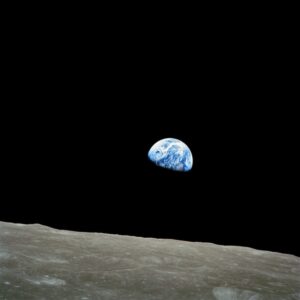
Crewed by astronauts Frank Borman, Jim Lovell, and William Anders, they were the first humans to see and photograph the far side of the Moon and an Earthrise.
The mission saw the crew orbit the Moon 10 times over the course of 20 hours, during which they made a Christmas Eve television broadcast where they read the first 10 verses from the Book of Genesis.
The Apollo 8 astronauts returned to Earth on December 27, 1968, when their spacecraft splashed down in the Pacific Ocean, and would eventually pave the way for Apollo 11, the first manned landing on the Moon, which we shall soon come to.
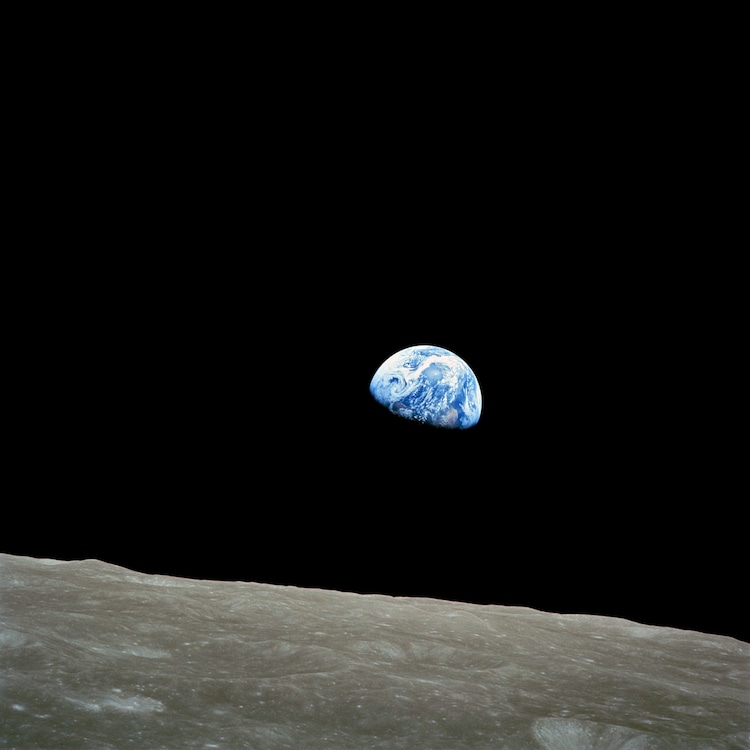
NASA’S MOON LANDING DRESS REHEARSAL: APOLLO 10
Launched on May 18, 1969, Apollo 10 was described by Nasa as being a “dress-rehearsal” for the Apollo 11 mission, which landed the first human beings on the moon.
Crewed by astronauts Thomas Stafford, John Young and Eugene Cernan, the mission was designed to test out all the spacecraft components and procedures short of actual descent and landing.
Apollo 10 spent 61 hours and 37 minutes orbiting the Moon, and splashed down on Earth on May 26, 1969. Interestingly, the mission used the call signs, Charlie Brown, and Snoopy, from Charlie Schultz’s Peanuts comics.
WHICH NASA MISSION FIRST LANDED MAN ON THE MOON? APOLLO 11
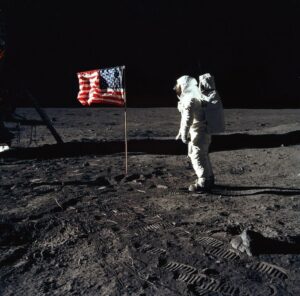
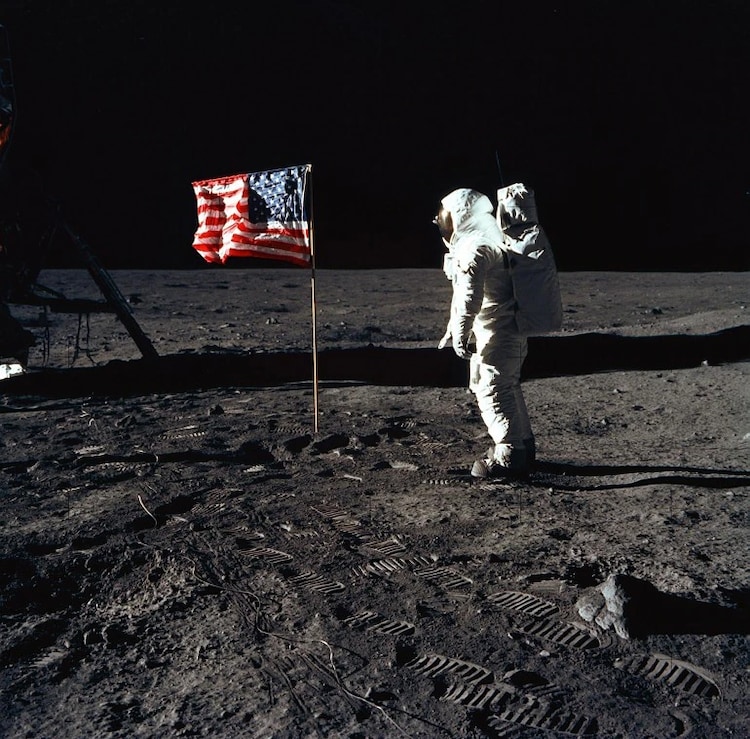
“One small step for man, one giant step for mankind”. These were the words of astronaut and mission commander Neil Armstrong as he became the first man to step foot on the Moon.
Launched on July 16, the Apollo 11 mission marked the first time humankind ever landed on the Moon. Launched atop a Saturn V rocket from Kennedy Space Center in Florida, and was crewed by astronauts Neil Armstrong, Buzz Aldrin and Michael Collins.
The Apollo spacecraft consisted of three parts: the command module (CM), which housed the three astronauts and was the only part to return to Earth; the service module (SM), which provided propulsion, electrical power, oxygen, and water to the command module; and the lunar module (LM), which eventually landed on the moon.
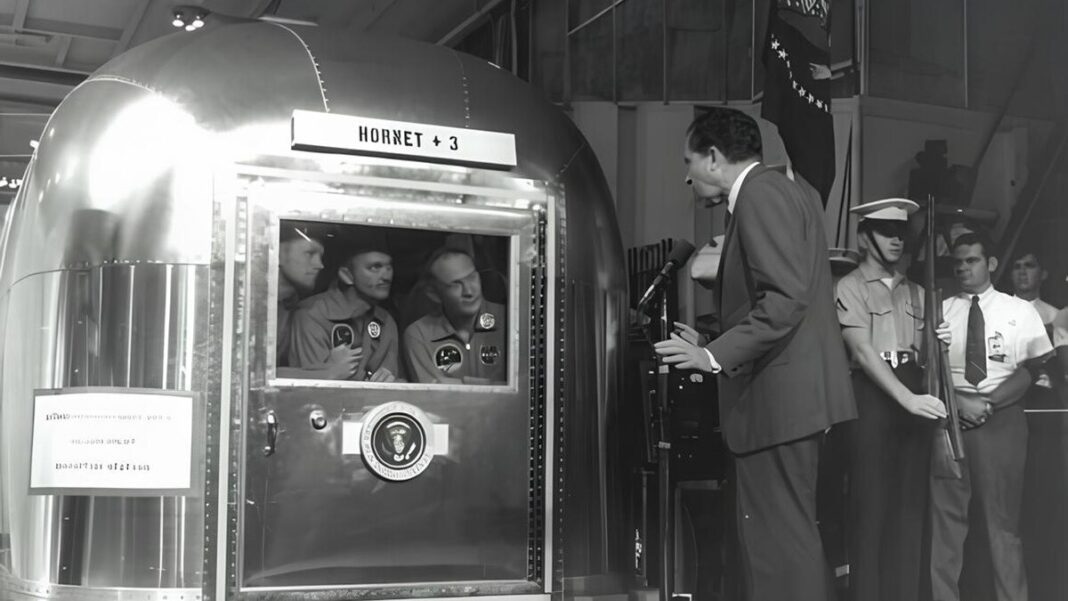
While Collins stayed back to pilot the command module orbiting the moon, Armstrong and Buzz would be the ones to land. The crew returned safely to Earth on July 24, splashing down in the Pacific Ocean.
WHICH WAS SECOND MOON LANDING? APOLLO 12
Launched on November 14, 1969, Apollo 12 was the second crewed mission to land on the Moon and demonstrated the ability to achieve a precise landing.
Crewed by astronauts Pete Conrad, Alan Bean, and Richard Gordon, Conrad and Bean landed the lunar module in the Ocean of Storms near the Surveyor 3 probe, while Gordon remained in lunar orbit. They were the first to visit a previous spacecraft on the Moon.
The mission saw Conrad and Bean perform two moonwalks totalling over seven hours, during which they deployed scientific experiments including a seismometer and collected lunar samples. They also retrieved parts from Surveyor 3 for analysis back on Earth.
The Apollo 12 astronauts returned to Earth on November 24, 1969.
WHICH MISSION ABORTED A MOON LANDING? APOLLO 13
Launched on April 11, 1970, Apollo 13 was intended to be the third crewed lunar landing mission but became one of Nasa’s most dramatic successes in crisis management.
Crewed by astronauts James Lovell, Jack Swigert, and Fred Haise, an oxygen tank explosion in the service module two days into the flight forced the crew to abort the landing and use the lunar module as a lifeboat.
The mission saw the crew loop around the Moon without landing, facing severe challenges with power, oxygen, and carbon dioxide levels while ground teams worked around the clock to develop emergency procedures.
The Apollo 13 astronauts returned safely to Earth on April 17, 1970.
THREE MOONWALKS AND A LUNAR ROVER: APOLLO 15
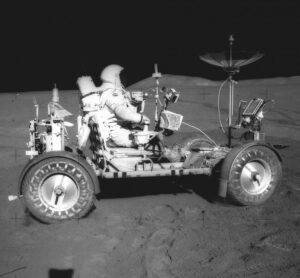
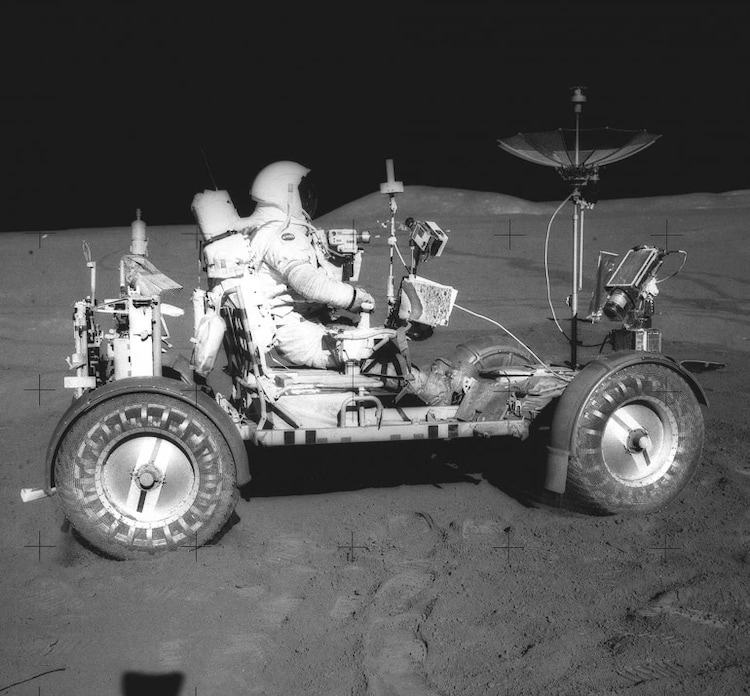
Launched on July 26, 1971, Apollo 15 was the first moon mission to carry the Lunar Roving Vehicle.
Crewed by astronauts David Scott, James Irwin, and Alfred Worden, Scott and Irwin landed at Hadley-Apennine while Worden remained in orbit. They explored the region using the rover for the first time.
The mission saw the crew perform three moonwalks totalling over 18 hours, drive nearly 18 miles across the lunar surface, collect more than 170 pounds of samples including the “Genesis Rock,” and conduct extensive geological studies.
The Apollo 15 astronauts returned to Earth on August 7, 1971.
EXPLORING MOON’S HIGHLANDS: APOLLO 16
Launched on April 16, 1972, from the Kennedy Space Centre in Florida, Apollo 16 was the fifth crewed lunar landing and the first to explore the lunar highlands in the Descartes region.
Crewed by astronauts John Young, Charles Duke, and Ken Mattingly, Young and Duke landed while Mattingly orbited the Moon.
The mission saw the crew perform three moonwalks totalling over 20 hours, drive the rover more than 16 miles, deploy experiments, and collect 209 pounds of samples while exploring craters and highland terrain.
The Apollo 16 astronauts returned to Earth on April 27, 1972.
WHICH WAS THE LAST APOLLO MISSION TO MOON? APOLLO 17
Launched on December 7, 1972, from the Kennedy Space Centre in Florida, Apollo 17 was the final mission of the Apollo programme and the last time humans have walked on the Moon.
Crewed by astronauts Eugene Cernan, Harrison Schmitt, and Ronald Evans, Schmitt was the first professional geologist on the Moon. Cernan and Schmitt landed while Evans orbited.
The mission saw the crew perform three moonwalks totalling over 22 hours, drive the rover nearly 22 miles, discover unusual orange soil, and collect the largest sample return of any Apollo mission.
The Apollo 17 astronauts returned to Earth on December 19, 1972.
From Apollo 8’s first daring voyage to Apollo 17’s final footprints, these missions carried humanity beyond Earth’s cradle. 53 years later, Artemis 2 is once more reaching out for humanity’s final frontier. While 24 astronauts went to the Moon as part of the Apollo missions, only 12 set foot on it. The four astronauts who are part of Artemis 2, won’t be landing on the Moon, keeping the record of the dozen intact.
(With Inputs from Meenal Sharma)