
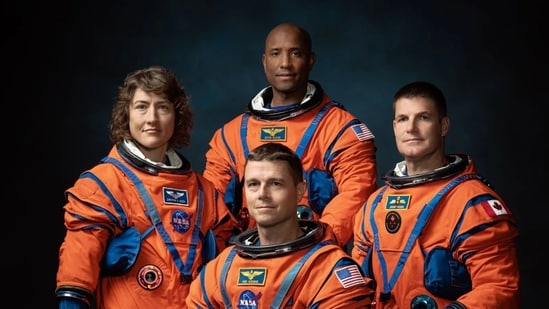
NASA is preparing to launch the Artemis 2 mission from the Kennedy Space Center, with astronauts Reid Wiseman, Victor Glover, Christina Koch and Jeremy Hansen set to fly around the Moon. The launch is targeted for April 1 and a two-hour launch window from 6:24pm to 8:24pm EDT. According to Wral News, weather conditions are currently looking favorable, with an 80% chance of a “go,” but teams are closely monitoring several risks that could delay the mission.
Engineers began final preparations ahead of the countdown, with calls to stations scheduled for 4:34pm and the countdown clock starting at 4:44pm NASA officials said cloud cover and possible strong ground winds remain the main concerns, and teams will continue tracking conditions closely.
How Florida weather affects the launch
Weather in central Florida is being shaped by a common seabreeze pattern. As land heats up faster than the ocean, winds push moisture from the Atlantic coast inland. This leads to clouds forming through the morning, followed by scattered showers or thunderstorms in the afternoon.
By evening, storms usually move toward the Gulf Coast, leaving the Atlantic side clearer. Forecasters say this pattern should not pose a major threat to the launch window, but they are watching cloud activity west of the launch site.
What is NASA’s Artemis 2? Everything you need to know about the historic moon mission
Major weather risks NASA is tracking
NASA’s meteorologists are closely monitoring several weather factors, including cumulus cloud development, showers, strong winds, and even solar activity.
Lightning is one of the biggest dangers. This includes not just natural lightning from storms, but also “rocket-induced lightning,” which can happen when a rocket passes through electrically charged clouds.
As per BBC, “Some types of clouds, even if they’re not producing lightning, carry an electrical charge where a rocket passing through them at high speeds with a trail of exhaust can act like a lightning rod and trigger a lightning strike,” said Mark Burger, the primary launch weather officer for Artemis II.
“Our job is to ensure, from a meteorological perspective, that it is safe to launch,” he added.
Weather officers use detailed data, experience and strict safety rules to decide whether conditions are safe. In fact, almost half of all delayed rocket launches are caused by unsafe weather.
And if conditions are not safe, NASA can “scrub” or cancel the launch attempt. Backup launch dates between April 2 and April 6 are already being considered.
The weather team is also monitoring conditions beyond Florida, including potential recovery areas in the North Atlantic, where weather is “not particularly favorable at this time of year.”


