The last time humans ventured beyond Earth’s orbit, the Cold War was in full swing, the Concorde, a revolutionary supersonic airliner, had just taken its first commercial flight, and Star Wars had not yet been made.
That was December 1972, when Apollo 17 astronauts Eugene Cernan and Harrison Schmitt became the last humans to walk on the Moon. Tonight, more than 50 years later, Nasa is ready to change that.
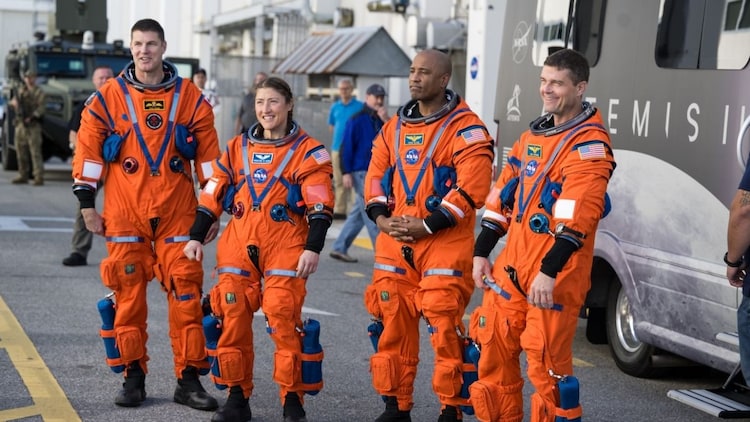
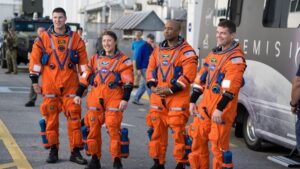
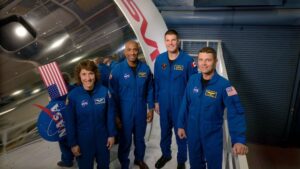
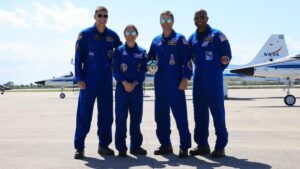
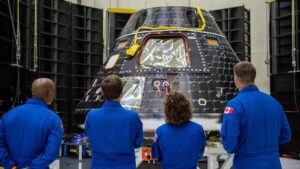
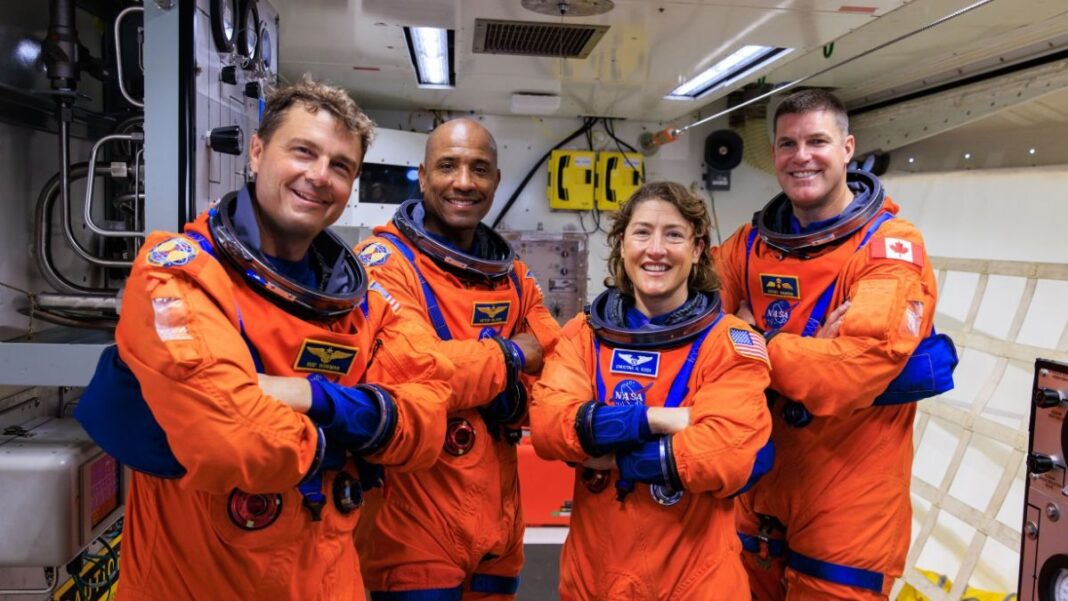
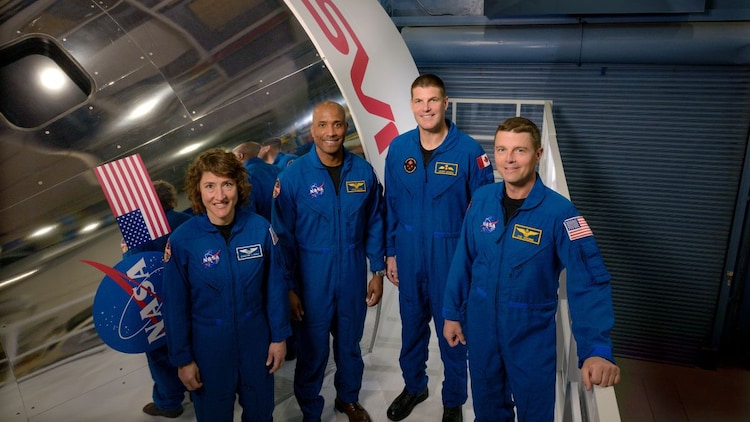
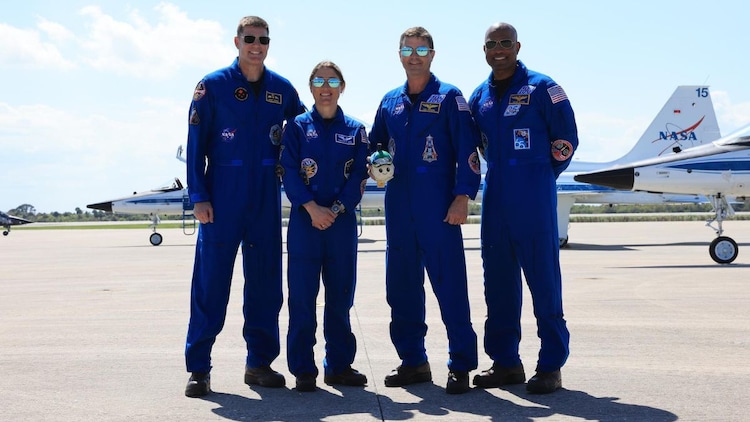
Nasa’s Artemis-II mission will carry Commander Reid Wiseman, Pilot Victor Glover, and Mission Specialist Christina Koch from Nasa, along with Mission Specialist Jeremy Hansen from the Canadian Space Agency, on a 10-day journey around the Moon and back.
They will not be landing. That is Artemis-III’s job, but they will travel farther from Earth than any human has in over half a century.
WHAT IS THE ARTEMIS-II MISSION?
Artemis-II builds on the success of the uncrewed Artemis-I in 2022, and will demonstrate a broad range of capabilities needed for deep space missions.
It will be Nasa’s first mission with crew aboard the Space Launch System (SLS) rocket and the Orion spacecraft.
Think of it as the most consequential test drive in human history. The crew will loop around the Moon on a free-return trajectory, meaning the Moon’s own gravity will sling them back towards Earth, no engine burn required.
The roughly 9,65,606-kilometre trip will expose the crew to dangerous levels of radiation, and at various crucial points during the flight, the crew expects to lose contact with mission control because of the sheer distance and the physics involved.
WHEN AND WHERE DOES ARTEMIS-II LAUNCH?
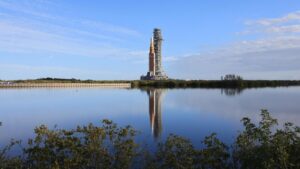
Nasa is targeting liftoff on April 2, 2026, with a two-hour launch window opening at 3:54 am IST from Kennedy Space Center in Florida.
Weather forecasters currently predict an 80 per cent chance of favourable conditions, though teams are closely monitoring cumulus clouds, which are low-level, cotton-like clouds, and the Thick Cloud Rule, a safety guideline that prevents a rocket launch if a cloud layer is too thick. Anything against the criteria could trigger a scrub.
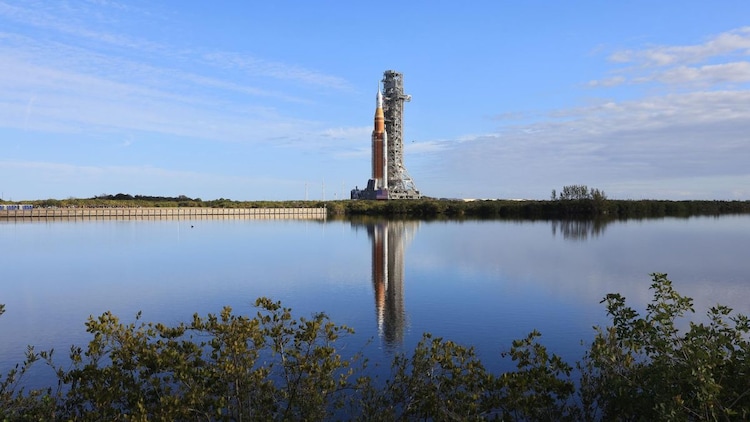
Getting to this point was not straightforward. Nasa’s March 2026 launch window was scrubbed after engineers found a problem with helium flow to the rocket’s upper stage.
This followed an earlier scrub in February 2026 due to issues during the wet dress rehearsal, after which Nasa rolled the rocket back into the Vehicle Assembly Building on February 25 to preserve the April launch window, before rolling it back out to the pad on March 20.
WHO ARE THE FOUR ASTRONAUTS FLYING TONIGHT?
The Artemis-II crew arrived at Kennedy Space Center on March 27, 2026 for their final preparations.
Commander Wiseman declared, “Hey, let’s go to the Moon!” upon arrival, and the team unveiled their zero-gravity indicator, a small, round plush mascot named Rise.
The crew is historic in every sense.
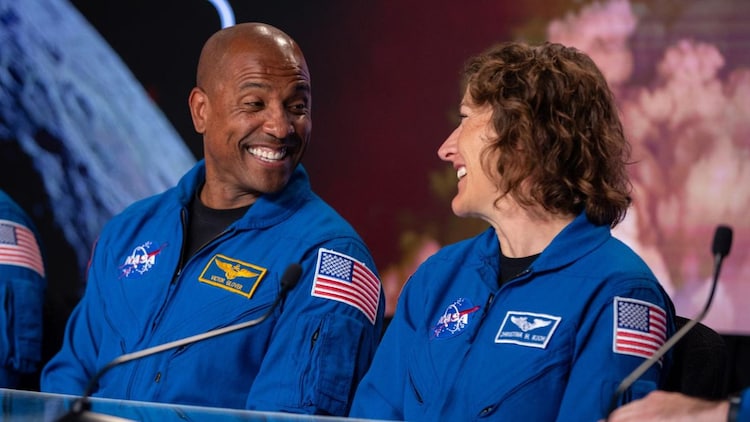
Victor Glover will become the first person of colour, Christina Koch the first woman, and Jeremy Hansen the first non-American to travel beyond low-Earth orbit.
Koch, a 47-year-old electrical engineer from North Carolina, already holds the record for the longest single spaceflight by a woman at 328 days.
Hansen is the only first-time flyer among the four and may experience space adaptation syndrome, an extreme form of motion sickness that affects around half of all first-time astronauts.
WILL ARTEMIS-II BREAK ANY RECORDS?
Several. If launched on April 2, the crew is expected to surpass the Apollo 13 record by travelling more than 4,00,171 kilometres from Earth, making it the farthest any human has ever been.
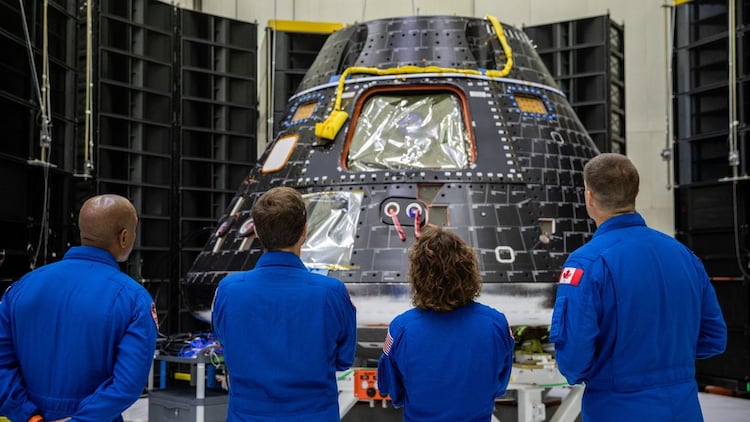
At an atmospheric re-entry speed of around 40,233 kilometres per hour, the mission will also break the previous crewed re-entry speed record.
WHAT HAPPENS AFTER ARTEMIS II?
Artemis-II lays the groundwork for Artemis-III, which aims to land astronauts on the lunar South Pole, a region believed to hold significant deposits of water ice.
Water ice means rocket fuel, drinking water, and eventually, the possibility of a permanent human presence on the Moon.
The Moon, in other words, is not the destination. It is the launchpad for everything that comes next.
Watch the live coverage of Artemis-II here.