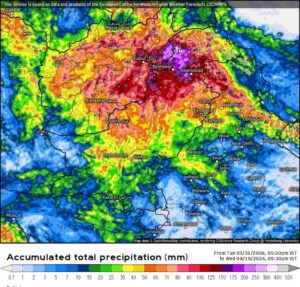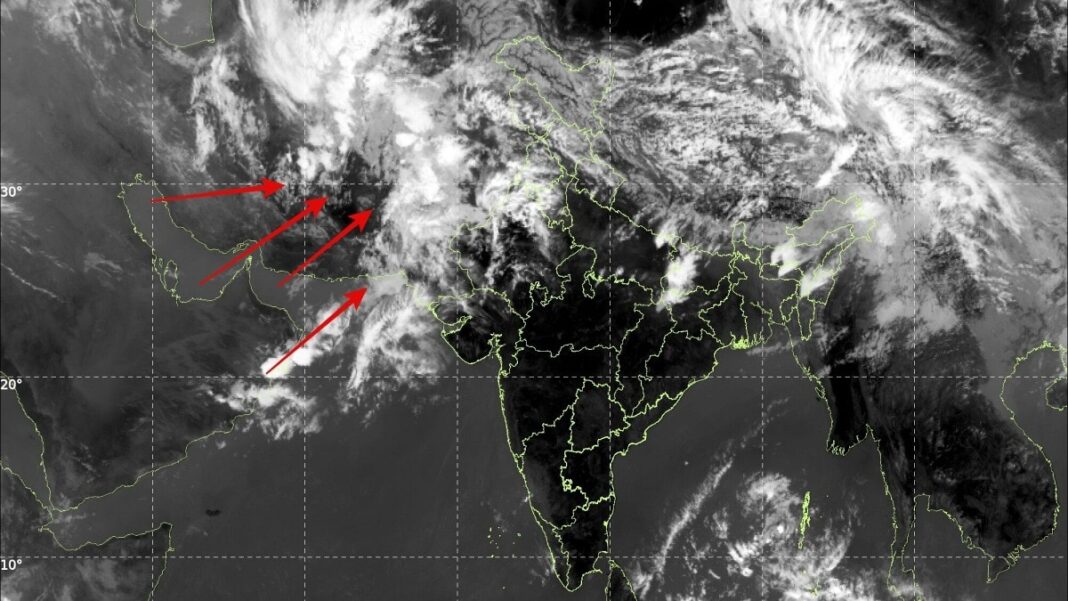
A weather system moving from the west is expected to trigger rain, thunderstorms and strong winds across parts of Pakistan starting today, April 1, 2026. And after that, the weather will pass on to India.
The wave of western disturbance, a weather pattern that brings winter rain and snow and hail from the west, is also set to deliver widespread showers, gusty winds, and possible hail to large areas of northwest India over the next few days.
The India Meteorological Department (IMD) has already pointed to the weather system that will bring a cool, wet spell instead of early summer heat.
WHEN WILL IT RAIN IN INDIA?
As the system arriving in Balochistan moves eastward, it will bring clear benefits and some challenges to India.
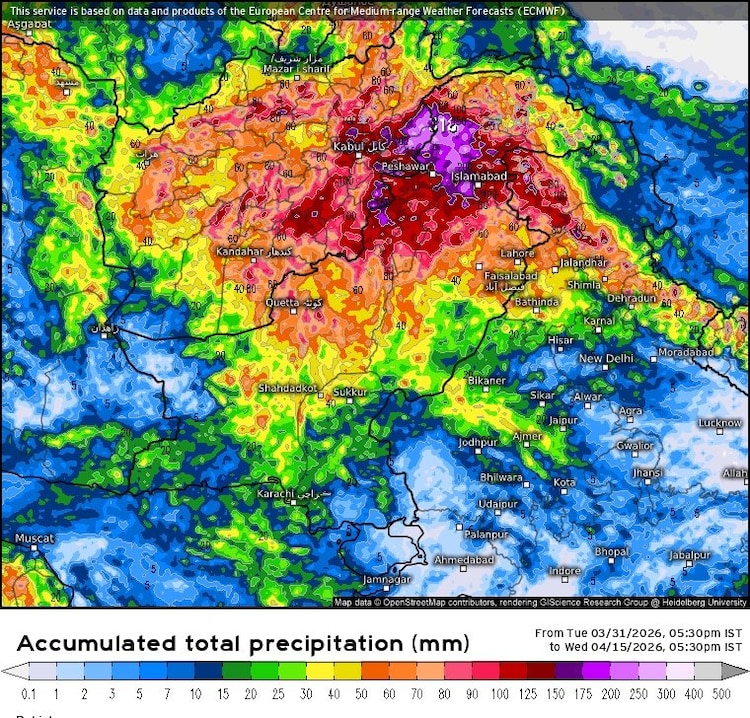
The IMD forecasts light to moderate rain with thunderstorms and gusty winds across Jammu and Kashmir, Himachal Pradesh, Punjab, Haryana, parts of Rajasthan, Uttar Pradesh and Delhi from April 2 to 4, with peak activity on April 3 and 4.
Higher reaches in the Himalayas may see snowfall or hail, while the plains could get scattered showers and winds up to 40–60 kmph.

This moisture will help spring crops and keep temperatures below normal, delaying any early heatwave until the end of April.
However, the rain may disrupt road travel, outdoor work and city traffic, especially in the Delhi-NCR.
Farmers welcome the showers for rabi crops, but sudden downpours could affect standing wheat or fruit orchards in some areas.
RAINS AND STORMS ARRIVING IN BALOCHISTAN
Pakistan’s Provincial Disaster Management Authority (PDMA) in Balochistan has issued an alert for most districts from April 1 to 4.
Rain is likely to begin in coastal and southwestern areas on the evening of April 1 and spread inland. Some places may see heavy downpours, thunder, strong gusts and small hail.

Officials have warned of flash flood risks in hilly and low-lying regions, advising people to avoid unnecessary travel, secure loose items, and keep emergency kits ready.
No major damage has been reported so far, but the weather can change quickly in the region.
The shared weather system shows how rain-bearing disturbances often cross borders, linking weather patterns between Pakistan and India. Residents on both sides should check local forecasts, stay indoors during heavy spells and follow safety advice from authorities.