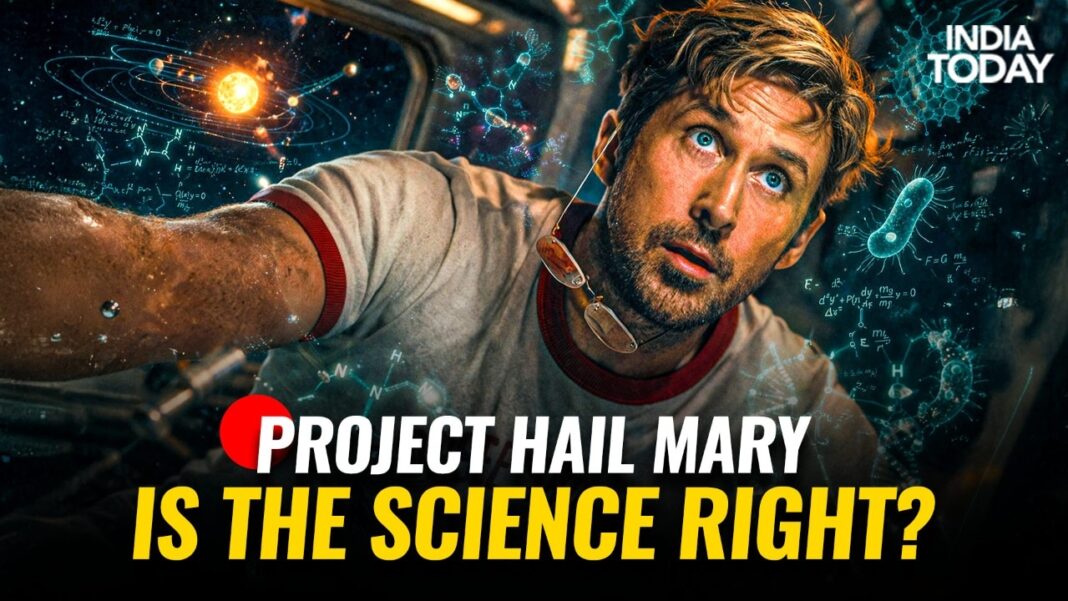
The new sci-fi film Project Hail Mary, based on Andy Weir’s bestselling novel, is drawing attention not just for its high-stakes story, but for how closely it sticks to real science.
Project Hail Mary has grossed over $300 million to $317 million globally, becoming Amazon MGM Studios’ highest-grossing film of all time.
The Ryan Gosling-led sci-fi film has achieved significant success with around $163.8-$164.3 million from the domestic (US) market and roughly $153 million internationally.
IS THE SCIENCE OF THE HAIL MARY RIGHT?
The sci-fi film is drawing attention not just for its high-stakes story, but for how closely it sticks to real science. Renowned astronomer Wendy Freedman of the University of Chicago, also a recipient of the US National Medal of Science, answers just how accurate the film’s science really is.
Starring Ryan Gosling as Ryland Grace, a school teacher-turned-astronaut tasked with saving humanity, the film explores complex ideas in astrophysics, biology and space travel. While the premise may seem extraordinary, Freedman says the film gets one crucial thing right: how science actually works.
“What really struck me was how well it represented how science is done,” she said, noting that the protagonist approaches problems thoughtfully, testing ideas and adapting when things don’t go as planned. She also praised the film for showing science as a collaborative effort rather than a solitary pursuit.
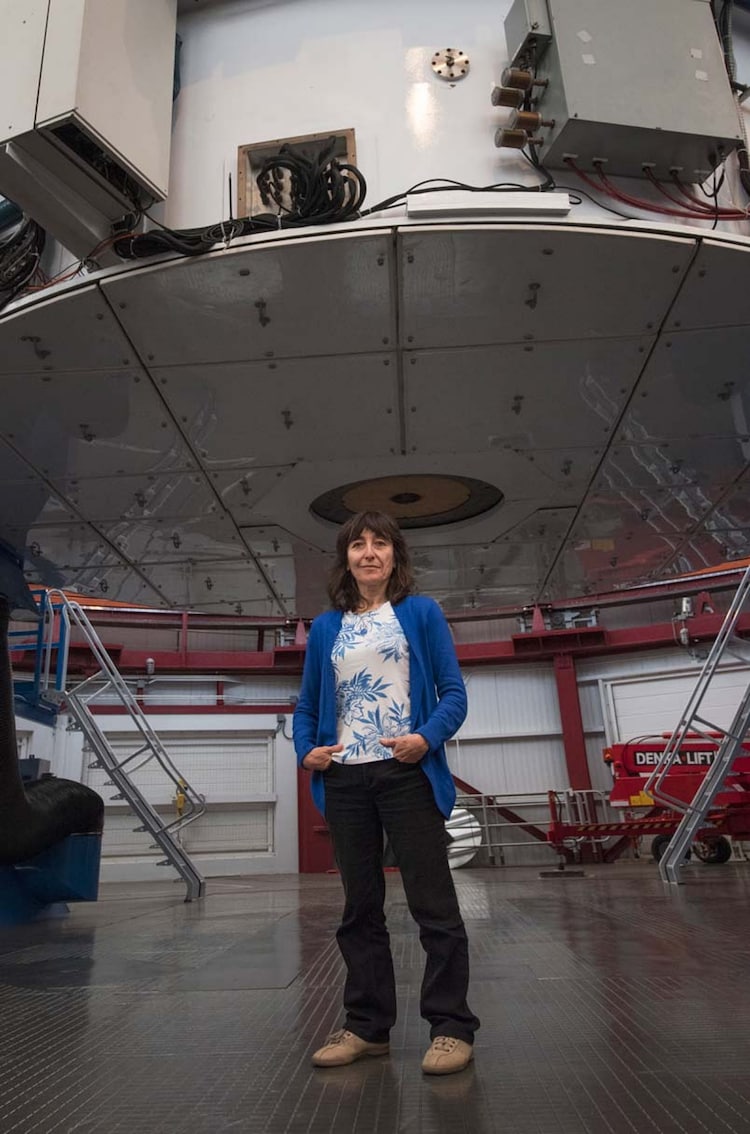
Freedman highlighted that several scientific elements in the movie are grounded in reality. Concepts like relativity, as well as the use of scientific tools to study unknown life forms, are portrayed convincingly.
The film’s blend of microbiology, chemistry, physics and astrophysics, she said, reflects real-world research practices.
One of the film’s most debated ideas, the possibility of life existing without water, remains speculative but not impossible.
Freedman emphasised that while scientists have yet to find such life, the vastness of the universe leaves room for possibilities.
“I wouldn’t rule it out,” she said, adding that discoveries of planets beyond our solar system have already challenged long-held assumptions about how planetary systems form.
However, not everything in the film mirrors reality. Freedman pointed out that the idea of Grace being ostracised by the scientific community for his theories is exaggerated. While disagreements and rivalries do exist in science, she said such extreme isolation is unlikely, though unconventional ideas can face scepticism.
The film also raises ethical questions about how humanity might respond to a global cosmic threat. Freedman compared such scenarios to classic moral dilemmas, suggesting that in a true emergency, people might act in unexpected or unconventional ways.
In the end, Project Hail Mary strikes a balance between imagination and realism, offering audiences a story that is both scientifically informed and dramatically compelling.