
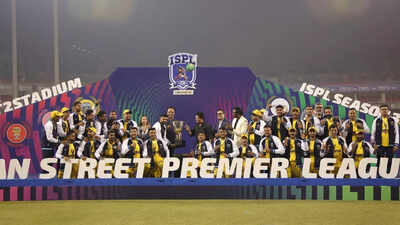
The Indian Street Premier League’s (ISPL) national competitive framework is being positioned as a game-changer for tennis-ball cricket — but its true significance lies in how it reshapes power, pathways and accountability at the grassroots.
At the heart of the model is a decentralised structure built around eight zonal panels, each effectively acting as a regional governing body. But unlike traditional federations, control here is not bureaucratic — it is franchise-led. ISPL team owners will double up as de facto chairpersons of their respective zones, giving them regulatory oversight on everything from tournament approvals to talent identification.
For local tournaments, affiliation is now the gateway to relevance. Any competition can apply, but entry comes with conditions: adherence to ISPL match formats, strict player registration norms, scheduling coordination and alignment with talent scouting systems. Once approved, tournaments are absorbed into a larger ecosystem.
The incentive structure is clearly designed to encourage buy-in. Tournament organisers retain 100% of local sponsorship revenue and half of the registration fees, while the remaining 50% flows to zone owners for infrastructure development.
ISPL itself takes no direct cut.
The regulatory responsibilities are equally significant. Zonal franchises are tasked with ensuring compliance, submitting match data, overseeing affiliated leagues and feeding performance metrics back to ISPL headquarters. This effectively turns them into both talent scouts and watchdogs.
For players, the framework shuts one door and opens another. Direct registrations are being phased out; the only route into the ISPL ecosystem is now through affiliated tournaments.
Performance will be quantified through a points-based system, with rankings determining progression to the auction pool. It is a meritocratic promise — but one that depends heavily on the consistency and integrity of data flowing in from hundreds of decentralised competitions.
What emerges is a tightly interlinked pyramid: local tournaments feed zonal panels, zonal panels feed the national league. The idea is clear—standardise a fragmented tennis-ball cricket landscape and create a visible, merit-based pathway to professional opportunities.
Stay updated with the latest IPL news on . Follow the IPL Schedule, check the IPL Points Table, and track the race for the IPL Orange Cap and IPL Purple Cap.


